
- Top Pick: Elitehood iPhone Tripod for Overhead Video Recording
- Best Value: UBeesize 72" Phone Tripod & Selfie Stick, Camera Tripod Stand with Wireless Remote and Phone Holder,Compatible with iPhone Android, Perfect for Selfies/Video Recording/Live Streaming Black
- Premium Choice: Overhead Phone Mount with Rechargeable Light for iPhone, Table Tripod for Content Creators, Portable Phone Camera Stand for Cooking, Video Recording, Filming, Nail Techs
Filming video on an iPhone has evolved far beyond casual home clips into a legitimate professional medium. As we navigate through 2026, Apple’s advanced camera arrays, high-resolution ProRes capabilities, and sophisticated Log profiles mean your phone demands stabilization gear that matches its creative potential. However, walking into the market of mobile supports can feel overwhelming, with countless designs, materials, and mounting mechanisms promising the world.
- Understanding Payload Capacity and Device Weight
- Materials Matter: Carbon Fiber versus Aluminum
- Head Types: Fluid Heads versus Ball Heads for Video
- Height, Portability, and Footprint Trade-offs
- MagSafe Integration and Secure Mounting Systems
- Avoiding Common Mistakes When Buying Support Gear
- Knowing When to Invest in Professional-Tier Systems
- Related Guides
- FAQ
- Related Guides
Choosing the right equipment isn’t about buying the most expensive option on the shelf; it is about matching your specific shooting style, environment, and physical setup to the gear. Whether you are capturing mobile journalism, crafting cinematic travel vlogs, or setting up static interviews for your studio, understanding the core specifications will save you money and frustration. Let’s break down what genuinely matters when evaluating your next mobile stabilization purchase.
Understanding Payload Capacity and Device Weight
When evaluating any tripod, the first specification to check is the payload capacity. Even though iPhones are remarkably lightweight compared to traditional cinema rigs, modern creators often add external lenses, rugged protective cases, microphones, and continuous LED lights. These accessories quickly compound the total weight resting on the tripod head.
A reliable setup requires a tripod that can comfortably support at least double your total rig weight without straining the joints. Exceeding a tripod’s payload limit leads to sagging over time, creeping tilt angles during long takes, and potential stability failures when encountering minor vibrations. Always calculate your heavy-duty video configuration—including power banks and audio receivers—before selecting a support base.
Materials Matter: Carbon Fiber versus Aluminum
The structural material of your tripod dictates its durability, weight, and vibration absorption characteristics. Aluminum tripods remain the most popular choice for budget-conscious creators because they offer robust durability and reliable performance in harsh weather conditions. They are mechanically dependable, though they tend to be heavier to carry during long days of outdoor shooting.
Carbon fiber models, on the other hand, provide a superior strength-to-weight ratio and naturally dampen high-frequency environmental vibrations, such as footsteps or wind buffeting. If you travel frequently or hike to remote filming locations, the weight savings of carbon fiber significantly reduce physical fatigue. However, they require careful handling around sharp rocks and demand a higher financial investment.
Head Types: Fluid Heads versus Ball Heads for Video
The tripod head is the critical interface between your iPhone and the legs, directly controlling how smoothly you can move the camera. Traditional photographic ball heads allow you to rapidly shift your framing in any direction, but they lack the resistance control needed for cinematic video movements. Panning and tilting with a standard ball head often results in jerky, amateur-looking footage.
For video production, a fluid head or a video-specific pan-tilt head is essential. Fluid heads utilize internal viscous grease or damping mechanisms to create smooth, controlled resistance when you pan horizontally or tilt vertically. This dampening effect eliminates sudden jerks, allowing you to achieve professional-looking tracking shots and clean framing adjustments during recording.
Height, Portability, and Footprint Trade-offs
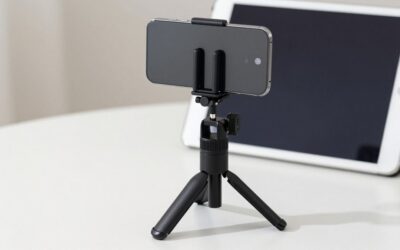
Finding the right balance between maximum operating height and folded portability is one of the trickiest parts of buying a tripod. Desktop tripods and miniature travel sticks are exceptionally portable and fit easily into a backpack, but they force you to find elevated surfaces like tables or walls to achieve eye-level shots.
Full-sized tripods offer complete height versatility, allowing you to shoot from ground level up to standing eye height without compromise. When assessing height, pay attention to whether the center column must be extended to reach your eye level. Raising the center column reduces overall stability, so look for a tripod that reaches your desired height with the column fully lowered whenever possible.
MagSafe Integration and Secure Mounting Systems
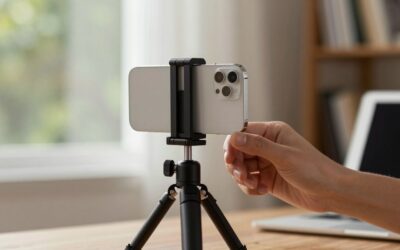
The method used to attach your iPhone to the tripod can make or break your shooting workflow. Traditional spring-loaded clamp mounts are universally compatible and secure, but they can accidentally press down on your phone’s side volume or power buttons if misaligned.
Modern magnetic mounting solutions provide lightning-fast attachment and removal speeds, transforming how quickly you can transition between handheld shooting and tripod setups. When choosing a magnetic mount, ensure it utilizes strong rare-earth magnets and physical alignment pins or lips to prevent rotational slippage. For extreme environments or heavy rig configurations, traditional mechanical clamps remain the safest fallback.
Avoiding Common Mistakes When Buying Support Gear
Many mobile creators make the mistake of purchasing ultra-cheap, lightweight plastic tripods that fail within months of regular use. Another common error is ignoring the leg locking mechanism—flip locks offer fast deployment, while twist locks provide a more compact folded profile and better resistance against dirt and sand intrusion.
Additionally, buyers often overlook the inclusion of accessory mounting points, such as standard threaded sockets or cold shoe mounts. Having extra mounting ports on the tripod chassis allows you to easily attach external microphones, wireless audio receivers, or portable lights without cluttering your phone setup.
Knowing When to Invest in Professional-Tier Systems
Deciding when to transition from consumer gear to professional-tier equipment depends entirely on your production demands. If your filming workflow involves fast-paced commercial work, broadcasting, or continuous outdoor shoots in windy conditions, investing in a professional modular system pays off immediately. Professional legs offer interchangeable feet, rugged weather sealing, and modular heads that adapt to dollies and sliders seamlessly.
However, if you primarily film static interviews, indoor tutorials, or casual travel content, a mid-range hybrid tripod will fulfill your creative needs without unnecessary bulk or expense.
Related Guides
If you want to skip the trial and error and see our hand-picked selections, take a look at our comprehensive roundup of the best iphone tripod for filming: Ultimate Top Gear! options available right now.
FAQ
Do I need a heavy tripod for an iPhone?
Not necessarily. While heavier tripods offer maximum stability against wind and sudden bumps, modern lightweight options made from advanced alloys provide a great balance of portability and secure support for handheld devices.
Is MagSafe strong enough for outdoor filming?
High-quality MagSafe mounts featuring rare-earth magnets and mechanical alignment pins are remarkably secure for static shots and controlled movements. However, for high-speed action or extremely windy outdoor environments, a physical clamp provides ultimate peace of mind.
As an Amazon Associate we earn from qualifying purchases at no extra cost to you.


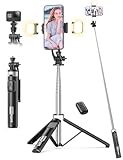
![EUCOS 62" Tripod for iPhone, Sturdy Selfie Stick Tripod with Remote & Lightweight Phone Stand, Solidest Portable Cell Phone Tripod, Compatible iPhone Pro Max/Android [White]](https://m.media-amazon.com/images/I/31wrpQdEGdL._SL160_.jpg)

What is the difference between a ball head and a fluid head?
A ball head allows you to rapidly tilt and swivel your phone in multiple directions using a single locking knob, which is great for quick adjustments. A fluid head uses internal damping fluid to ensure smooth, cinematic pans and tilts, making it essential for professional video work.
How tall should my tripod be for standing interviews?
For comfortable eye-level filming while standing, look for a tripod that extends to at least fifty to sixty inches without needing to raise the center column. Keeping the center column down ensures maximum stability during your takes.

Write Your Review
No reviews yet. Be the first to share your experience!