
Content creation on the iPhone has evolved dramatically, and as we move through 2026, mobile videographers demand broadcast-quality stability from pocket-sized setups. Whether you are shooting cinematic travel vlogs, hosting live streams, or recording structured instructional courses, your camera is only as steady as its foundation. While many creators invest heavily in premium tripods or expensive lighting, they often overlook the single most critical component linking the device to the support structure: the tripod mount.
- Clamping Mechanisms: Spring-Loaded versus Screw-Locking
- Case Compatibility and Clearance Issues
- Mounting Standards: 1/4″-20 Threads and Cold Shoe Integration
- Smooth Rotation and Landscape-to-Portrait Transitions
- Material Selection: Aluminum Alloy versus Reinforced Polymer
- Center of Gravity and Weight Distribution
- Knowing When to Invest in Professional Ecosystems
- Related Guides
- FAQ
- Related Guides
Choosing the right mount goes far beyond finding a generic plastic clamp that happens to hold your phone. Factors like clamping security, quick-release capabilities, accessory integration, and structural balance dictate whether your shoot runs smoothly or ends in a frustrating gear slip. This decision guide breaks down the core elements that actually matter when selecting an iPhone tripod mount, helping you invest in gear that protects your device and elevates your production quality.
As an Amazon Associate we earn from qualifying purchases at no extra cost to you.
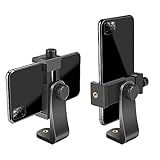
Clamping Mechanisms: Spring-Loaded versus Screw-Locking
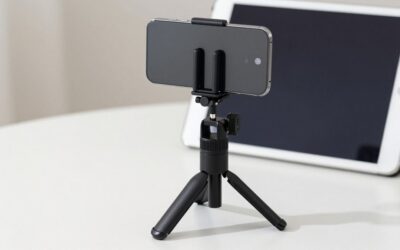
The primary interface between your iPhone and the mount is the clamping mechanism, and you will typically encounter two distinct styles: spring-loaded jaws and threaded screw-locks. Spring-loaded mounts are fast and convenient, allowing you to snap your phone in and out with one hand. However, they rely entirely on tension, which can degrade over time or struggle to hold larger Pro Max models securely during active shoots.
For serious video creation, screw-locking mechanisms provide superior security. By manually tightening a thumbscrew or rotary dial, you dictate the exact clamping pressure applied to the device. This eliminates any guesswork and ensures that your iPhone will not shift or slide out of alignment, even when shooting outdoors in windy conditions or on uneven terrain.
Case Compatibility and Clearance Issues
One of the most common oversights creators make is failing to account for their iPhone protection case. Modern iPhones are rarely used naked, yet many budget mounts are engineered with narrow lips designed exclusively for bare devices. If you utilize a rugged protective case, a MagSafe wallet attachment, or a specialized filmmaking case with lens filters, a shallow clamp will fail to grip the edges properly.
When evaluating mounts, check the jaw depth and maximum opening width specifications. Look for designs featuring deep rubberized channels that accommodate thick cases without pushing against your screen protector. Adjustable depth profiles ensure that whether your iPhone is stripped down for lightweight stabilization or fully rigged out, the mount maintains a flush, secure hold.
Mounting Standards: 1/4″-20 Threads and Cold Shoe Integration
A professional video workflow rarely consists of just an iPhone and a tripod. You will frequently need to attach external microphones, compact LED video panels, or wireless audio receivers to your rig. The versatility of your tripod mount depends heavily on its built-in mounting points.
At a minimum, ensure the mount features a standard 1/4″-20 threaded hole on the base and spine, allowing you to switch easily between horizontal and vertical orientations. Furthermore, integrated cold shoe mounts on the top or sides of the clamp are invaluable. They let you mount a shotgun microphone or fill light directly to the phone holder, keeping your entire rig compact, balanced, and free of cable clutter.
Smooth Rotation and Landscape-to-Portrait Transitions
Modern video creation requires fluency across multiple aspect ratios. While traditional horizontal video remains the standard for YouTube and documentary work, vertical video formats dominate short-form platforms. Changing your framing shouldn’t require dismantling your entire tripod head or unscrewing the phone from the clamp.
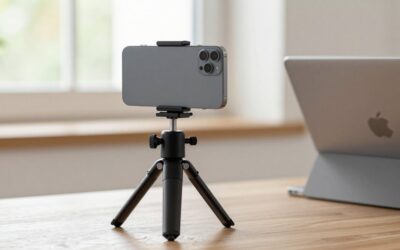
Advanced tripod mounts feature a built-in 360-degree rotating collar or a smooth tilt-and-pivot ball head junction. This allows you to transition seamlessly from a cinematic 16:9 landscape shot to a 9:16 vertical frame in seconds. Look for mounts with detents or locking pins at the ninety-degree marks to ensure your horizon lines remain perfectly level during rotation.
Material Selection: Aluminum Alloy versus Reinforced Polymer
The materials used to construct your tripod mount dictate its long-term durability and resistance to wear. Inexpensive mounts are frequently molded from brittle plastics that can crack under stress, warp in direct sunlight, or strip their threaded inserts over time.
Anodized aluminum alloy and aerospace-grade composites offer the ideal balance of structural rigidity and lightweight portability. Aluminum mounts resist impact, do not flex under heavy loads, and provide a secure, professional tactile feel. While they may carry a slightly higher initial cost, their longevity far outweighs the replacement expense of buying cheaper plastic alternatives.
Center of Gravity and Weight Distribution
Physics plays a significant role in mobile videography. iPhones, particularly the larger Max models equipped with heavy camera bumps, are top-heavy devices. When you attach an external microphone or a battery pack to the top of the phone, the center of gravity shifts drastically upward and outward.
A poorly designed mount that only offers a single centered mounting point can cause your tripod head to sag or tip over under the asymmetric load. Look for mounts featuring an extended baseplate or multiple mounting channels that allow you to adjust the center of gravity directly over the tripod’s vertical axis, ensuring total stability during pans and tilts.
Knowing When to Invest in Professional Ecosystems
If you are shooting casual clips for personal use, a simple clamp with a basic screw mechanism will suffice. However, if your video creation involves client work, frequent travel, or modular rig building, it is wise to invest in professional-grade mounting ecosystems.
Professional mounts often integrate directly with Arca-Swiss quick-release plates, letting you snap your phone from a tripod to a handheld stabilizer instantly without unscrewing anything. Evaluating your workflow honestly will help you determine whether you need a basic utility clamp or a heavy-duty modular mounting solution.
Related Guides
To explore specific product recommendations and detailed research notes, check out our comprehensive Best iphone tripod mounts for perfect video creation guide.
FAQ
Can I use a MagSafe mount for outdoor action video?
While MagSafe mounts are exceptionally convenient for studio work and static vlogging, they are generally not recommended for high-movement outdoor video. Sudden impacts, strong winds, or vigorous panning can overcome magnetic adhesion, making a mechanical clamp-style mount much safer for dynamic shooting environments.
Do I need a universal mount or a phone-specific cage?
Universal tripod mounts are best if you upgrade your phone frequently or use multiple devices, as they adjust to fit various widths. Phone-specific video cages offer superior structural rigidity and more mounting points, but they become obsolete the moment you upgrade to a newer iPhone model with different physical dimensions.
How do I prevent my iPhone from scratching inside the mount?
Always choose tripod mounts that feature high-density rubber pads or silicone lining along the interior jaws and backplate. These soft materials absorb vibration, provide friction to prevent slipping, and create a protective barrier that keeps your phone’s chassis and glass back pristine.
Are plastic tripod mounts safe for heavy Pro Max models?
Some high-impact engineering plastics are quite durable, but budget plastic mounts often feature weak points around the threaded inserts and spring hinges. If you shoot with a heavy Pro Max model loaded down with cases or accessories, an aluminum alloy mount is always the safer and more reliable choice.

Write Your Review
No reviews yet. Be the first to share your experience!