
Buying a screen protector sounds simple until you are comparing “9H” glass, privacy filters, alignment trays, oleophobic coatings, and packs that appear identical but fit different iPhone generations. The most common mistake is choosing by price alone. A protector can be inexpensive yet have the wrong camera cutout, cover the Dynamic Island, interfere with a case, or leave an exposed strip along one edge.
- Decide These 3 Things First
- Size and Fit Come Before Everything Else
- Material: Tempered Glass, Film, or Hybrid
- Construction: Edges, Adhesive, and Cutouts
- Comfort and Performance: Touch, Clarity, and Glare
- Price Tiers: What You Actually Get
- Warranty, Replacement, and Support
- Delivery and Assembly: Installation Is Part of the Product
- Spec Checklist
- Red Flags
- FAQ
Another mistake is assuming every tempered-glass protector performs the same way. Thickness, adhesive coverage, edge shape, surface coating, and installation quality all affect daily use. The best choice is not necessarily the thickest or most expensive option; it is the one that matches your exact iPhone, your case, and the way you use your phone. This iphone screen protector buying guide explains what deserves attention before you buy in 2026.
As an Amazon Associate we earn from qualifying purchases at no extra cost to you. Product prices and availability are accurate as of the date shown and are subject to change.


Decide These 3 Things First
- Your exact iPhone model: Confirm the model in Settings > General > About, then check the screen size and camera layout. “iPhone 16” and “iPhone 16 Pro,” for example, are not interchangeable accessories.
- Your preferred protection style: Choose clear tempered glass for general protection, a matte film for reduced reflections, or a privacy filter for limiting side-angle visibility.
- Your case compatibility: If you use a case, select a case-friendly protector with an edge gap of roughly 0.5 to 1.5 millimeters. A protector that reaches too close to the frame may lift when the case is installed.
Once those decisions are settled, compare the details below rather than relying on marketing labels.
Size and Fit Come Before Everything Else
A screen protector must match more than the phone’s diagonal screen measurement. The top speaker opening, front-camera area, rounded corners, bezel shape, and edge curvature all matter. A protector designed for a 6.1-inch model may not fit another 6.1-inch iPhone because the outer dimensions and sensor arrangement differ.
Look for the exact model name in the product title, not just a broad compatibility list. Some budget packs combine models with similar dimensions, such as the iPhone 15 and iPhone 16, while other combinations cover different generations or entry-level versions. The Ailun three-pack examples illustrate this approach: one is listed for iPhone 16, iPhone 15, and iPhone 15 Pro; another groups iPhone 17e, iPhone 16e, iPhone 14, iPhone 13, and iPhone 13 Pro. Treat those lists as a starting point and verify your model before ordering.
Measure the protector’s listed coverage when dimensions are provided. A typical full-screen protector is approximately 135 to 155 millimeters tall and 62 to 75 millimeters wide, depending on the iPhone family. A case-friendly design may intentionally leave a narrow border around the active display. That border is preferable to an edge that catches on your case.
Material: Tempered Glass, Film, or Hybrid
Tempered glass is the default choice for most people. Common products measure between 0.25 and 0.33 millimeters thick and provide a smoother, more glass-like feel than plastic film. They are also easier to clean and generally resist everyday scratches from keys, coins, and pocket debris. Glass can crack after a drop, but replacing a $2-to-$8 protector is less expensive than replacing a phone display.
Plastic film is usually thinner, often around 0.1 to 0.2 millimeters, and can conform better to curved edges. It is useful when touch sensitivity, minimal bulk, or full edge coverage matters most. The tradeoff is that film can show scratches and may feel softer under a fingertip.
Hybrid protectors combine a flexible layer with a glass-like surface. They can offer a compromise between impact resistance and edge coverage, but the label alone does not establish quality. Check the actual thickness, installation method, and return policy rather than assuming “hybrid” means stronger.
“9H hardness” is a common pencil-hardness claim, not a guarantee that the protector will survive every impact. Use it as a basic comparison point, not as a laboratory rating for drop protection.
Construction: Edges, Adhesive, and Cutouts
Construction details determine whether a protector remains comfortable and secure after weeks of use. Choose rounded 2.5D edges when available. These edges transition more gradually into the display and are less likely to catch on a finger than a sharp, unfinished perimeter.
Full-adhesive coverage is preferable to adhesive only around the border. Edge-only adhesive can create a hollow feel, trap dust, and produce rainbow-like patches or tapping noises in the center. A full-adhesive protector should sit flat across the display without visible bubbles after installation.
Inspect the top cutout design. Some protectors leave the speaker and sensors open, while others cover the upper area with a clear layer. Either approach can work if it is designed for the specific model, but a poorly placed cutout may block sound or create a visible ridge near the front camera. Avoid generic “universal” protectors unless the manufacturer provides a precise model list.
Also check whether the package includes one protector or three. A three-pack is useful because installation can fail, glass can crack during a later drop, or you may replace the phone before using the final protector. The listed Ailun packs range from approximately $5.98 to $6.99 for three pieces, making them examples of the budget category rather than proof that every low-cost pack is equivalent.
Comfort and Performance: Touch, Clarity, and Glare
A clear protector should preserve the phone’s normal brightness and color as much as possible. Look for high-transparency language, but remember that brand claims are not standardized. The most useful clues are customer photos, return terms, and whether the product uses a clean, smooth surface without a noticeable blue or gray tint.
For touch performance, thinner glass—around 0.25 millimeters—often feels more direct than thicker glass near 0.33 millimeters, although adhesive quality and phone software also matter. A well-installed protector should register ordinary taps, swipes, and keyboard input without requiring extra pressure.
An oleophobic coating helps fingerprints wipe away more easily. It will wear with use, particularly if you clean the screen with abrasive materials. Use a soft microfiber cloth and a small amount of screen-safe cleaner instead of paper towels or household glass cleaner.
Matte protectors reduce reflections from windows and overhead lights, but they can slightly soften text and images by scattering light. Privacy protectors typically darken the display from side angles and may reduce brightness or make the screen appear less vivid straight on. They are best for commuters, travelers, and shared workspaces—not necessarily for photographers or anyone who values maximum clarity.
Price Tiers: What You Actually Get
Budget: $5 to $10 for a one- to three-pack. Expect tempered glass, basic cleaning accessories, and limited model coverage. A three-pack around $5.98 to $6.99 can be a sensible purchase if the fit is verified and the package includes a useful alignment guide. The main compromises may be less refined edges, weaker coating longevity, or inconsistent installation materials.
Midrange: $10 to $25 per protector or multipack. This tier commonly adds a better alignment tray, full-adhesive coverage, smoother rounded edges, improved coating, and clearer instructions. It is often the best value for someone who wants easy installation without paying for a premium brand.
Premium: $25 to $50 or more. Premium products may include advanced privacy or anti-reflective treatments, extensive accessory kits, replacement coverage, or a more carefully engineered fit. They are worthwhile when installation reliability, a specific finish, or warranty support matters more than minimizing cost. Do not pay this tier merely for a higher “9H” number.
Warranty, Replacement, and Support
Read the warranty language before assuming “lifetime replacement” means unlimited free replacements. Some programs cover only manufacturing defects, while others require a registration, proof of purchase, shipping payment, or a small replacement fee. A useful policy should explain what happens if the glass cracks during normal use and how many replacements are allowed.
For a low-cost three-pack, a formal warranty may add little value because replacement packs cost roughly $6 to $12. For a $30 privacy or specialty protector, responsive support becomes more important. Keep the order confirmation and photograph the package if the wrong model arrives.
Delivery and Assembly: Installation Is Part of the Product
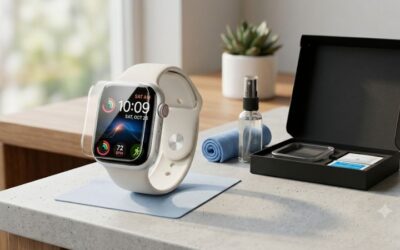
A protector that arrives quickly but installs poorly is not a bargain. Check the package contents for an alcohol wipe, dust-removal sticker, microfiber cloth, smoothing card, and alignment frame or tray. An alignment tool can reduce off-center placement and is especially useful for first-time installation.
Install in a low-dust room after washing your hands. Clean the display, inspect it under a bright light, and remove every dust particle before exposing the adhesive. Align the speaker and edges first, then lower the protector slowly. Small bubbles caused by trapped air may disappear within 24 to 48 hours; dust bubbles usually will not.
Delivery times vary by seller and location, so check the stated arrival window and return deadline. If your current protector is badly cracked, order the replacement before removing it. Never use a cracked protector as a substitute for a damaged phone display, and do not bend tempered glass to force it into place.
Spec Checklist
| Spec | Budget | Mid | Premium |
|---|---|---|---|
| Material | Tempered glass or basic film | Tempered glass or hybrid | Specialty glass, hybrid, matte, or privacy |
| Thickness | 0.30–0.33 mm | 0.25–0.33 mm | About 0.20–0.30 mm, depending on finish |
| Edges | Basic rounded edges | Rounded 2.5D edges | Refined edge finish and case-focused fit |
| Adhesive | Full adhesive preferred | Full adhesive | Full adhesive with optimized installation layer |
| Pack size | 1–3 protectors | 1–2 protectors | Usually 1 protector with replacement support |
| Price | $5–$10 | $10–$25 | $25–$50+ |
| Installation | Cleaning kit; tray may be absent | Alignment tray commonly included | Precision tray and detailed instructions |
Red Flags
- The listing names only a screen size and not the exact iPhone model.
- Compatibility includes a long, vague list with no explanation of camera or speaker fit.
- The product promises “military-grade” protection without stating thickness, material, or warranty terms.
- Only the border is adhesive, or reviews repeatedly mention bubbles around the center.
- There is no clear image of the top cutout, edge coverage, or included installation tools.
- The seller provides no return policy or makes replacement claims that are difficult to verify.
- The protector is marketed as case-friendly but has no information about edge spacing.
FAQ
Is tempered glass better than a screen film?
For most people, yes. Tempered glass usually offers a more natural feel and better everyday scratch resistance at a modest price. Film is a better choice when you want the thinnest possible layer, more flexible edge coverage, or a matte finish.
How thick should an iPhone screen protector be?
Look for about 0.25 to 0.33 millimeters for tempered glass. Thinner glass can feel more responsive, while slightly thicker glass may provide a bit more material between the display and an object. Fit and adhesive coverage matter more than a small thickness difference.
Can I use a screen protector with any iPhone case?
Most cases work with a case-friendly protector, but compatibility is not universal. Bulky cases, rigid raised bezels, and cases that press inward from the corners can lift the glass. Install the protector first, then fit the case carefully and check all four edges.
Should I buy a three-pack?
A three-pack is practical if the price is around $6 to $12 and the model match is clear. You get spares for installation mistakes or future cracks. Choose a single premium protector instead when you need a specialty finish, a precision installation system, or stronger replacement support.
Ready to decide? Our #1 pick for 2026 is the Material.
Live price & availability on Amazon.




Write Your Review
No reviews yet. Be the first to share your experience!