
Disclosure: As an Amazon Associate, this site may earn from qualifying purchases made through links on this page.
The best sampling arranger keyboards for music teaching turn a single instrument into a full classroom band. A teacher can play piano with the right hand, trigger bass and drums with the left, and load custom samples that match the song, culture, or instrument under study. Sampling matters because it lets a teacher bring in a folk flute, a choir vowel, a drum kit from a specific tradition, or a student-recorded sound, then build a lesson around it. The four keyboards below all include sampling in their listed specifications, along with large style libraries, touchscreens, and built-in speakers that suit a teaching room.
At a Glance
| Product | Standout feature | Best for |
|---|---|---|
| Korg Pa5X 61 | 4 GB user PCM sample memory | Advanced teaching and flagship depth |
| Korg Pa1000 | 300 MB compressed sample memory and vocal harmonizer | All-round classroom and ensemble work |
| Yamaha PSR-SX900 | AWM stereo sampling and 525 styles | Clear demonstrations and varied repertoire |
| Korg Pa700 | 128 MB compressed sampling in a compact body | Smaller rooms and focused lessons |
How to Choose for Music Teaching
Start with sample memory and format support. A larger memory keeps more custom sounds ready without swapping files, while WAV, AIFF, and SoundFont support makes it easier to use sounds from a school library. Check the listing for the exact memory figure, because the numbers differ widely here.
Next, weigh the style library, touchscreen, and room sound. Styles give students a backing band in many genres, so a teacher can show how a chord progression sounds as jazz, pop, Latin, or folk accompaniment. A bright touchscreen helps the room follow along, built-in speakers should fill a classroom, and a microphone input lets a teacher demonstrate vocal harmony. Semi-weighted keys with aftertouch give expressive control for dynamics and phrasing.
The Picks
Korg Pa5X 61

View the Korg Pa5X 61 on Amazon
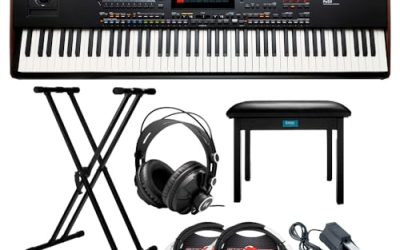
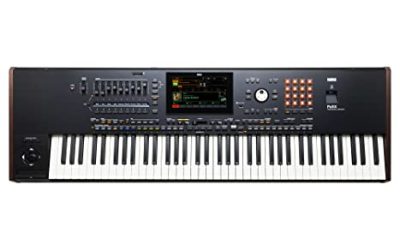
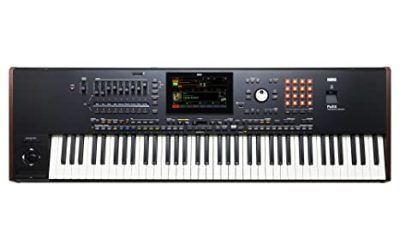
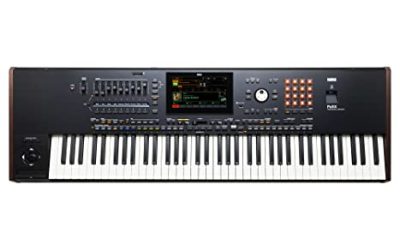
The Korg Pa5X 61 is the flagship pick here, built around the EDS-XP sound engine with 160-voice polyphony and more than 2,200 factory sounds. Its listed user PCM sample memory is 4 GB, equivalent to 8 GB linear when compressed, and it loads Korg, WAV, AIFF, and SoundFont formats, with full editing and time-slice tools. That depth suits a teacher who wants to build a lasting library of custom instruments, drum kits, and vocal textures. It also includes more than 600 styles, dual crossfading players for two styles, MIDI files, or MP3 files at once, and separate microphone and guitar inputs with effects. The 61 semi-weighted keys include aftertouch, and the aluminum case with wooden side panels feels built for regular use. Its size and depth are the main limits: a teacher who wants a simple first arranger may find the controls and menus more than a beginner class needs.
Korg Pa1000

View the Korg Pa1000 on Amazon
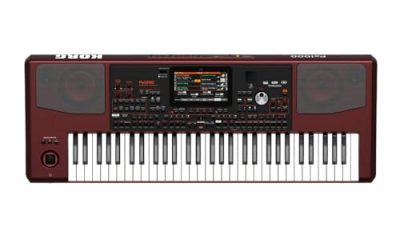
The Korg Pa1000 is a strong all-round choice for teaching, with more than 1,700 sounds and more than 420 styles in its Amazon listing. Its user PCM sample memory is listed at 300 MB compressed, equivalent to 600 MB linear, and it loads Korg, WAV, AIFF, and SoundFont formats. That is enough room for a useful set of custom samples, such as regional instruments, choir sounds, or student-created textures, without moving to a flagship model. The 61 semi-weighted keys have aftertouch, the 7-inch TFT color touchscreen gives access to KAOSS-style MIDI and effects control, and the TC-Helicon vocal processor adds a three-voice harmonizer to the microphone input. Built-in speakers are listed at 33 watts per side with tweeters, which helps in a larger teaching room, and a 16-track sequencer adds further lesson tools. The main limit is sample headroom: teachers with a very large custom library will fill it sooner than the Pa5X.
Yamaha PSR-SX900

View the Yamaha PSR-SX900 on Amazon
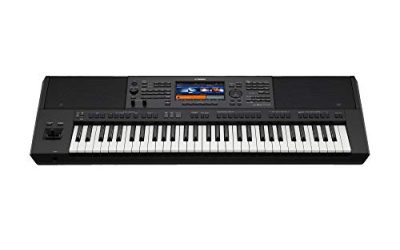
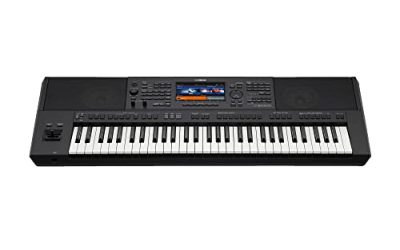
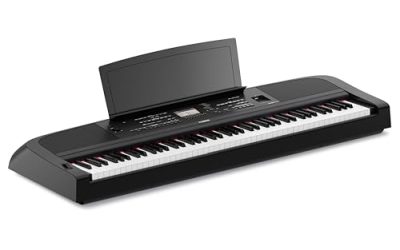
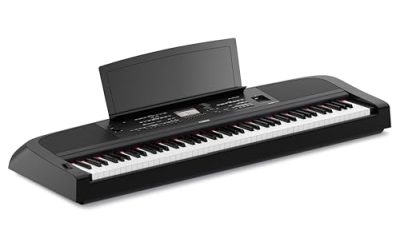
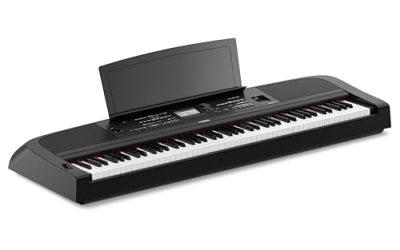
The Yamaha PSR-SX900 uses Advanced Wave Memory stereo sampling, which recreates natural instrument sound in stereo, and it is a clear, teacher-friendly workstation. Its listing shows 1,337 voices plus 56 drum and sound-effect kits, 525 accompaniment styles, a 7-inch touchscreen, a joystick controller, and a chord looper that records chord progressions for practice and demonstration. A 16-track song recorder, Bluetooth audio for playing along with a track, and an MP3 lyric display add useful classroom functions. The 61 full-size keys, assignable live-control knobs, and built-in bi-amplified speakers suit demonstrations in front of a group. One point to note is the sampling approach: this model centers on its stereo sampling sound engine and expansion content rather than the large user PCM sample memory found on the Korg models above, so check the listing for the exact expansion and sample-import details before choosing it for a sample-heavy course.
Korg Pa700

The Korg Pa700 is the compact pick in this group, and it still includes real sampling for teaching. Its specifications list 128 MB of compressed sampling memory, equivalent to 256 MB linear, loading Korg, WAV, AIFF, and SoundFont formats, with full editing and time-slice tools. That is enough for a focused set of custom sounds, such as a small group of folk instruments or a custom drum kit for one unit of study. It also includes more than 1,700 sounds, more than 370 styles, a 7-inch TouchView display, Defined Nuance Control for expressive sounds, and 2 x 25-watt built-in speakers. A 16-track sequencer, MP3 player, and USB and MIDI connectivity round out a practical teaching setup. The limits are clear: sample memory is smaller than on the Pa1000 and Pa5X, and the key bed is velocity-sensitive without the aftertouch found on the larger Korg models, so expressive aftertouch demonstrations are not part of this model.
Comparison Table
| Feature | Korg Pa5X 61 | Korg Pa1000 | Yamaha PSR-SX900 | Korg Pa700 |
|---|---|---|---|---|
| Keys | 61 semi-weighted, aftertouch | 61 semi-weighted, aftertouch | 61 full-size | 61 velocity-sensitive |
| Sample memory | 4 GB user PCM | 300 MB compressed | AWM stereo sampling engine | 128 MB compressed |
| Sample formats | WAV, AIFF, SoundFont | WAV, AIFF, SoundFont | Check the listing for import details | WAV, AIFF, SoundFont |
| Factory sounds | More than 2,200 | More than 1,700 | 1,337 voices | More than 1,700 |
| Styles | More than 600 | More than 420 | 525 | More than 370 |
| Touchscreen | Large color display | 7-inch TFT color | 7-inch touchscreen | 7-inch TouchView |
| Built-in speakers | Check the listing | 33 watts per side | Bi-amplified | 2 x 25 watts |
Which One Fits Your Situation
Choose the Korg Pa5X 61 for advanced students and a long-term sample library, with the deepest sound design and dual-player transitions here.
Choose the Korg Pa1000 for a balanced classroom instrument, pairing useful sample memory with a vocal harmonizer, strong speakers, and a clear touchscreen.
Choose the Yamaha PSR-SX900 for clear demonstrations, a large style library, and the chord looper, plus Bluetooth audio for playing along with tracks.
Choose the Korg Pa700 if space is tight or the group is smaller, with sampling, a touchscreen, and a large sound library in a compact body.
FAQ
What makes a sampling arranger keyboard useful for music teaching?
Sampling lets a teacher load sounds that match the lesson, from a folk instrument to a choir texture or a custom drum kit, so students hear how a real timbre behaves inside an arrangement.
How much sample memory does a teacher need?
It depends on the course. A focused unit fits in the Pa700 memory, while a teacher who keeps many instruments ready across a term will value the larger memory of the Pa1000 or Pa5X.
Can these keyboards work as a backing band in class?
Yes. Each model includes hundreds of accompaniment styles, so a teacher can play chords with the left hand and hear bass, drums, and harmony follow.
Do I need external speakers for a classroom?
Not always. The Pa1000 and Pa700 include built-in speakers, and the PSR-SX900 includes bi-amplified speakers. For a large hall, check the listing for speaker output and plan for an external amplifier if needed.
Final Take
The best sampling arranger keyboard matches the size of your sample library and the way you teach. The Pa5X 61 leads on memory and depth, the Pa1000 is the most balanced classroom pick, the PSR-SX900 shines for demonstrations and style variety, and the Pa700 keeps sampling practical in a compact body.
Write Your Review
No reviews yet. Be the first to share your experience!