
In late 2017, Apple and Samsung released two phones that each tried to define what a flagship should become. The iPhone X marked ten years of iPhone by removing the home button, stretching the screen to the edges, and betting on face recognition. The Galaxy Note 8, arriving a few weeks earlier, restored Samsung’s big-screen, pen-equipped line with a tall curved display and dual cameras. Nearly every argument that shaped the next decade of phones — notches, biometrics, styluses, wireless charging, and the death of the headphone jack — appears in this pairing.
One fact needs stating at the outset: both phones are discontinued. Neither maker sells them new, and neither receives current software or security support. Buying either today means shopping in the refurbished and used market. What follows compares them on their published specifications, explains where each had the edge in its era, and looks honestly at owning either in 2026.
Disclosure: As an Amazon Associate, we earn from qualifying purchases made through links on this page, at no additional cost to you.
Design and Display
The iPhone X used a stainless steel frame between glass panels, with a compact footprint built around a 5.8-inch display. Its most recognisable feature was the notch at the top of the screen, housing the front camera and Face ID sensors. The notch existed because Apple had removed the home button and its fingerprint reader entirely, committing the design to gestures and face unlock.
The Galaxy Note 8 was larger and more angular, its curved glass screen flowing slightly over the long edges. At 6.3 inches its display was noticeably bigger, and the phone was taller and heavier — a trade the Note line always made for screen space and its stylus. Its fingerprint sensor sat on the back, beside the cameras, a placement many found awkward to reach.
Both used OLED, a milestone for Apple: the iPhone X was the first iPhone with an OLED panel. Its Super Retina screen measured 5.8 inches at 2436 by 1125 pixels. Samsung fitted the Note 8 with a 6.3-inch Super AMOLED display at 2960 by 1440 pixels, marketed as an Infinity Display. On paper the Note 8 offered the sharper, larger screen, plus an always-on display mode the iPhone lacked. In practice both delivered deep blacks and strong contrast, and the difference came down to size and shape: a compact, notched screen against a taller, curved, uninterrupted one.
Both were water resistant, both used glass backs partly to enable wireless charging, and both felt premium. Ergonomically, the iPhone X suited one-handed use better; the Note 8 gave more screen at the cost of a device that really wanted two hands.
Performance
Inside, the iPhone X ran Apple’s A11 Bionic chip, while the Galaxy Note 8 used Qualcomm’s Snapdragon 835 in some markets and Samsung’s Exynos 8895 in others. Both handled the apps and games of 2017 with ease. Apple’s chip held a clear advantage in benchmark scores, particularly single-core performance, while the Note 8 compensated with more memory for multitasking.
In daily use the gap was measured in fractions of a second. The more meaningful difference was longevity: Apple’s control over chip and operating system translated into a longer run of major software updates, a point that becomes central today. The A11 was the stronger processor; the Note 8’s chip and memory made it a strong multitasker, especially using two apps at once in split screen.
Storage split the same way. The iPhone X came in fixed capacities with no expansion. The Note 8 included a microSD slot for adding inexpensive storage — a genuine, practical advantage for large media libraries.
Cameras
Both phones arrived with a pair of 12-megapixel rear cameras: a main wide-angle lens and a telephoto lens offering optical zoom. On paper the systems look nearly identical, but processing separated them.
The iPhone X gave both rear cameras optical image stabilisation, helping the telephoto in lower light and steadying video. Its portrait mode extended to the front camera through the Face ID depth-sensing system, enabling portrait selfies. Video was a particular strength, with strong stabilisation that made the iPhone a favourite for casual filming.
The Galaxy Note 8, Samsung’s first dual-camera phone, also fitted optical image stabilisation to both rear lenses. Its Live Focus offered a similar background-blur effect, with the ability to adjust blur strength after the shot. Samsung’s processing tended toward saturated, vivid colours; Apple leaned toward natural tones.
In good light both produced photographs owners were happy with. Judged within 2017 they were two of the best available, and the gap between them was small, though neither matches a current phone’s computational processing.
Battery and Charging
Battery capacity favoured Samsung: 3300 mAh in the Note 8 against 2716 mAh in the iPhone X. The comparison is not as one-sided as the figures suggest, because the Note had a larger, higher-resolution screen to power. In their era, both were generally one-day devices, with heavy users reaching for a charger by evening.
Charging was more complete on the Note 8 out of the box: fast charging included, wireless charging supported, and a USB-C connector. The iPhone X also supported fast and wireless charging — wireless was new to iPhone that year — but fast charging required accessories bought separately, and the phone used Lightning. For a quick wired top-up, Samsung’s arrangement was more convenient as supplied.
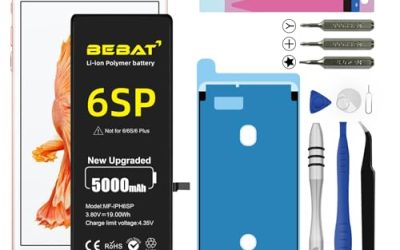
In 2026, age matters more than capacity. Every battery of this vintage has lived through years of charge cycles or been replaced, and lithium batteries lose capacity over time. Battery condition varies enormously from unit to unit and should be a deciding factor.
Software and Ecosystem
At launch the iPhone X ran iOS, with its gesture-based navigation replacing the home button: swiping up to go home, and new gestures for multitasking and controls. The Galaxy Note 8 ran Android with Samsung’s software layer on top, offering heavier customisation, split-screen multitasking that suited its big display, and features built around the stylus.
The ecosystem question was, and remains, the real divider. The iPhone X plugged into Apple’s world of iMessage, FaceTime, the App Store, and continuity with iPads, Macs, and the Apple Watch. The Note 8 sat within Google’s services and Samsung’s own additions, with more freedom to customise, install from varied sources, and expand storage. Neither answer was objectively better; it depended on what a person’s other devices and habits already were, and switching costs ran in both directions.
What has changed decisively since launch is support. Both phones have now reached the end of their software lives. The iPhone X received several years of major iOS updates, longer than most Android phones of its generation, but it no longer receives the current iOS or ongoing security updates. The Note 8’s update run ended earlier still. The practical consequences in 2026 are real: some current apps require newer operating systems than either phone can run, banking and other sensitive apps may refuse to work or carry greater risk on unpatched software, and known security flaws will not be fixed. This, more than any specification, is what limits both phones today.
The Differentiators: S Pen vs Face ID
Each phone had one signature feature the other could not match, and together they capture the philosophical difference between the two makers.
The Galaxy Note 8’s defining extra was the S Pen, a pressure-sensitive stylus stored in a silo in the phone’s body. It was not a novelty pointer. Owners could handwrite notes on the locked screen, annotate documents and screenshots, draw with pressure sensitivity in art apps, select precise areas of the screen, translate text by hovering, and use the pen as a fine, accurate input tool that fingers cannot replicate. For people who think on paper, mark up documents, or sketch, the S Pen was the reason to buy a Note over any other large phone, and nothing in Apple’s range answered it.
The iPhone X’s defining extra was Face ID. Its front sensor array projected and read a pattern of infrared dots to map the user’s face in depth, unlocking the phone, authorising payments, and filling passwords by looking at it. It replaced the fingerprint reader entirely, which was a bold removal at the time, and it also enabled the depth-based portrait selfies and animated emoji features that used the same sensors. Samsung offered its own face and iris recognition on the Note 8, alongside its rear fingerprint sensor, giving owners more unlocking options; Apple’s system, however, was regarded as the more secure and consistent face authentication of the two, and it worked in the dark thanks to its infrared design.
Neither feature is a curiosity in hindsight. Face ID went on to become standard across Apple’s phones, and the S Pen outlived the Note branding itself, continuing in Samsung’s later top-end models. Choosing between these phones in their day often came down to which of these two ideas matched a person’s habits: writing and drawing by hand, or unlocking and authenticating with a glance.
Buying Either Phone in 2026, Honestly
It would be misleading to discuss these phones as if they were ordinary current purchases, so this section is deliberately plain. Both the iPhone X and the Galaxy Note 8 are discontinued. There is no new stock from their makers, no manufacturer warranty in the normal sense, and no ongoing software or security support. Anything offered for sale today is refurbished, renewed, or second-hand, and its condition depends entirely on the individual unit and the honesty and standards of whoever prepared it.
That framing rules out some uses and permits others. As a main phone for banking, work accounts, and daily life, neither is a responsible recommendation in 2026, because unpatched security flaws and app incompatibility are not hypothetical problems but predictable ones. As a secondary device, a media player, a phone for a specific light-duty purpose, a collector’s piece, or a way to experience a notable chapter of phone design, either can still make sense, provided the buyer understands what they are getting. A phone bought for nostalgia or curiosity should be judged by different standards from one bought to be relied upon.
Condition checks matter more than model choice at this age. Battery health is the first question, because a worn battery cannot be worked around and replacement adds cost and, on sealed glass phones, some risk. Screen condition is the second: OLED panels of this age can show burn-in or uneven wear, and replacement screens vary in quality. Storage, working cameras, functioning Face ID sensors on the iPhone or a present, working S Pen on the Note, and confirmation that the phone is not locked to an account or carrier all deserve verification before money changes hands. Connectivity expectations should also be modest: mobile networks have moved on since 2017, and while both phones support the 4G networks still widely available, neither offers 5G, and carrier support for older devices varies by region.
Judged with those cautions, the choice between them today mirrors the choice in 2017. The iPhone X appeals for its compact size, its gesture interface, its video recording, and its place in Apple’s ecosystem for light duties such as music or a spare iMessage device. The Note 8 appeals for its bigger screen, its stylus, its expandable storage, and its headphone jack, which together make it an interesting pocket media and note-taking device. Both are better understood as pieces of living technology history than as bargains, and anyone whose budget stretches only to phones of this age for essential use should weigh the security warning above carefully.
Verdict by User Type
For the stylus user and note-taker, the Galaxy Note 8 is the only answer in this pairing. The S Pen had no equivalent on the iPhone, and if handwriting, annotation, or drawing matters, the comparison ends there.
For the compact-phone and video user, the iPhone X fits better. It was the easier phone to handle one-handed, its video recording led this pairing, and Face ID made unlocking and payments effortless for those comfortable with face authentication.
For the media consumer, the Note 8’s larger, sharper screen, microSD expansion, and headphone jack made it the stronger entertainment device, particularly for downloaded video and music collections.
For the ecosystem-committed user, the decision was made before the comparison began: iPhone owners with Macs, iPads, and iMessage circles stayed with Apple, and Android users who valued customisation and Google services stayed with Samsung, and both groups were rational to do so.
For a buyer in 2026, the honest verdict overrides all of the above categories: neither phone should be bought as a primary, security-sensitive device today. Choose between them only for secondary, hobby, or collecting purposes, choose the individual unit’s battery and screen condition over the badge, and let the S Pen versus Face ID question settle it, just as it did in 2017.
Frequently Asked Questions
Are the iPhone X and Galaxy Note 8 still sold new?
No. Both phones are discontinued by their makers. Any example available today is refurbished or second-hand, and condition, battery health, and included accessories vary by seller and by individual unit.
Do either of these phones still receive software updates?
No. Both have reached the end of their update support. The iPhone X received major iOS updates for several years, longer than the Note 8 received Android updates, but neither now receives current operating system versions or ongoing security patches, which limits app compatibility and carries security risk.
Which phone has the better screen?
On specifications, the Galaxy Note 8: its 6.3-inch Super AMOLED display is larger and sharper at 2960 by 1440 than the iPhone X’s 5.8-inch OLED at 2436 by 1125. Both are high-quality OLED panels with deep blacks, so the practical choice is mainly about preferred size and the iPhone’s notch.
Which camera is better?
They are close. Both use dual 12-megapixel rear cameras with optical image stabilisation on both lenses and a telephoto zoom. The iPhone X is generally favoured for video and front-camera portraits, while the Note 8 allowed adjusting background blur after capture. Colour style also differs, with Samsung’s processing of the era more saturated and Apple’s more natural.
Does the Galaxy Note 8 really have a headphone jack and expandable storage?
Yes to both. The Note 8 kept a 3.5mm headphone jack and a microSD slot for expandable storage. The iPhone X had neither: no headphone jack, and fixed internal storage with no expansion.
What is the battery difference?
The Note 8 has the larger battery at 3300 mAh against 2716 mAh in the iPhone X, though its bigger, sharper screen offsets some of that advantage. In 2026 the more important point is that any surviving battery is old, so the condition of the specific unit matters more than the original capacity.
Should I buy one of these phones in 2026?
Only for the right reasons: as a secondary device, a media or note-taking spare, or a collectible example of an important design era. Neither should serve as a main phone for banking and sensitive accounts, because neither receives security updates any longer.
Conclusion
The iPhone X and Galaxy Note 8 were the two clearest statements of where phones were heading in 2017. Apple bet on a screen that filled the front, a face that replaced a fingerprint, and gestures that replaced a button. Samsung bet on the biggest, sharpest screen it could make, a stylus no rival offered, and a feature list that refused to leave anything out, headphone jack and memory card included. Both bets largely won: face recognition and edge-to-edge screens became the industry default, and the stylus survived as a premium speciality.
Compared directly, the Note 8 was the more versatile and better-specified device on paper, with its larger display, S Pen, expandable storage, and more complete charging package. The iPhone X countered with the stronger processor, excellent video, a more compact and manageable body, and the longer software support that Apple consistently provided. There was no universal winner then, only a better match for each kind of user.
In 2026, the comparison gains a final, sobering layer. Both phones are discontinued, unsupported, and available only used or refurbished, and that reality should govern any purchase far more than their specifications do. As historical flagships and as light-duty secondary devices, they remain genuinely interesting. As main phones, their time has passed, and remembering them accurately — strengths, compromises, and limits alike — is the most useful verdict of all.



Write Your Review
No reviews yet. Be the first to share your experience!