
Two phrases in this search need translating before any product makes sense. “iPhone 10” is the iPhone X, and “without cables” means wireless charging: an external battery you set the phone on, with no cord between the battery and the phone. The iPhone X was the first iPhone with Qi wireless charging, so the hard rule for this list is that the power bank’s listing must confirm it works with the iPhone X specifically.
Both picks below are Qi wireless power banks whose listings or maker documentation name the iPhone X. Newer magnetic packs built only for MagSafe iPhones are excluded, because the iPhone X has no magnets and charges at standard Qi speeds.
Quick Picks
As an Amazon Associate we earn from qualifying purchases.
| Product | Best for | Key spec from title |
|---|---|---|
| Anker PowerCore III 10K Wireless | Fastest wireless and wired output | Qi-certified 10W wireless charging, 10,000mAh |
| Mophie Charge Stream Powerstation Wireless | A maker-documented iPhone X match | Made for Qi enabled smartphones, 10,000mAh |
How to Choose
Confirm the listing names your phone, not just Qi
Qi is a shared standard, so most wireless power banks will technically charge an iPhone X. The problem is the details around that claim: some packs need a button press to start wireless charging, some only deliver their headline wattage to certain brands, and magnetic models assume a MagSafe phone that the iPhone X is not. The safest filter is the one used here: the listing, its questions section, or the maker’s own documentation should name the iPhone X or the iPhone XS generation explicitly. If a listing only shows the newest iPhones, treat iPhone X support as unconfirmed and keep looking.
Wireless speed on an iPhone X has a ceiling
The iPhone X accepts up to 7.5W of wireless charging, so a pack advertising 10W or 15W wireless output will not charge it any faster than that ceiling; the extra headroom only helps newer phones. What still matters is that the pack is Qi-certified, because certified packs hold the phone at a steady charge instead of cycling on and off as it warms up. Expect wireless charging to be slower than a cable regardless: it trades speed for the convenience of setting the phone down, which is the entire point of a cable-free battery.
Capacity decides how many real charges you get
A 10,000mAh power bank does not put 10,000mAh into the phone. Wireless transfer loses energy as heat, so a pack of this size realistically delivers roughly one and a half to two full charges to an iPhone X battery. Both picks here sit at 10,000mAh, which is the practical sweet spot for a bag or coat pocket: enough for a long day or a weekend of top-ups without the weight of a 20,000mAh brick. If you routinely drain a phone twice a day, no pocketable wireless pack fixes that; buy for the pattern you actually have.
Check how the pack itself recharges and passes power through
A wireless power bank still needs a cable to refill itself, so look at its input: USB-C input refills faster and matches modern chargers, while older micro-USB input is slow. Pass-through charging is the other feature worth checking, because it lets the pack sit on a desk plugged in and act as a wireless pad, charging the phone first and then itself. One listing below calls this out by name. Also check case limits: most Qi packs charge through cases only up to a stated thickness, and metal plates or thick wallets stop the charge entirely. Finally, look for a charge indicator you can read at a glance: four small LEDs are the norm in this class, and they are the difference between packing a full battery and packing a dead one.
The 2 Best Options
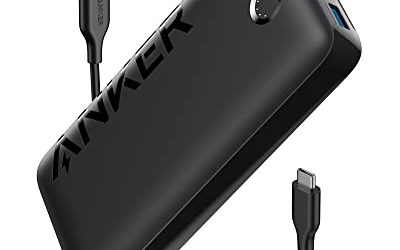
Anker PowerCore III 10K Wireless
Anker’s PowerCore III 10K Wireless pairs a 10,000mAh battery with Qi-certified wireless charging rated up to 10W, plus an 18W USB-C port for the times a cable is acceptable and speed matters. The listing’s own question section confirms compatibility with the iPhone X directly, and one listing title variant names the iPhone X among its supported phones, which is exactly the confirmation this guide requires. A desktop mode lets it work as a plugged-in wireless pad at home. For an iPhone X owner it will charge at the phone’s 7.5W wireless ceiling, with the wired port as a fast fallback.
Specs
- Brand: Anker
- Model: PowerCore III 10K Wireless (A1617)
- Capacity: 10,000mAh
- Wireless output: Qi-certified, up to 10W
- Wired output: 18W USB-C Quick Charge
- Compatibility note: iPhone X confirmed in listing Q&A
Best for: iPhone X owners who want one pack for cable-free top-ups and fast wired charging.
Watch out for: No magnetic alignment, so the phone must be centered on the pad by eye.
ASIN: B0899Z4YPZ
Mophie Charge Stream Powerstation Wireless
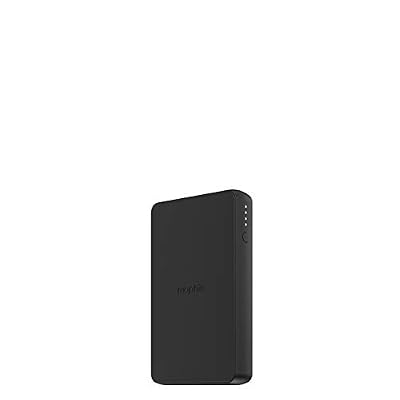
Mophie’s Charge Stream Powerstation Wireless is a 10,000mAh battery built around a Qi charging surface, and its maker’s manual names the iPhone X among the compatible phones, which settles the fit question without guesswork. Wireless output runs up to 5W, with a 10W USB-A port alongside it, and the listing states it charges through lightweight cases up to 3mm thick. Its Priority+ feature charges a connected phone before refilling the battery itself when plugged in. It is the slower, simpler pack of the two, in a slim 2.72 by 5.04 inch body that suits a jacket pocket.
Specs
- Brand: Mophie
- Model: Charge Stream Powerstation Wireless (401101510)
- Capacity: 10,000mAh
- Wireless output: Qi, up to 5W
- Wired output: 10W USB-A port
- Case limit: Charges through cases up to 3mm thick
Best for: Buyers who want the iPhone X named in the maker’s own documentation and a slim pack.
Watch out for: 5W wireless output is the slowest option here; this is an overnight and desk charger.
ASIN: B07H165NB3
Which One Fits Your Situation
You want the fastest possible top-up away from home
Take the Anker. Its wireless output is the stronger of the two, and when you do accept a cable, the 18W USB-C port charges an iPhone X far quicker than either pack can manage wirelessly. It is the better travel pick for airport days and long commutes, where a thirty-minute wired boost between flights beats an hour of wireless trickle. The Mophie still works in this role, just plan around its slower pace.
You mostly charge at a desk or bedside
Take the Mophie. Priority+ charging means it can live plugged in as your everyday wireless pad, sending power to the phone first and topping itself up afterward, so it is always ready to grab on the way out. At 5W the wireless speed is unremarkable, but for a phone that sits on the pad for hours at a desk or overnight, the speed difference disappears and the slim shape is what you notice.
Your iPhone X lives in a case
Both packs charge through ordinary slim cases, but only the Mophie states its limit on the listing: up to 3mm. Measure or check your case before ordering either, and remove metal kickstands, magnetic mounts and card wallets with metal plates, all of which block Qi charging. If your case is a thick armored model, expect to pop the phone out to charge wirelessly, whichever pack you choose.
You are keeping the iPhone X as a backup or travel phone
A second phone that lives in a drawer or a travel bag needs a battery that holds its charge and works the moment it is picked up, which suits either pack here. The Anker’s faster wired port makes it the better choice if the phone comes out for full days of maps and photos abroad; the Mophie suits a phone that mostly needs a slow overnight revival. Either way, cycle the pack every few months, because a lithium battery left flat for a year loses capacity permanently.
Common Mistakes
- Buying a MagSafe-only magnetic pack for an iPhone X, which has no magnets and gets no alignment or speed benefit.
- Assuming a 10W or 15W wireless rating means the iPhone X charges at that speed; it is capped at 7.5W.
- Expecting a 10,000mAh pack to deliver four full charges once wireless losses are counted.
- Leaving a metal plate or thick wallet case on the phone and concluding the pack is faulty.
- Forgetting the pack still needs its own cable to recharge, so the cable-free part is phone to pack only.
- Stacking the phone off-center on the pad and blaming the pack for a charge that never started.
Frequently Asked Questions
Does the iPhone X support wireless charging at all?
Yes. The iPhone X introduced Qi wireless charging to the iPhone line, along with the iPhone 8 models, and it accepts up to 7.5W from a Qi-certified charger. That is why this guide only includes packs whose listings or maker documents confirm iPhone X support, and why headline wattages above 7.5W do not change the charging speed on this phone. It also means any Qi pad or stand you already own will charge the X; the packs here simply add a battery, so the charging works away from a wall outlet too.
Will a MagSafe power bank work with an iPhone X?
It will usually charge the phone at basic Qi speed if placed carefully, because MagSafe chargers are Qi-based, but the magnets will not grip an iPhone X and the pack can slide out of alignment in a bag. Since alignment is what makes a magnetic pack useful, iPhone X owners are better served by the flat Qi packs in this guide, which is why MagSafe-only models were excluded.
How many charges does a 10,000mAh wireless pack give an iPhone X?
Plan on roughly one and a half to two full charges. The pack’s rated capacity is measured at the battery cell, and conversion plus wireless transfer losses take a real share before power reaches the phone. Wired charging from the same pack is more efficient, so the USB ports on both picks will stretch the same battery further when a cable is acceptable.
Can I charge the phone and the power bank at the same time?
On the Mophie, yes: its Priority+ feature sends power to the phone first when the pack is plugged in, then recharges the pack. The Anker offers a desktop mode that works as a plugged-in wireless pad. In both cases the pack itself refills by cable; pass-through is a convenience for desks and nightstands, not a way to make the whole setup wireless.

Write Your Review
No reviews yet. Be the first to share your experience!