
For iPhone and iPad users who love the great outdoors, keeping your Apple devices charged far from the nearest wall outlet is a constant challenge. While standard portable chargers are great for a weekend getaway, extended camping trips, hiking adventures, or emergency preparedness situations require a more sustainable energy source. Solar power banks offer the perfect solution, combining high-capacity lithium batteries with integrated photovoltaic panels to keep your iPhone, iPad, and Apple Watch powered using nothing but the sun.
Recommended Products

Prime Microsoft Surface Pro 13" Keyboard – Black

Samsung Smart Keyboard, Bluetooth Multi-Device Keyboard for Galaxy Phones, Tablets & Laptops, Slim Lightweight Design, AI Shortcut Key, Long Battery Life, EJ-B7800UBEGUJ, Dark Gray

Samsung Smart Keyboard, Laptop-Like Typing Feel, Dedicated Ai Short Key, Shortcut Keys - Black
As an Amazon Associate we earn from qualifying purchases. Product prices and availability are accurate as of the date/time indicated.
What to Look for in a Solar Power Bank
When shopping for a solar-powered charger for your iOS and iPadOS devices, it is easy to get overwhelmed by marketing jargon. The first thing to understand is that the built-in solar panels on pocket-sized power banks are primarily designed for emergency backup use, not as the primary method of daily charging. Because of their small surface area, a single integrated panel can take several days of direct sunlight to fully replenish a large internal battery. If you need rapid solar charging, look for models that support detachable, multi-panel folding arrays that expand to catch more sunlight.
Additionally, ruggedness is key for any outdoor accessory. Look for power banks that feature an IP (Ingress Protection) rating, such as IP65 or IP67, which guarantees resistance against dust, rain, and accidental splashes. Physical durability is also crucial; reinforced corners, rubberized bumpers, and sealed port covers will protect the delicate internal circuitry from drops on rocky trails or exposure to morning dew.
Key Features and Specs That Matter for Apple Users
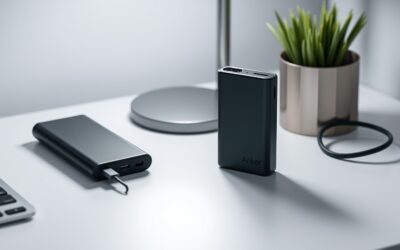
To get the best performance for your Apple ecosystem, you must look beyond the solar panels and examine the battery and port specifications. Power delivery (PD) is the most critical spec for modern iPhone and iPad users. Look for a USB-C port that supports USB-PD with at least 18W to 20W output for iPhones, and ideally 30W to 45W if you plan to charge an iPad Pro or iPad Air at full speed. Without USB-PD, your devices will charge at a sluggish pace.
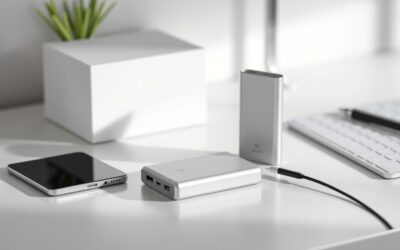
Battery capacity, measured in milliamp-hours (mAh), determines how many times you can juice up your gear. A 10,000mAh power bank can charge an iPhone 15 or 16 roughly two times, while a beefier 20,000mAh to 26,800mAh unit can keep an iPad and an iPhone running for a long weekend. Be mindful of aviation limits if you plan to fly to your hiking destination; the Federal Aviation Administration (FAA) limits carry-on batteries to 100 watt-hours (Wh), which is roughly equivalent to a 27,000mAh capacity.
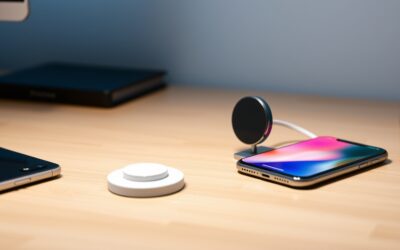
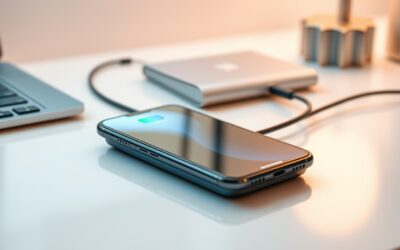
Finally, consider wireless charging capability. Many outdoor solar power banks feature an integrated Qi or MagSafe-compatible wireless charging pad on the back. This is incredibly convenient in the wilderness, as it allows you to charge your iPhone without carrying extra Lightning or USB-C cables that could get lost or damaged in the dirt.
How to Choose for Different Needs and Budgets
Choosing the right solar power bank depends heavily on your specific outdoor activities and budget. Ultralight backpackers who count every ounce should prioritize weight and compact size. For these users, a lightweight 10,000mAh single-panel power bank that clips to a backpack with a carabiner is ideal. It won’t weigh down your pack, but it provides enough passive solar trickle-charging to offset daily GPS and camera usage on your iPhone.
For car campers, basecamp operators, or family trips where weight is less of an issue, a heavy-duty 25,000mAh+ power bank with expandable, folding solar panels is the superior choice. These larger setups cost more but offer the surface area necessary to generate usable solar electricity in just a few hours of direct afternoon sun, allowing you to charge multiple iPhones and iPads simultaneously.
If you are on a tight budget, focus on getting a reliable, highly-rated battery brand with basic water resistance and a single solar panel. Avoid cheap, no-name brands boasting unrealistic capacities like 50,000mAh at suspiciously low prices, as these often use inferior battery cells that degrade quickly and pose safety risks.
Essential Usage and Setup Tips for Best Solar Efficiency
To get the most out of your solar charger, you must optimize how it interacts with the sun. Always angle the solar panels directly perpendicular to the sun’s rays. Even a slight angle away from the sun can drop the charging efficiency by 50% or more. Remember that glass windows block a significant portion of solar energy, so placing a solar bank on a car dashboard or behind a tent window will drastically slow down the charging process compared to placing it directly outdoors.
Temperature management is also critical. Lithium-ion batteries degrade quickly and can become unsafe if they overheat. However, solar panels require direct sunlight to work, which naturally generates heat. To protect your gear, never leave your iPhone or iPad in direct sunlight while charging. Keep your Apple devices shaded underneath the solar panel, inside a backpack pocket, or under a towel while they are connected to the power bank.
Lastly, always start your outdoor adventure with the power bank charged to 100% from a traditional wall outlet at home. Use the solar capabilities strictly to top off the battery during the day or as an emergency lifeline when you are completely off the grid.
Who Each Type of Solar Power Bank Suits Best
Single-panel compact chargers are best suited for day hikers, emergency preparedness kits, and casual beachgoers. They serve as an excellent “insurance policy” in case your phone dies during a day trip, and they can be easily stored in a glove compartment or a home blackout kit without taking up space.
Multi-panel folding solar kits are designed for serious off-grid adventurers, digital nomads who work from campsites, and long-distance backpackers. If you plan to be away from electricity for four days or more and rely on your iPad for navigation, reading, or photo editing, the increased surface area of a folding panel system is absolute necessity to keep your devices functional.
Related guides on our site: Ipad pro yellow screen troubleshooting guide for users · MacBook Pro bezel crack: Expert Repair and Prevention Tips · Orange smudge on macbook pro screen: Expert Removal Guide · Icloud locked macbook pro: A complete recovery guide · Macbook pro 2017 backlight issue troubleshooting guide.
Frequently Asked Questions
Can I charge my iPhone directly from the solar panel without using the battery?
While some solar chargers allow direct pass-through charging, it is highly discouraged. Solar energy fluctuates constantly due to passing clouds or moving tree branches. iPhones require a steady, consistent stream of power; constant drops in current will cause your iOS device to repeatedly chime, reject the charger, or even drain its own battery trying to handshake with the fluctuating power source. It is always best to let the solar panel charge the power bank first, and then use the stable battery power to charge your iPhone.
How long does it actually take to charge a solar power bank using only the sun?
For a standard, single-panel solar power bank with a 20,000mAh capacity, it can take anywhere from 50 to 80 hours of intense, direct sunlight to reach a full charge. This is because a small, single panel typically outputs only 1.5 to 3 watts of power. However, larger folding solar arrays with multiple panels can output 10 to 20 watts or more, allowing you to fully recharge the internal battery in 6 to 12 hours of ideal sunlight.
Are solar power banks safe to leave out in the hot sun?
Solar power banks are designed to withstand outdoor use, but extreme heat is the enemy of lithium batteries. If a power bank gets too hot, its internal safety mechanisms may shut down charging to prevent swelling or thermal runaway. When charging via solar, try to position the battery portion of the device in the shade (such as behind the angled solar panel itself) while keeping only the photovoltaic panels exposed to the direct sun.

Write Your Review
No reviews yet. Be the first to share your experience!