
- Top Pick: PHILIPALA 20 Piece Gold Silverware Set, Stainless Steel Flatware Set for 4 Food Grade Novelty Flatware Cutlery Utensil Set Include Knife Fork Spoon Mirror Polished Dishwasher Safe
- Best Value: Aisoso Gold Silverware Set, 40-Piece Flatware Set Service for 8
- Premium Choice: Stapava 60 Pcs Gold Silverware Set, Food-Grade Stainless Steel Flatware Sets for 12 Mirror Polished Cutlery Utensil Sets Include Dinner Knives Spoons and Forks Set Dishwasher Safe for Home Restaurant
The best gold flatware sets for everyday dining are usually 18/10 stainless-steel sets with a PVD gold finish, because they offer the strongest balance of corrosion resistance, comfortable weight, finish durability, and practical place-setting sizes.
- Quick comparison: which gold flatware set fits your table?
- What makes gold flatware suitable for everyday dining?
- Gold finishes compared: PVD, electroplate, and painted coating
- Best set sizes: avoid buying too many or too few pieces
- How the finishes hold up in real kitchens
- Dishwasher care that protects a gold finish
- What to check before buying
- Bottom line
As an Amazon Associate we earn from qualifying purchases at no extra cost to you.

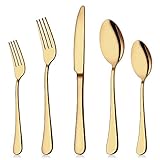
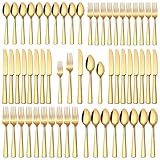

Quick comparison: which gold flatware set fits your table?
| Best for | Recommended specification | Typical set size | Expected market range | Main compromise |
|---|---|---|---|---|
| Daily family use | 18/10 stainless steel, PVD gold, dishwasher-rated | 20 pieces for 4 people | $70–$180 | Higher initial cost |
| Frequent entertaining | 18/10 steel, heavier handles, PVD finish | 45–65 pieces for 8–12 people | $180–$450 | More storage space required |
| Low-cost style update | 18/0 steel, electroplated or coated finish | 20 pieces for 4 people | $30–$80 | Greater risk of rust, fading, or scratches |
| Modern minimalist table | Matte champagne or brushed PVD over 18/10 steel | 16–20 pieces for 4 people | $80–$220 | Matte surfaces can show utensil marks |
| Special-occasion use | Gold electroplate or decorative 18/0 set | 20–24 pieces for 4–6 people | $40–$150 | Usually needs gentler washing |
What makes gold flatware suitable for everyday dining?
Gold flatware is not normally solid gold. It is stainless steel covered with a decorative finish. The underlying steel determines much of the set’s strength and resistance to corrosion, while the coating determines its color, shine, and long-term appearance.
For daily use, look first for 18/10 stainless steel. The first number indicates approximately 18% chromium, which helps the steel resist staining and corrosion. The second indicates approximately 10% nickel, which improves corrosion resistance and gives the metal a smoother, brighter appearance. It is generally the most reassuring specification for flatware used frequently and washed often.
18/0 stainless steel contains chromium but little or no nickel. It can still be serviceable, especially for occasional use, but it is usually more magnetic, somewhat less corrosion-resistant, and more likely to develop discoloration if left wet or exposed to salty or acidic food residue. The number alone does not guarantee quality: thickness, polishing, edge finishing, and the gold coating also matter.
Gold finishes compared: PVD, electroplate, and painted coating
PVD gold
Physical vapor deposition, or PVD, bonds a thin metallic coating to the steel in a vacuum process. Gold-colored PVD commonly uses titanium-based compounds rather than actual gold. It is typically the best choice for everyday flatware because it is harder and more resistant to routine abrasion than many decorative surface coatings.
PVD does not make the pieces scratch-proof. Contact with sharp knives, abrasive detergents, metal scouring pads, and crowded utensil baskets can still mark the surface. However, a well-made PVD set is usually less likely to show rapid color loss than a basic painted or lightly plated set.
Gold electroplate
Electroplating deposits a metal layer onto the stainless-steel base. It can produce a convincing warm gold appearance and is common on decorative or special-occasion flatware. Durability depends heavily on plating thickness and care instructions. A set labeled only “gold finish” without identifying the process deserves more caution.
Colored or lacquered coating
Some inexpensive sets use a surface coating that creates the gold color without the hardness associated with PVD. These sets can be attractive for occasional entertaining, but edges, fork tines, and knife blades are the places most likely to wear first. They are better treated as decorative flatware than as a carefree everyday purchase.
Best set sizes: avoid buying too many or too few pieces
A standard five-piece place setting contains a dinner fork, salad fork, dinner knife, soup spoon, and teaspoon. A 20-piece set therefore normally serves four people. A 30-piece set may serve six, although the exact contents vary; some sets substitute serving utensils for individual pieces.
- For one or two people: a 16- or 20-piece set provides useful spares without filling a drawer.
- For a household of four: begin with 20 pieces, but choose 30 or 40 if you do not run the dishwasher daily.
- For six people: 30 pieces is the minimum for one full meal; 45 pieces is more practical for entertaining or delayed washing.
- For eight to twelve people: buy a 45- to 65-piece collection, checking whether serving spoons, a serving fork, and a slotted spoon are included.
Here is a simple ownership calculation. If a 20-piece set costs $120 and is used by four people for dinner five times per week, it provides approximately 1,040 place settings per year. The first-year cost is about 12 cents per place setting before considering replacements. A cheaper $50 set may cost less initially, but replacing it after the finish deteriorates can make the long-term cost higher.
How the finishes hold up in real kitchens
The most exposed areas are usually knife blades, fork tines, spoon bowls, and the corners of squared handles. Knife blades rub against plates and cutting boards, so they can show fine lines sooner than forks or spoons. Fork tines can bend if the steel is thin, while hollow or very lightweight handles may dent more easily.
Finish fading is often uneven. Handles protected inside a utensil tray may remain bright while the working ends become dull. Dark sauces, hard-water minerals, and detergent residue can also make gold look faded when the coating itself is still intact. A soft rinse and thorough drying may restore the appearance.
| Ownership factor | Lower-risk choice | What to avoid |
|---|---|---|
| Frequent dishwasher use | 18/10 steel with PVD finish and explicit dishwasher guidance | Unidentified coating or hand-wash-only decorative finish |
| Hard water | Bright or brushed finish that can be wiped dry easily | Leaving pieces wet in the dishwasher after the cycle |
| Children or heavy use | Thicker gauge, rounded edges, durable PVD coating | Very thin handles and sharp geometric corners |
| Limited drawer space | 16–20 piece set with compact handles | Large sets containing rarely used serving pieces |
Dishwasher care that protects a gold finish
“Dishwasher-safe” does not mean the finish will remain perfect under every washing routine. Use the gentlest practical cycle, avoid abrasive powders, and follow the manufacturer’s detergent guidance. Do not mix gold flatware tightly with stainless-steel knives or heavy cookware, since repeated contact can cause rubbing and scratches.
- Scrape off acidic or salty food rather than allowing it to dry on the surface.
- Place pieces with space between them, especially knives and serving utensils.
- Keep gold-finished pieces away from cast iron, aluminum cookware, and heavily soiled pans.
- Remove the flatware when the cycle ends, particularly in humid kitchens.
- Dry water spots with a soft cotton or microfiber cloth; never use steel wool.
Hand washing is the safest approach for electroplated or unlabeled finishes. Use warm water, mild dish soap, and a non-abrasive sponge. Avoid bleach, chlorine-based cleaners, citrus-based soaking solutions, and baking soda scrubs. These can attack the coating or leave a cloudy residue.
What to check before buying
- Material: prefer clearly stated 18/10 or 18/8 stainless steel for regular use.
- Finish method: PVD is generally the strongest everyday option; “gold tone” alone is not enough information.
- Weight: a complete five-piece place setting weighing roughly 350–550 grams usually feels more substantial than an ultra-light set, though handle design affects the result.
- Knife construction: inspect whether the knife is stamped or forged, and whether the blade is thick enough for normal table use.
- Set contents: confirm whether a “20-piece” set includes four complete place settings or substitutes serving pieces.
- Replacement availability: established flatware makers such as Oneida, Lenox, Mikasa, Cambridge Silversmiths, and Gourmet Settings offer broad collections, but individual patterns and finishes can be discontinued.
Bottom line
Choose an 18/10 stainless-steel set with a PVD gold finish if you want gold flatware for daily meals and routine dishwasher use. Select a heavier 45- to 65-piece collection for frequent entertaining, or a 20-piece set for a four-person household that washes dishes regularly. Electroplated and lower-cost gold-colored sets can deliver the look for less, but they require more careful washing and are more likely to show wear at knife blades, fork tines, and handle edges.
Ready to decide? Our #1 pick for 2026 is the Daily family use.
Live price & availability on Amazon.




Write Your Review
No reviews yet. Be the first to share your experience!