
As an Amazon Associate, we earn from qualifying purchases made through links on this page.
A song demo has to sell the song: to a publisher, an artist, a band or a collaborator who was not in the room. That takes more than a phone recording. An 88-key arranger built for demo production combines a convincing piano performance, a full backing that follows the song’s structure, a guide vocal where possible, and a clean recording that can be shared the same day.
Only a few weighted 88-key instruments include genuine arranger accompaniment, so this guide compares the three current options on demo terms: how complete a recording each one can produce alone, how the piano sound sits in a demo, microphone support for guide vocals, and how easily the result moves to a computer for finishing and sharing.
What to look for
The shortlist in this guide was built from manufacturer-published specifications and feature lists, matched against the job described in the title. These are the criteria that matter most for this use case:
- A demo-grade piano sound: The piano carries most demos. Modelled resonance, a good stereo grand sample and an action that records dynamics faithfully decide whether the demo sounds professional.
- Backing that follows structure: Styles need intros, variations, fills and endings that the player can trigger while performing, so the demo has verses and choruses rather than one repeated loop.
- Guide vocal capture: A microphone input with basic effects lets a writer sing the demo in the same take. Without one, vocals need a separate interface, which slows the process.
- Recording quality and export: USB audio recording should produce a clean stereo file that can be shared immediately, and USB MIDI allows the performance to be rebuilt with software sounds later.
- Presentation: A demo studio is also a working room. Finish, stand and pedal options affect whether the instrument stays set up and ready for the next session.
The picks in detail
Yamaha DGX-670B — Complete demo platform with mic and audio recording

ASIN: B08RNFJ98M · View on Amazon: https://www.amazon.com/dp/B08RNFJ98M
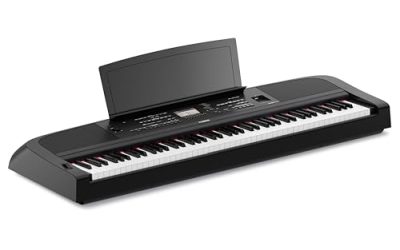
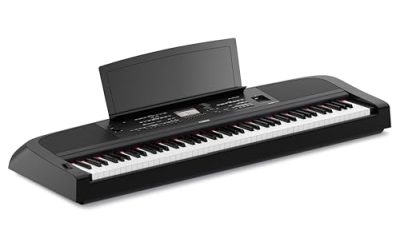
The DGX-670B is a weighted 88-key piano first and an arranger second: the graded hammer action and modelled piano tone support real piano practice, while 263 styles, Smart Chord and Bluetooth audio turn it into a one-person band for songs and demos.
Key features and specifications:
- 88 Graded Hammer Standard keys with matte black key tops
- 263 accompaniment styles with Smart Chord and one-finger follow modes
- Virtual Resonance Modeling piano sound and a 4.3-inch colour display
- Bluetooth audio streaming and a microphone input
- USB audio recording for capturing performances and demos
- Optional furniture stand and three-pedal unit available from Yamaha
Who it fits: Readers whose priority is complete demo platform with mic and audio recording will find this the most direct match in the group.
Limitations to note: No model leads on every criterion here, so check the criteria above against this specification set carefully. Other picks in this comparison cover the formats, libraries or recording systems outside this model’s focus.
Casio CDP-S360 Bundle — Multi-track recorder for layered demos

ASIN: B0B5FGM2VZ · View on Amazon: https://www.amazon.com/dp/B0B5FGM2VZ
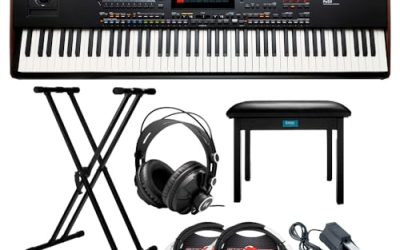
The CDP-S360 packs 700 tones and 200 rhythms into one of the slimmest weighted 88-key bodies available. This bundle version adds a stand, bench and learning materials, which makes it a practical starting point for a home studio or teaching corner that also needs full piano range.
Key features and specifications:
- 88 scaled hammer action keys with textured key surfaces
- 700 tones and 200 auto-accompaniment rhythms
- Built-in six-track recorder for layering song ideas
- Slim, lightweight body that can also run on batteries
- USB MIDI connection and compatibility with the Casio app ecosystem
- Bundle format with stand, bench and learning materials included by the seller
Who it fits: Readers whose priority is multi-track recorder for layered demos will find this the most direct match in the group.
Limitations to note: No model leads on every criterion here, so check the criteria above against this specification set carefully. Other picks in this comparison cover the formats, libraries or recording systems outside this model’s focus.
Yamaha DGX-670WH — White finish platform for studio presentation

ASIN: B08RN4L3ZP · View on Amazon: https://www.amazon.com/dp/B08RN4L3ZP
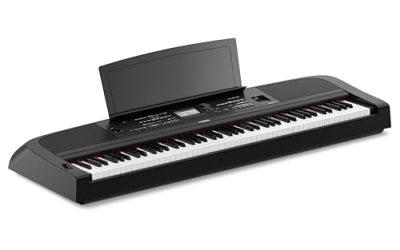
The DGX-670WH is the white-finish version of the DGX-670 platform, with the same weighted action, style library and recording tools. The lighter finish suits bright rooms, studios and venues where a black cabinet would dominate the space.
Key features and specifications:
- 88 Graded Hammer Standard keys in a white finish cabinet
- 263 accompaniment styles with Smart Chord support
- Virtual Resonance Modeling piano sound and colour display
- Bluetooth audio streaming and microphone input
- USB audio recording and score display functions
- Optional matching white furniture stand and pedal unit from Yamaha
Who it fits: Readers whose priority is white finish platform for studio presentation will find this the most direct match in the group.
Limitations to note: No model leads on every criterion here, so check the criteria above against this specification set carefully. Other picks in this comparison cover the formats, libraries or recording systems outside this model’s focus.
Why this shortlist is focused
This category is narrower than it first appears. Many products are marketed with similar language but do not actually match the requirement in the title, whether that is a true auto-accompaniment system in the right key count, the correct juicer mechanism, or the right format for the job. Rather than pad the list with near-matches, this guide includes only the models that genuinely fit the brief and are sold through Amazon in the United States, and compares them in depth. A shorter list of correct options serves a buyer better than a longer list of approximate ones, and the criteria and questions sections above are written to help readers judge any additional model they come across against the same standard.
Quick comparison
| Product | Format | Standout strength |
|---|---|---|
| Yamaha DGX-670B (ASIN B08RNFJ98M) | 88 graded hammer keys | Complete demo platform with mic and audio recording |
| Casio CDP-S360 Bundle (ASIN B0B5FGM2VZ) | 88 scaled hammer keys | Multi-track recorder for layered demos |
| Yamaha DGX-670WH (ASIN B08RN4L3ZP) | 88 graded hammer keys | White finish platform for studio presentation |
Buying notes for this use case
Set up a demo template and reuse it: one registration with the piano, style family and tempo range the writer uses most, microphone level checked, and a USB drive left in the keyboard. Demo production rewards routine; the writers who finish demos are the ones whose setup asks for no decisions before the first take.
Frequently asked questions
Can an 88-key arranger produce a shareable demo on its own?
Yes. On the Yamaha models, a writer can perform with style accompaniment, sing through the microphone input and record the complete performance to USB audio in one take. The Casio builds demos in layers with its six-track recorder and exports by USB MIDI.
What makes a demo sound professional rather than sketched?
Structure and balance: an intro and ending, style variations between verse and chorus, a piano performance with real dynamics, and a guide vocal recorded cleanly rather than shouted across the room at a phone.
Should demos be finished in a DAW afterwards?
For pitching, light finishing helps: trimming silence, setting levels and adding a fade. These keyboards hand work to a computer by USB audio and MIDI, so the same performance can be polished without being replayed.
Which model suits a writer who does not sing?
The Casio CDP-S360, with its multi-track recorder and large tone library, builds instrumental demos in layers. Singing writers gain more from the Yamaha microphone input and one-take audio recording.
Conclusion
For one-take, sing-and-play demos, the Yamaha DGX-670B is the strongest tool here, and the white DGX-670WH offers the identical platform in a lighter finish. Writers who build demos instrumentally, layer by layer, should choose the Casio CDP-S360 and its six-track recorder. All three produce cleaner, more structured demos than a phone recording of a plain piano.
Write Your Review
No reviews yet. Be the first to share your experience!