
A solar car battery charger is a small panel that sits on a dashboard or outside and trickles charge into a 12V battery while the car sits parked. It keeps the battery topped up through weeks of standing, so the car starts when you need it, and the overcharge protection in the controller stops the charge when the battery is full. This guide compares two 20W solar maintainers built for that job.

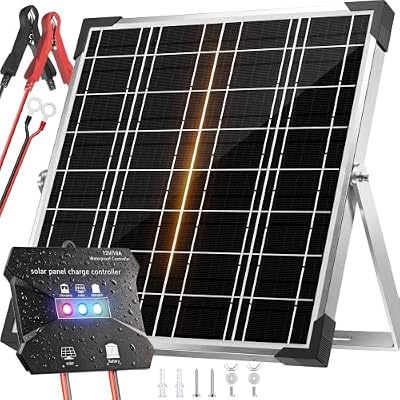
Both chargers below are 20W panels with an MPPT controller, both work on 12V batteries, and both stop charging when the battery is full. The SUNER POWER panel uses a 3-stage charging design and meets a UL specification on its listing, while the Voltset panel adds IP67 weatherproofing and a 10A MPPT controller. Both panels are maintainers, so neither one will revive a flat battery on its own. Read the guide, match the charger to where the car sits, and pick the one that fits your battery and your parking spot.
Quick Picks
As an Amazon Associate we earn from qualifying purchases
| Product | Best for | Key spec from title |
|---|---|---|
| SUNER POWER 20W Solar Battery Charger | A 3-stage charge with UL specification met | 20W, MPPT, IP65, 3-stage charging |
| Voltset 20W Solar Battery Charger | Weatherproof charging with full protection | 20W, 10A MPPT, IP67, overcharge protection |
How to Choose
Wattage and what 20W maintains
A 20W solar panel is a maintainer, not a fast charger, and knowing the difference saves disappointment. It tops up a healthy 12V battery and holds it at full charge through weeks of standing, but it will not revive a flat battery or run heavy loads. Both chargers in this guide are 20W, which suits a car, a boat, or an RV that sits unused between trips. Judge the panel by the battery it maintains, not by the wattage alone, and remember that a shaded dashboard gives far less power than a panel in direct sun. Check the battery type on the listing before you order.
MPPT controllers and charging stages
The controller decides how well a solar charger works, because it turns the panel’s raw output into a charge the battery can use. An MPPT controller tracks the panel’s best power point and squeezes more charge from the same sunlight than a basic controller, and both chargers here use one. The SUNER POWER controller charges in three stages, bulk, absorption, and float, which fills the battery and then holds it gently. The Voltset controller is rated 10A and manages the same job with overcharge and over-discharge protection built in. A good controller protects the battery as well as charging it. A controller that protects the battery is worth more than a bigger panel.
Overcharge protection and safe use
Overcharge protection is the feature this guide is built around, and it works through the controller rather than the panel. The SUNER POWER controller stops charging when the battery is full and resumes when the battery drains, so the panel can stay connected without cooking the battery. The Voltset controller adds overcharge, over-discharge, short-circuit, and reverse-polarity protection, plus a cut-off that stops the battery draining back into the panel at night. The SUNER POWER listing states that it meets a UL specification, which is a safety claim from the listing itself. Read the protections on the listing, connect the clips the right way round, and keep the panel clear of damage. Trust the controller.
Weatherproofing, mounting and cables
A solar charger lives outside or on a dashboard, so weatherproofing and mounting decide whether it survives the season. The SUNER POWER panel is rated IP65, which means it resists rain and dust, while the Voltset panel is rated IP67, which is a higher level of water resistance on the listing. The Voltset panel includes a 360-degree adjustable bracket for aiming at the sun, plus alligator clips and O-rings for connecting to the battery. Check the cable length on the listing, because a short cable limits where the panel can sit, and aim the panel at the sun for the best charge. A panel that cannot reach the sun cannot charge the battery.
The 2 Best Options
SUNER POWER 20W Solar Battery Charger
The SUNER POWER charger suits buyers who want a 3-stage charge and a UL specification met on the listing. Its 20W panel feeds a 12V battery through an MPPT controller, which charges in bulk, absorption, and float stages, and the controller stops charging when the battery is full and resumes when it drains. The panel is rated IP65 against rain and dust, works with flooded, gel, AGM, SLA, and LiFePO4 batteries, and measures 20.15 x 13.78 x 0.7 inches at 5.14 lb. This is the charger to buy when a proven 3-stage charge and a stated safety specification matter most.
Specs
- 20W solar panel
- Model BC-20W-Pro
- 12V DC output
- MPPT controller
- IP65 waterproof rating
- 3-stage charging: bulk, absorption, float
- Compatible with flooded, gel, AGM, SLA and LiFePO4 batteries
- 20.15 x 13.78 x 0.7 in dimensions
- 5.14 lb weight
- UL specification met on listing
- Controller stops charging when battery is full
- Controller resumes charging when battery drains
- Suitable for cars, boats and RVs
- Maintains 12V batteries
- Panel for outdoor use
- Trickle charge design
- Battery maintainer
- Dashboard or outdoor placement
- Works with five battery types
- Panel mounts on dashboard or outside
- Controller manages charge automatically
- Compact 20W panel size
- Rain and dust resistant build
- 20W output for 12V systems
Best for: A 3-stage charge with a UL specification met for a parked car, boat, or RV.
Watch out for: The panel is a maintainer, so it will not revive a flat battery on its own.
Voltset 20W Solar Battery Charger
The Voltset charger suits buyers who want the strongest weatherproofing and the widest protection in this guide. Its 20W monocrystalline panel feeds a 12V battery through a 10A MPPT controller, which guards against overcharge, over-discharge, short circuits, and reverse polarity, and cuts off at night so the battery cannot drain back into the panel. The panel is rated IP67, works from minus 40F to 185F, and includes a 360-degree adjustable bracket, alligator clips, and O-rings. At 4 lb with tempered glass and aluminium, it is built for outdoor use. The wide temperature range suits every season. This is the charger to buy when weatherproofing and protection matter most.
Specs
- 20W monocrystalline panel
- Model VS-20W
- 12V output
- 10A MPPT controller
- IP67 waterproof rating
- Operating range minus 40F to 185F
- Overcharge protection
- Over-discharge protection
- Short-circuit protection
- Reverse-polarity protection
- Night-drain cut-off
- 360-degree adjustable bracket
- Alligator clips included
- O-rings included
- Tempered glass and aluminium build
- 4 lb weight
- 1-year manufacturer warranty
- 25-year panel lifespan per listing
- Suitable for cars, boats and RVs
- Battery maintainer
- Monocrystalline cells for strong output
- Bracket aims panel at the sun
- Clips and O-rings in the box
- Wide temperature range for all seasons
- Warranty covers one year
- 10A controller for steady charging
Best for: Weatherproof charging with full protection for a battery that sits outside.
Watch out for: The panel needs direct sun to work well, so a shaded dashboard will give little charge.
Which One Fits Your Situation
A car parked for weeks at a time
Pick the SUNER POWER charger when the car sits for weeks between drives. Its 3-stage charge fills the battery and then holds it gently, the controller stops charging when the battery is full, and the IP65 panel resists rain on a dashboard or outside. The panel works with flooded, gel, AGM, SLA, and LiFePO4 batteries, so it fits most cars on the road.
A boat or RV in storage
Pick the Voltset charger when the battery sits in a boat or an RV through the off-season. Its IP67 rating handles rain and spray, the 10A MPPT controller guards against overcharge and over-discharge, and the night-drain cut-off stops the battery losing charge after dark. The 360-degree bracket aims the panel at the sun, and the alligator clips and O-rings connect to the battery terminals.
A sunny driveway with no garage power
Pick the SUNER POWER charger when the car parks on a sunny driveway with no socket nearby. Its 20W panel needs no mains power, the MPPT controller makes the most of the sunlight, and the 3-stage charge keeps the battery topped up day after day. The panel measures 20.15 x 13.78 x 0.7 inches, which fits a dashboard or a sunny spot, and the controller resumes charging whenever the battery drains.
A first solar maintainer for a beginner
Pick the Voltset charger when you have never used a solar maintainer and want one that protects itself. Its controller guards against overcharge, over-discharge, short circuits, and reverse polarity, so a wrong connection or a full battery will not damage anything. The 1-year manufacturer warranty backs the build, the bracket and clips are included, and the panel needs no setup beyond aiming it at the sun.
Common Mistakes
- Buying a 20W panel to revive a flat battery, then finding a maintainer can only top up a healthy battery and hold it there, while the flat one stays flat.
- Placing the panel in shade, then wondering why the battery drains despite the charger being connected, and the dashboard never seeing direct sun.
- Ignoring the controller protections on the listing, then connecting the clips the wrong way round and damaging the battery in a single careless moment.
- Choosing a panel with a short cable, then finding it cannot reach from the sunny spot to the battery terminals, and the panel sitting useless in the shade.
- Leaving the panel dirty or covered, then losing charge because the cells cannot see the sun through a layer of dust and leaves.
Frequently Asked Questions
Will a 20W solar charger revive a flat battery?
No, a 20W panel is a maintainer, not a recovery charger, because it trickles a small charge into a healthy battery and holds it at full charge. A flat battery needs a mains charger or a jump start first, and the solar panel then keeps it topped up.
Does overcharge protection really stop the charge?
Yes, the controller in both chargers stops charging when the battery is full and resumes when the battery drains, so the panel can stay connected without cooking the battery. The Voltset controller adds over-discharge, short-circuit, and reverse-polarity protection, while the SUNER POWER controller uses a 3-stage charge that holds the battery gently. Protection comes from the controller, not the panel alone.
Can I leave a solar charger connected all winter?
Yes, both chargers are built to stay connected, because the controller stops charging when the battery is full and the panels are rated against rain and dust. The Voltset panel works from minus 40F to 185F, and the SUNER POWER panel is rated IP65, so winter weather will not harm them.
Where should I put the solar panel?
Put the panel where it gets direct sun for as much of the day as possible, because shade cuts the charge sharply. A dashboard works when the car faces the sun, while an outside spot with the adjustable bracket works better for a parked car or an RV.


Write Your Review
No reviews yet. Be the first to share your experience!