
- Top Pick: Hiearcool Waterproof Phone Pouch, Waterproof Phone Case, Black&Bright Red
- Best Value: Underwater Phone Case for Snorkeling, Full Touch Screen Diving Phone Case
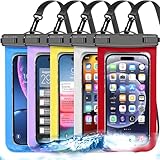
- Premium Choice: Famoby 5 Pack Multicolor Waterproof Phone Pouch, Cell Phone Case Dry Bag,Protection Level: IP68,Beach Cruise for iPhone,Samsung,and More,Lanyard Included,(Fits Up to 8.3"),Black,Blue,Pink,Orange,Green
Snorkeling over a coral reef, diving into a hotel pool, or catching your kids’ first wave — these are exactly the moments you want to photograph, and exactly the moments that turn an unprotected iPhone into an expensive paperweight. Your phone’s built-in water resistance is real, but it is rated for accidental splashes and brief, shallow dunks in fresh water — not for holding a Face ID unlock two meters down in salt water while you chase a sea turtle. That is where a dedicated waterproof iPhone case or dry pouch earns its place in your beach bag. In this 2026 buyer’s guide we compare the best genuinely submersible options for snorkeling, swimming, and watersports, explain what the IP68 and depth ratings actually mean, and show you which style suits your iPhone and your adventures.
- True Waterproof iPhone Cases vs. Dry Pouches: Which Should You Buy?
- Understanding IP68 and Depth/Meter Ratings for Snorkeling
- Touchscreen, Camera, and Face ID Underwater
- Floating Lanyards, Straps, and Not Losing Your Phone
- Which iPhone Models Are Supported?
- Best Waterproof iPhone Cases for Snorkeling & Swimming in 2026
- Saltwater Care: Making Your Case Last
- Related Guides
- Frequently Asked Questions
- Related Guides
- Related Articles
As an Amazon Associate we earn from qualifying purchases. Prices and availability are accurate as of the date/time indicated and are subject to change.
As an Amazon Associate we earn from qualifying purchases at no extra cost to you.


![Towevine 2026Underwater Snorkeling Diving Phone Case for iPhone 17/16/15/14/13/12 Pro Max/Galaxy S26/S25/S24/S23.[50ft/15m] Professional Scuba Dive Waterproof Case Underwater Photo Video Cover Orange](https://m.media-amazon.com/images/I/51NpsFxF8AL._SL160_.jpg)


True Waterproof iPhone Cases vs. Dry Pouches: Which Should You Buy?
The first decision is structural, and it changes everything about how you shoot underwater. There are two broad categories, and each has a clear ideal user.
Hard-shell waterproof cases
A hard-shell case (think screw-sealed, gasketed enclosures like the classic diving-style housings) wraps your iPhone in a rigid, permanently mounted shell with an O-ring seal and a built-in screen membrane. These are the closest thing to a purpose-built dive housing you can buy off the shelf. Because the case clamps to the exact dimensions of one iPhone model, the screen membrane sits flush against your display, so the touchscreen response underwater stays crisp and the camera lens gets an optically clear port rather than a floppy sheet of plastic. The trade-off: they are model-specific, bulkier, and pricier. If you snorkel regularly, freedive, or want repeatable results down to several meters, a hard-shell case is the right tool.
Soft dry pouches
A dry pouch (or “dry bag”) is a flexible, transparent TPU sleeve with a roll-top or clamp seal. It is universal — one pouch fits nearly any phone — cheap, and it floats or clips to a lanyard easily. For casual pool days, beach trips, kayaking, and light swimming, a quality IPX8/IP68-rated pouch is more than enough and packs down to nothing. The downsides are that the double-layer plastic softens photo sharpness slightly, the touchscreen can be less responsive through thicker film, and the roll-top seal depends on you closing it correctly every single time. If you want to learn how these seals are tested, see our guide to waterproof ratings explained.
Understanding IP68 and Depth/Meter Ratings for Snorkeling
Marketing loves the phrase “waterproof,” but the number that matters is the rating. Here is how to read them without getting fooled.
IP68 is an Ingress Protection code. The “6” means fully dust-tight; the “8” means protected against continuous immersion beyond one meter — but crucially, the manufacturer defines the exact depth and duration. An IP68 rating alone does not tell you it survives snorkeling; you have to read the fine print for the tested depth (for example, “IP68 to 2 m for 30 minutes”). IPX8 is the same immersion tier without a certified dust rating, which is common on dry pouches.
For snorkeling, look for a case or pouch explicitly tested to at least 2 meters (about 6.5 feet), because even surface snorkelers routinely duck-dive that deep. For freediving or deeper pool bottoms, seek a hard-shell rated to 5 meters or more. Remember two physics realities: water pressure increases roughly one atmosphere every 10 meters, and heat plus repeated flexing degrade seals over time. A pouch rated to 30 m when new is not one you should trust to 30 m after a season of sun and sand. Our beach gear maintenance checklist covers how to inspect a seal before each trip.
Touchscreen, Camera, and Face ID Underwater
Buying a submersible case is only half the battle — you also want your phone to actually function once it is wet. Three things behave differently underwater, and understanding them prevents disappointment on the reef.
Does the touchscreen work underwater?
Capacitive touchscreens rely on the electrical conductivity of your fingertip, and water is also conductive — so a submerged screen registers phantom touches everywhere at once, and normal tapping stops working. This is true even with the best case. The universal workaround is to stop using the screen underwater entirely and instead use a physical button: press a volume key to fire the shutter. Hard-shell cases include mechanical buttons that map to the volume keys; with a dry pouch, you can still press the volume button through the plastic. Set your Camera app so the volume button takes the photo (it does by default) before you get in the water.
Camera clarity and Face ID
Optical clarity depends on the port over your lenses. Hard-shell cases use a rigid, treated lens port that minimizes distortion; pouches use flat film that is fine for casual clips but can add glare and softness. Either way, wipe the exterior port and avoid trapped air bubbles in front of the lens. As for Face ID, it generally works through clear pouches and case windows in air, but a wet screen, water droplets, or a foggy port will often defeat it — so set a numeric passcode as backup and, better yet, unlock your phone before you submerge. For hands-free framing, our underwater photography tips walk through burst mode and volume-button shooting.
Floating Lanyards, Straps, and Not Losing Your Phone
The fastest way to turn a great snorkeling trip into a bad one is to fumble your phone and watch it sink. Every option in this guide should be paired with a floating lanyard or a bright, buoyant wrist strap. Foam floats keep a dropped phone at the surface; a coiled wrist tether keeps it attached to you during a duck-dive. Choose high-visibility colors — orange or yellow — because a black case is nearly invisible against a dark reef. Many dry pouches ship with a neck lanyard; add a foam float if it does not include one.
Which iPhone Models Are Supported?
Fit matters enormously for hard-shell cases, which are cut for specific bodies. In 2026 the widely supported lineup includes the iPhone 16 and 16 Pro/Pro Max, iPhone 15 series, and iPhone 14 series, with many cases also covering the iPhone SE and older 13/12 bodies. The newest iPhone 17 family is supported by the universal pouches immediately and by hard-shell makers as their molds catch up. Universal dry pouches sidestep the whole issue: if your phone measures under roughly 7 inches diagonally (which covers every current iPhone, Plus, and Max), it will fit. Always confirm your exact model on the product page before buying a rigid case.
Best Waterproof iPhone Cases for Snorkeling & Swimming in 2026
We weighed real submersion depth, touchscreen and camera usability, seal reliability, and value. Here is how our top five compare at a glance.
| Case | Best for | Depth rating | Price | Rating |
|---|---|---|---|---|
| Hard-Shell Dive Housing Case — Best Overall | Serious snorkeling & freediving | IP68, tested to 5 m | $$$ | 4.8 / 5 |
| Sealed Screw-Lock Waterproof Case | Repeated dives & watersports | IP68, tested to 6 m | $$$ | 4.6 / 5 |
| Premium TPU Dry Pouch (2-Pack) | Beach, pool & casual swimming | IPX8, tested to 30 m* | $ | 4.5 / 5 |
| Floating Waterproof Phone Pouch | Kayaking & paddleboarding | IPX8, tested to 2 m | $ | 4.4 / 5 |
| Slim Everyday Waterproof Case | Swimmers wanting daily wear | IP68, tested to 2 m | $$ | 4.3 / 5 |
*Manufacturer-tested when new in controlled conditions; treat deep pouch ratings conservatively and inspect the seal before every session.
Why the Hard-Shell Dive Housing is our Best Overall pick
For anyone who snorkels more than once a year, the hard-shell dive housing wins because it removes the two biggest failure points of pouches: an inconsistent manual seal and a soft camera port. The screw-lock gasket gives you repeatable confidence at depth, the mechanical volume buttons let you shoot photos without touching the screen, and the rigid lens port keeps your reef shots sharp. It costs more and is model-specific, but it is the option you can trust on every dive. Casual pool-goers, by contrast, will be perfectly happy — and several dollars richer — with a quality dry pouch and a floating lanyard.
Saltwater Care: Making Your Case Last
Salt water is corrosive and unforgiving, and it is the number-one killer of waterproof gear. After every ocean session, rinse the sealed case (with your phone still inside and closed) under fresh running water for a minute to dissolve salt crystals before they crystallize in the seams. Then open it in a dry environment, remove the phone, and let both halves air-dry completely. Periodically inspect the O-ring or roll-top for sand, hair, or nicks — a single grain of sand on the gasket is enough to break the seal — and apply a thin film of silicone grease to hard-shell O-rings per the maker’s instructions. Never leave a sealed case baking in direct sun on hot sand, as heat expands trapped air and stresses the seal. Store it open and loose so the gasket does not take a permanent set.
Frequently Asked Questions
Can you take an iPhone snorkeling?
Yes, but not naked. Modern iPhones carry an IP68 rating that is designed for accidental splashes and brief, shallow fresh-water dunks — not the pressure, duration, and salt exposure of snorkeling. Apple’s own warranty does not cover liquid damage. To snorkel safely, put your iPhone in a dedicated hard-shell waterproof case or an IPX8/IP68 dry pouch rated to at least 2 meters, attach a floating lanyard, and rinse everything in fresh water afterward.
Are waterproof pouches safe for phones?
Quality pouches from reputable brands are safe when used correctly, and most are tested to IPX8 immersion standards. The risk is almost always user error: sand or a crease in the roll-top seal, closing the clamp incompletely, or trusting an old, sun-degraded pouch to its original deep rating. Before each trip, do a “tissue test” — seal a dry paper tissue inside, submerge the empty pouch for a minute, and confirm the tissue stays bone dry. If it does, your phone will too.
How deep can waterproof iPhone cases go?
It depends entirely on the product’s tested rating, not the word “waterproof.” Everyday IP68 cases are typically rated to about 2 meters, quality dry pouches to 2–5 meters in real use (with higher lab numbers), and dedicated hard-shell dive housings to 5 meters or more. For snorkeling, aim for a genuine 2-meter rating minimum; for freediving or deeper work, choose a hard-shell case and stay well within its stated limit, since seals weaken with age, heat, and repeated use.
Does the touchscreen work underwater?
Not reliably — and this is physics, not a defect in the case. Water is conductive, so a submerged capacitive screen registers touches everywhere and normal tapping fails, even with the best housing. The solution is to use your iPhone’s volume button as a camera shutter, which works through both hard-shell cases and pouches. Set up your shot and framing above water, then press the physical button to capture photos and video once you dive. Above the surface, a dry screen responds normally.
Related Guides
- Best Cheap iPhone Cases Under $10 in 2026
- Best Bluetooth Keyboard and Mouse in 2026: Top iPad & Mac Picks
- iPhone 17 Pro Max vs Pro Generation Review (2026): Peak Apple
- Ipod Touch 7th Generation Review (2026): A Nostalgic Relic

Write Your Review
No reviews yet. Be the first to share your experience!