
What does cottage cheese taste like? It usually tastes mild, fresh, lightly salty, and slightly tangy, with soft curds in a creamy liquid; the exact experience changes noticeably with fat level, curd size, moisture, and whether it is whipped or flavored.
- The Basic Flavor of Cottage Cheese
- How Texture Changes the Eating Experience
- Low-Fat, Full-Fat, Whipped, and Flavored Varieties Compared
- What the Main Flavored Types Taste Like
- Which Cottage Cheese Should You Choose?
- How to Make Cottage Cheese Taste Better
- Storage and Freshness Details That Affect Taste
- Frequently Asked Questions
As an Amazon Associate we earn from qualifying purchases at no extra cost to you.


The Basic Flavor of Cottage Cheese
Plain cottage cheese has a gentle dairy flavor rather than the sharp, aged taste associated with cheddar or blue cheese. Its acidity is similar to a mild yogurt, but the curds give it a more substantial, lumpy texture. Some varieties taste almost neutral, while others have a distinct cultured tang and a salty finish.
The liquid surrounding the curds is usually milk, cream, and whey. It may make the first bite seem wet or loose, especially in “large curd” or high-moisture products. Fresh cottage cheese should smell clean and milky. A strong sour, yeasty, bitter, or unpleasant odor suggests that it is past its best and should not be eaten.
How Texture Changes the Eating Experience
Cottage cheese is defined as much by texture as by flavor. The curds are small pieces of coagulated milk protein, and the package may contain a thin or thick dressing around them.
- Small curd: The pieces are usually around 2–5 mm wide. They blend into the creamy dressing and feel soft, fine, and almost spoonable like thick yogurt.
- Large curd: The pieces are often around 6–12 mm wide. They are easier to notice, with a gentle bounce or soft crumble when chewed.
- Dry or drained: Less liquid clings to the curds, producing a firmer, more crumbly texture. This is useful for cooking and spreading.
- High-moisture: The curds may slide through a looser dressing. It tastes creamier but can seem watery if you prefer thick dairy products.
- Whipped: The curds are blended into a smooth, airy cream. It has little or no lumpiness and may taste slightly less tangy because the texture distributes the flavor evenly.
Low-Fat, Full-Fat, Whipped, and Flavored Varieties Compared
Fat level affects more than calories. Fat carries flavor and softens acidity, so reduced-fat cottage cheese can taste sharper, saltier, or more watery than a full-fat version. Full-fat cottage cheese generally has a rounder milk flavor and a smoother mouthfeel.
| Variety | Typical fat content | Typical moisture and curd feel | Flavor profile | Best use |
|---|---|---|---|---|
| Low-fat | About 0–2% milk fat | Loose to moderately thick; curds can feel slightly rubbery or grainy | Brighter tang, more noticeable salt, lighter dairy finish | Bowls, savory toppings, recipes where other ingredients add richness |
| Reduced-fat | About 2–4% milk fat | Usually moist with a soft, moderately creamy dressing | Balanced tang and creaminess | Everyday eating and cooking |
| Full-fat | About 4–5% milk fat | Thicker, silkier dressing; curds feel more tender | Rich, mild, milky flavor with softer acidity | Eating plain, fruit bowls, dips, and creamy recipes |
| Whipped | Varies by recipe, commonly 0–5% | Smooth and aerated; little or no visible curd | Mild, creamy, and evenly blended | Toast, dips, smoothies, and people who dislike lumps |
| Flavored | Varies by product | Usually smooth or small-curd with fruit pieces or flavoring | Sweet, fruity, or dessert-like; often less noticeably salty | Breakfast, snacks, and quick chilled desserts |
These are practical ranges rather than universal specifications. Labels differ by recipe, and “low-fat,” “full-fat,” and “whipped” do not guarantee a particular curd size or thickness.
What the Main Flavored Types Taste Like
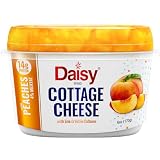
Fruit-flavored cottage cheese tends to be sweeter than plain cottage cheese and may contain fruit purée, pieces, or a separate fruit compartment. Strawberry, peach, pineapple, and blueberry styles usually combine mild dairy tang with a jam-like sweetness. The fruit can also make the product seem more moist.
Vanilla versions often taste like a lightly tangy custard rather than plain cheese. Honey or maple-style varieties add sweetness but can still retain cottage cheese’s salty dairy note. Savory versions with herbs, chives, black pepper, or vegetables taste closer to a soft dip and are commonly used with crackers, baked potatoes, or vegetables.
If you are uncertain about the flavor, begin with a full-fat or reduced-fat plain variety and add your own fruit, cinnamon, jam, herbs, or pepper. This lets you control sweetness and salt while revealing the base flavor.
Which Cottage Cheese Should You Choose?
| Your situation | Best starting choice | Why |
|---|---|---|
| You dislike lumpy foods | Whipped or blended cottage cheese | Smooth texture removes the distinct curd sensation |
| You want the richest plain flavor | Full-fat, small-curd | More fat softens acidity and gives a creamier finish |
| You prefer a lighter, sharper dairy taste | Low-fat or reduced-fat | Less fat makes the tang and salt more prominent |
| You need a topping for toast or potatoes | Thick, small-curd, or drained cottage cheese | It stays in place instead of spreading liquid across the food |
| You want a quick sweet snack | Fruit-flavored or plain with fresh fruit | Fruit balances the tang and adds sweetness |
| You are cooking with it | Plain reduced-fat or full-fat | Neutral flavor works in batters, fillings, sauces, and dips |
How to Make Cottage Cheese Taste Better
Serve it well chilled if you want a firmer, cleaner flavor. Stir the container before serving so the dressing is distributed evenly; otherwise, the first portion may be thick and the last portion unusually wet. If it seems watery, drain it through a fine strainer for 5–15 minutes. Draining concentrates the dairy flavor and produces curds that work better on toast or in recipes.
- For a sweet bowl, add berries, sliced banana, cinnamon, nuts, or a small amount of honey.
- For a savory bowl, add black pepper, chopped herbs, cucumber, tomato, or olive oil.
- For a smoother texture, blend for 30–60 seconds until no obvious curds remain.
- For a thicker dip, combine it with herbs and allow it to chill for 20–30 minutes before serving.
Storage and Freshness Details That Affect Taste
Cottage cheese is perishable and should remain refrigerated. Keep it covered, use a clean spoon, and follow the package’s use-by guidance. Once opened, quality commonly declines within several days, even when the product still looks acceptable. Separation of liquid is normal and can often be corrected by stirring; discoloration, mold, gas production, or a harsh sour smell is not a normal texture change.
The curds may become firmer and the dressing thinner after repeated temperature changes. Avoid leaving the container at room temperature for extended periods, because warmth can quickly change both flavor and texture. Do not return unused portions to the original container after they have been served in a bowl.
Frequently Asked Questions
Does cottage cheese taste like cheese?
It has a mild cheese-like dairy flavor, but it is much fresher, softer, and less intense than aged cheeses. Its taste is closer to lightly salted cultured milk with soft curds.
Is cottage cheese sour?
It can be mildly tangy, but it should not taste aggressively sour or bitter. Reduced-fat varieties often make the tang more noticeable because they contain less fat to soften it.
Can you taste the curds?
Yes, in small-curd and large-curd varieties. Small curds blend into the dressing, while large curds provide a more obvious soft, moist, slightly springy bite. Whipped cottage cheese largely removes this experience.
Why does some cottage cheese taste salty?
Salt is commonly added to the dressing for flavor and preservation. The perceived saltiness depends on the recipe, the amount of liquid, and whether you eat it plain or with sweet or savory toppings.
Ready to decide? Our #1 pick for 2026 is the Low-fat.
Live price & availability on Amazon.








Write Your Review
No reviews yet. Be the first to share your experience!