
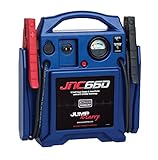
- Top Pick: Clore Automotive Jump-N-Carry JNC660 1700 Peak Amp 12 Volt Jump Starter , Blue
- Best Value: Clore Automotive Jump-N-Carry JNC1224 3400/1700 Peak Amp 12/24V Jump Starter
- Premium Choice: 8000A 12V/24V Jump Starter for Large Gas & Diesel Engines, Heavy-Duty Portable Battery Booster Pack for Trucks, RVs & Commercial Vehicles with Force Start, Digital Display, LED Light & USB Charging
A dead battery on a commercial fleet truck or a diesel engine in cold weather is not an inconvenience — it is lost revenue, missed deliveries, and a mechanic’s visit you could have avoided. The best commercial jump starter eliminates that dependency entirely, putting enough cranking amps in a portable unit that a single operator can revive a dead battery in under two minutes without waiting for a tow or a booster cable from another vehicle.
Not every jump starter marketed for commercial use actually delivers. Some units list peak amperage figures that sound impressive but collapse under the sustained load of a large diesel engine. Others lack the safety protections that prevent damage to modern vehicle electronics when connecting to a battery with residual charge. The difference between a unit that earns its place in a fleet van and one that sits unused in a storage compartment comes down to real-world amperage consistency, voltage flexibility, and whether the manufacturer designed the product around the abuse a commercial environment demands. This roundup compares published specifications, current pricing, and aggregated owner feedback across eight models to identify where those lines fall.
As an Amazon Associate we earn from qualifying purchases at no extra cost to you.


Quick Picks
| Product | Best for | Price |
|---|---|---|
| Clore Automotive JNC660 | Fleet reliability on a budget | under $150 |
| Clore Automotive JNC1224 | Heavy-duty 12V and 24V operations | under $350 |
| 8000A 12V/24V Jump Starter | Large diesel engines and RVs | under $250 |
| DEWALT DXAEPS14 | Tire inflation plus jump starting | $209 |
| 8000A 12V/24V Heavy Duty Jump Starter | Tractors and mixed commercial fleets | under $250 |
| ZEHON 12Volt Proseries | Entry-level commercial use | under $80 |
| UTRAI 8000A Jump Starter | All-in-one gas and diesel support with compressor | under $90 |
| Clore Automotive JNC770R | Premium features at mid-range cost | under $200 |
How We Picked
We evaluated each unit on four criteria that determine whether a jump starter functions reliably in commercial settings: sustained cranking current versus marketed peak amperage, dual-voltage compatibility for fleets mixing 12V and 24V equipment, build quality relative to the price tier, and the presence of integrated tools such as air compressors or USB charging that reduce the number of separate devices a technician must carry. Owner feedback on recurring failure modes and cold-weather performance informed our weighting of each factor.
The 8 Best Commercial Jump Starter in 2026
Clore Automotive JNC660 1700 Peak Amp
This is the default recommendation for fleet operators who want proven commercial reliability without paying a premium. The JNC660 is built around a high-output AGM cell that Clore Automotive designed specifically for repeated deep-cycle discharge, meaning it tolerates weekly use far better than consumer-grade lithium alternatives. Owners consistently praise its ability to crank large gas engines even after sitting unused for months. The tradeoff is single-voltage output at 12V, which limits it if your fleet includes 24V diesel equipment. It is also heavier than portable lithium units, making it better suited to a van or workshop than a backpack kit. Skip this if you need 24V support or weight-sensitive portability.
Clore Automotive JNC1224 3400/1700 Peak Amp 12/24V
For mixed-fleet operations, the JNC1224 covers both voltage standards in a single unit, delivering 3400 peak amps on 24V and 1700 on 12V. This makes it the most versatile entry in Clore Automotive’s commercial line, capable of jump-starting heavy trucks, buses, and standard vehicles without switching equipment. Build quality matches the JNC660’s reputation for longevity under repeated use. The cost is the primary barrier — for under $350, it is the most expensive unit here, and its weight makes it less practical for mobile technicians who already carry heavy tool loads. Skip it if your fleet is entirely 12V or if budget is tight.
8000A 12V/24V Jump Starter with Force Start
This unit claims 8000 peak amps across both 12V and 24V outputs, positioning it as a brute-force solution for large diesel engines that resist conventional jump starters. The Force Start feature provides a secondary boost for deeply discharged batteries, and owners report success on engines where lower-rated units simply could not generate enough current. Digital display and USB charging add practical value for technicians who need to monitor connection status without guessing. The con is size and weight — this is not a compact unit, and the 8000A figure likely reflects a brief peak rather than sustained output, so expectations should be calibrated accordingly. Skip it if you need something light for regular carry.
DEWALT DXAEPS14 2000 Peak Amp with Air Inflator
The DXAEPS14 consolidates two commercial tasks into one tool: jump starting with 2000 peak amps and inflating tires to 120 PSI without a separate air compressor. For fleet maintenance where tires lose pressure between inspections, this dual function saves a trip to the shop or a second device in the van. The DEWALT brand carries strong owner trust for durability, and the digital interface simplifies PSI selection. The limitation is that 2000 peak amps places this unit below the 8000A competitors for the largest diesel applications. It also does not offer 24V output. Skip it if your primary need is jumping large commercial diesel engines rather than light truck and van support.
8000A 12V/24V Heavy Duty Jump Starter for Trucks and Tractors
For under $250, this unit sits in the same performance tier as the other 8000A model but targets a slightly broader range of equipment including tractors and pickup trucks. Dual 12V/24V compatibility makes it suitable for agricultural and mixed commercial operations where voltage standards vary across the vehicle lineup. Owners appreciate the included clamps rated for the stated amperage and the compact form factor relative to its output claims. The con is brand recognition — this is a lesser-known manufacturer compared to Clore Automotive or DEWALT, and long-term parts availability is harder to confirm. Skip it if you prioritize warranty support from an established commercial brand.
ZEHON 12Volt Proseries Car Battery Jump Start Commercial Box
The ZEHON Proseries occupies the entry-level commercial tier for under $80, offering a straightforward 12V jump start capability without extra features. It is a functional choice for small fleet operators or service vehicles that need occasional backup rather than daily heavy use. The price is its strongest argument, and owners note it performs adequately on standard gasoline engines and light-duty applications. The lack of 24V support, no integrated tools, and lower overall build quality compared to mid-range options mean it will not satisfy demanding operators. Skip it if you handle diesel engines above light-duty or need equipment that tolerates daily commercial use.
UTRAI 8000A Jump Starter with Air Compressor 160PSI
For under $90, the UTRAI combines 8000 peak amps of jump-starting capability with a 160 PSI air compressor, making it one of the highest-value all-in-one units available. It supports all gas engines and diesel engines up to 12 liters, covering most commercial vehicles in a single package. The price-to-feature ratio is difficult to challenge at this tier. The con is that a under-$90 unit with these specifications likely reflects cost-cutting on internal components or sustained output consistency, and owner reports on long-term durability are mixed. Skip it if you need guaranteed reliability for daily professional use or if your engines exceed 12L diesel displacement.
Clore Automotive JNC770R 1700 Peak Amp Premium
The JNC770R adds refined features to the proven JNC660 platform, including an improved display and updated connection indicators for under $200. It maintains the same 1700 peak amp output and the AGM cell architecture that earned Clore Automotive its commercial reputation. For operators who want the reliability of the JNC660 with better usability features, this is a meaningful upgrade without a dramatic price increase. The single-voltage limitation remains, and the added features may not justify the premium over the base JNC660 if your use is purely functional. Skip it if the JNC660’s lower price covers your needs and you do not value the incremental interface improvements.
Buying Guide
Understanding Peak Amp Ratings
Peak amperage is the single number manufacturers use to market jump starters, but it represents an instantaneous burst rather than a sustained output. A unit advertising 8000 peak amps does not deliver 8000 amps continuously — that figure may apply for milliseconds at initial contact. For commercial applications, the relevant question is whether the unit sustains enough current long enough to turn over a large diesel engine under cold conditions. Look for units from manufacturers like Clore Automotive that specify both peak and cold cranking amps, and treat 8000A claims from unknown brands as directional rather than literal.
Voltage Compatibility for Mixed Fleets
Commercial operations frequently include vehicles at different voltage standards: vans and light trucks at 12V, buses and heavy equipment at 24V. A jump starter that only supports 12V cannot serve a mixed fleet, forcing operators to maintain multiple units or rely on tow services for the larger vehicles. The JNC1224 and the 8000A models with dual-voltage output solve this problem directly. If your entire fleet is 12V, single-voltage units like the JNC660 or ZEHON Proseries are adequate and more affordable.
Battery Chemistry and Duty Cycle
AGM and lithium cells behave differently under commercial use patterns. AGM units like the Clore Automotive line tolerate extended storage between uses without capacity degradation but are heavier. Lithium-based units offer portability and sometimes integrated features like USB charging, but can be less tolerant of repeated deep discharge cycles common in professional settings. For daily heavy use, AGM longevity matters more than weight savings. For mobile technicians covering scattered sites, the weight reduction of lithium units may justify a shorter replacement interval.
Our Verdict
The Clore Automotive JNC1224 is the top pick for commercial operations that require dual-voltage support and proven durability under repeated use, earning its premium price through versatility that no other unit here matches. The ZEHON 12Volt Proseries for under $80 is the budget pick for small fleets operating exclusively 12V vehicles with moderate usage frequency. The DEWALT DXAEPS14 wins outright for operators whose primary need is combining tire maintenance with jump starting on light commercial vehicles, where the air compressor integration eliminates a separate tool from the work kit.
FAQ
Can a commercial jump starter be used on modern vehicles with sensitive electronics?
Yes, provided the unit includes reverse polarity protection and spark-free connection technology. Most current commercial models incorporate these safeguards, but verify before connecting to vehicles with complex electronic control modules, especially those with start-stop systems or integrated battery management sensors.
How often should a commercial jump starter be recharged?
AGM-based units like the Clore Automotive models should be topped up every three to six months even if unused, as internal discharge reduces available current over time. Lithium units hold charge longer but should still be checked monthly if used on a daily schedule to ensure they retain sufficient capacity for cold-weather cranking.
Is 8000 peak amps actually stronger than 1700 peak amps?
Not necessarily in practical terms. Different manufacturers measure and report peak amperage using inconsistent methods, and sustained output depends on cell capacity, internal resistance, and cable gauge. A 1700A Clore Automotive unit with a high-output AGM cell may deliver more usable current to a dead battery than a lesser-known unit claiming 8000A based on brief instantaneous measurement.
Do jump starters damage a vehicle’s alternator?
No, a properly connected jump starter does not damage an alternator. The jump starter provides external current to crank the engine; once running, the vehicle’s own charging system resumes normal operation. Damage occurs only from incorrect connection, using a unit with faulty regulation, or attempting to charge a battery that is internally shorted rather than simply discharged.










Write Your Review
No reviews yet. Be the first to share your experience!