
Choosing between the iPhone 17 and iPhone 16 is less about finding a “bad” phone and more about deciding how much you want to spend on convenience. For a home, the right model can serve as a kitchen timer, security-camera viewer, smart-home remote, recipe screen, family calendar, and entertainment device for years. That makes storage, durability, battery life, repairability, and resale value just as important as camera specifications.
The newer iPhone 17 is the better fit if you want a brighter, smoother display, more storage in the typical configuration, and a phone that feels more comfortable as an all-day household device. The iPhone 16, however, remains the practical value choice, especially when purchased renewed. In 2026, the price gap may be large enough that the older model leaves more money for a case, charging accessories, or other home technology.
As an Amazon Associate we earn from qualifying purchases at no extra cost to you. Product prices and availability are accurate as of the date shown and are subject to change.


Quick Verdict
Choose the iPhone 17 if your phone is central to your daily routine, you often use it while cooking or traveling around the house, or you expect to keep it for five years. Its 6.3-inch display, 120Hz adaptive refresh rate, 256GB starting storage, and newer-generation hardware make it easier to justify as a long-term purchase.
Choose the iPhone 16 if you want a capable iPhone at the lowest sensible price. It is slightly smaller and lighter, works with the same general ecosystem of cases and accessories, and still offers strong performance for photos, streaming, video calls, navigation, and smart-home apps.
For a strict budget, the iPhone 16e is also worth noting. A renewed 128GB iPhone 16e listed at about $385 is the entry-level option, although its simpler camera system and fewer features make it a different proposition from the standard iPhone 16.
Side by Side
| Consideration | iPhone 17 | iPhone 16 |
|---|---|---|
| Comfort | About 6.3 inches and 177 grams; larger screen, slightly heavier feel | About 6.1 inches and 170 grams; easier for smaller hands |
| Dimensions | Approximately 5.89 x 2.81 x 0.31 inches | Approximately 5.81 x 2.82 x 0.31 inches |
| Durability | Water and dust resistance, Ceramic Shield front, aluminum construction | Water and dust resistance, Ceramic Shield front, aluminum construction |
| Price range | About $759 renewed for 256GB; more for Pro models | About $575 renewed for 128GB; less for older or discounted stock |
| Maintenance | USB-C charging, replaceable battery service, modern accessory support | USB-C charging, replaceable battery service, broad accessory support |
| Space needed | About 6.3 inches of screen; needs a little more drawer or counter space | About 6.1 inches of screen; fits compact stands and pockets more easily |
| Look | Newer finish options and a more current front design | Familiar flat-sided design with a wide range of cases |
| Resale | Likely stronger over time because it starts newer and with more storage | Lower entry cost, but depreciation may be more noticeable |
| Best for | Long-term owners, home organizers, heavy daily users | Budget buyers, children, guests, and straightforward everyday use |
Where iPhone 17 Wins
The biggest everyday advantage is the display. The iPhone 17’s 6.3-inch screen gives recipes, shared calendars, baby-monitor feeds, and video calls a little more room. More importantly, its adaptive refresh rate can make scrolling through long shopping lists or smart-home dashboards feel smoother. That is a quality-of-life upgrade rather than a necessity, but it is noticeable when the phone is used constantly.
The iPhone 17 also starts with 256GB of storage in the commonly available configuration. That matters in a busy household. Photos of children and pets, downloaded shows, large games, home-inventory videos, and security-camera clips can fill 128GB faster than expected. Extra storage can also postpone the need for cloud-storage upgrades.
Its newer processor provides additional headroom for demanding apps and future software. You do not need flagship performance to adjust a thermostat or stream music, but extra capacity helps the phone stay responsive as apps become more complex. It is particularly useful if the device will control smart lights, locks, cameras, speakers, and appliances from one place.
The front camera and video-calling experience are also better suited to a household where the phone doubles as a communication hub. The slightly larger body provides more room for viewing faces during group calls, while the newer camera system is a stronger choice for indoor family photos and quick videos.
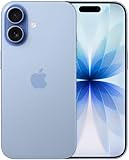
Finally, the iPhone 17 may hold value better. A renewed 256GB iPhone 17 in Mist Blue is listed around $759, while a renewed iPhone 17 Pro with 256GB is around $978.03. The Pro is a separate, more expensive purchase, but those prices show how the newer generation occupies a higher tier in the used market. If you upgrade later, the standard iPhone 17 should be easier to resell than an older 128GB phone in comparable condition.
Where iPhone 16 Wins
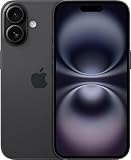
Value is the iPhone 16’s strongest argument. A renewed 128GB unlocked iPhone 16 listed around $574.99 costs roughly $184 less than the renewed 256GB iPhone 17 example. That difference can cover a protective case, a 20W or 30W USB-C charging brick, a magnetic stand, and several years of cloud storage.
The iPhone 16 is also slightly smaller and lighter. At approximately 170 grams, it is easier to carry from room to room, hand to a child for a video call, or place on a narrow bedside stand. Its 6.1-inch display remains large enough for recipes, streaming, and video chats without making the phone feel oversized.
For everyday household tasks, performance is more than adequate. The iPhone 16 can handle photography, navigation, streaming, messaging, banking, voice assistants, and smart-home applications without difficulty. If your use is primarily practical rather than creative or intensive, the newer model may not change your routine very much.
The iPhone 16 also has an established accessory market. Cases, screen protectors, charging stands, and car mounts are widely available, often at lower prices than accessories for a newer model. That is useful when equipping multiple family members or keeping a spare phone in a guest room.
Cost Over 5 Years
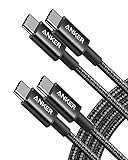
Purchase price is only part of the ownership cost. Assuming a renewed iPhone 17 costs about $759 and a renewed iPhone 16 costs about $575, the initial difference is approximately $184. Add a durable case at $25 to $60, a screen protector at $10 to $30, and a charging setup at $20 to $50, and either phone may require roughly $55 to $140 in accessories.
Over five years, battery service is the major variable. A battery replacement may cost approximately $99 to $119 outside a warranty or service plan, depending on the model and provider. A sensible five-year ownership estimate is therefore:
- iPhone 17: about $834 to $1,018 before cellular service, assuming the phone, basic accessories, and one possible battery replacement.
- iPhone 16: about $650 to $834 under the same assumptions.
The iPhone 16 remains cheaper by roughly $184, but the iPhone 17’s larger storage and newer hardware could reduce the chance of upgrading early. If you keep either phone for the full five years, the price gap matters less on a monthly basis: approximately $10 to $17 per month separates the example purchase prices before accessories and service.
Which One for Your Home
Small Apartment
Choose the iPhone 16 if counter and storage space are limited. Its slightly smaller footprint works well with compact charging docks, narrow nightstands, and small kitchen ledges. Choose the iPhone 17 instead if the phone will serve as your main entertainment screen and you value the extra display area.
Family With Kids or Pets
The iPhone 17 is the better long-term family device because 256GB gives more room for photos and videos. Its newer hardware should also age well as the phone is shared among multiple users. Whichever model you choose, use a raised-edge case and screen protector; accidental drops and kitchen spills are more realistic concerns than small differences in camera performance.
Rental
The iPhone 16 is the sensible rental-home choice. It offers the features needed for smart locks, maintenance apps, video calls, and moving-day photos without tying up as much money. A renewed model also makes a practical backup phone for guests or emergencies.
Long-Term Home
Choose the iPhone 17 if you expect to keep one phone for five years or more. The higher starting storage, smoother display, and newer processor make it the safer future-facing purchase. The iPhone 16 is still reasonable if you already use cloud storage and do not keep many videos locally.
FAQ
Is the iPhone 17 much bigger than the iPhone 16?
No. The iPhone 17 is approximately 6.3 inches compared with 6.1 inches for the iPhone 16. It is about 177 grams versus 170 grams, so the difference is noticeable but modest. The iPhone 16 is better for compact handling, while the iPhone 17 gives more room for reading and video.
Is 128GB enough for a household phone?
It can be enough for messaging, streaming, normal photography, and cloud backups. However, 256GB is safer for families, frequent travelers, children’s videos, downloaded entertainment, and smart-camera clips. If you plan to keep a phone for five years, the iPhone 17’s higher starting capacity is a meaningful advantage.
Should I buy a renewed iPhone 16?
Yes, if the seller provides a clear battery-health policy, a return period, and an unlocked device. Inspect the screen, cameras, charging port, speakers, and buttons immediately. At around $574.99 for a renewed 128GB model, the iPhone 16 can be an excellent value when condition and warranty coverage are reliable.
Which phone is better for a five-year purchase?
The iPhone 17 is the stronger five-year choice because it is newer, starts with more storage, and offers more performance headroom. The iPhone 16 wins if keeping the initial cost low matters most. Both should serve ordinary home needs well when protected and maintained properly.
Ready to decide? Our #1 pick for 2026 is the Comfort.
Live price & availability on Amazon.




Write Your Review
No reviews yet. Be the first to share your experience!