
- Top Pick: YAMAHA P71 88-Key Weighted Action Digital Piano with Sustain Pedal and Power Supply (Amazon-Exclusive)
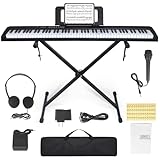
- Best Value: 88 Key Piano Keyboard, Electric Digital Piano with Semi Weighted Keys, Keyboard Piano with Sustain Pedal, Power Supply, Stand, Carrying Case, Headphones, USB-MIDI Compatibility, for Beginner Adults
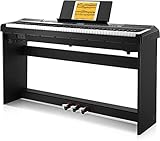
- Premium Choice: Donner DEP-20 Beginner Digital Piano 88 Key Full Size Weighted Keyboard, Portable Electric Piano with Furniture Stand, 3-Pedal Unit
Best digital pianos: quick picks by budget, skill and space
The best digital pianos for most beginners are compact 88-key models with graded, weighted hammer action, three-pedal support and a headphone output; choose the Roland FP-10 for a small room and the Yamaha P-225 if you want a lighter instrument with built-in speakers that can fill a modest space. For a furniture-style home setup, the Yamaha YDP-145 offers an integrated stand and pedal unit, while the Roland FP-30X is a stronger step-up choice for regular practice and performance features.
Those recommendations are starting points, not a ranking that suits everyone. Key action, speaker placement, pedal feel and room layout affect daily use more than a long list of sounds. Prices vary by region and bundle; the broad ranges below are approximate US-market instrument-only prices, not live quotes.
As an Amazon Associate we earn from qualifying purchases at no extra cost to you.


Compare the shortlist
| Model | Keys and action | Approx. dimensions and weight | Best fit | Pedal setup |
|---|---|---|---|---|
| Roland FP-10 | 88, PHA-4 Standard hammer action | 51.2 × 10.2 × 5.5 in; 27.1 lb | Beginner or apartment practice | Basic sustain pedal included; optional three-pedal unit |
| Yamaha P-225 | 88, GHC weighted action | 52.2 × 10.5 × 5.2 in; 25.4 lb | Portable home use and small rooms | Sustain pedal included; optional compatible three-pedal unit |
| Roland FP-30X | 88, PHA-4 Standard hammer action | 51.2 × 11.2 × 5.9 in; 32.6 lb | Frequent practice, lessons and flexible audio use | Basic sustain pedal included; optional three-pedal unit |
| Yamaha YDP-145 | 88, GHS weighted action | 53.4 × 16.6 × 32.3 in; 83.8 lb | Dedicated practice corner or living room | Integrated three-pedal unit |
Dimensions and weights are approximate manufacturer specifications and can vary slightly by market. Portable-piano measurements exclude an optional stand and bench. Check the current regional specification and package contents before buying: pedals, stands and power supplies can differ by bundle.
Approximate US price bands: FP-10, about $500–$700; P-225, about $700–$900; FP-30X, about $700–$1,000; YDP-145, about $1,000–$1,300. A stand, bench, headphones or upgraded pedal may add to the total.
Choose by your playing situation
| Your situation | Good starting choice | Why |
|---|---|---|
| First piano, limited budget, little floor space | Roland FP-10 | Full 88-key weighted action in a portable, relatively affordable body. |
| Beginner who needs to move the piano or keep a room uncluttered | Yamaha P-225 | Lightweight cabinet and compact depth make storage and occasional transport easier. |
| Several practice sessions a week, with room to improve | Roland FP-30X | A fuller feature set and useful audio connectivity make it more adaptable as skills develop. |
| Daily practice in one permanent place | Yamaha YDP-145 | Furniture-style stand and built-in three pedals provide a stable, ready-to-play setup. |
| Serious classical study or advanced performance goals | Try these actions in person; compare with higher-tier models | Subtle differences in repetition, control and tonal response matter more than extra instrument sounds. |
What matters more than the sound-count headline
Weighted action: match the feel to your practice
All four picks have 88 weighted keys, but their actions are not identical. Graded hammer actions generally feel heavier in the bass and lighter in the treble, approximating an acoustic piano. The FP-10 and FP-30X share Roland’s PHA-4 Standard action; the P-225 uses Yamaha’s GHC action, and the YDP-145 uses Yamaha’s GHS action.
For a beginner, consistent resistance and a proper piano layout are more useful than chasing the most elaborate action name. If you are moving from an acoustic upright or preparing for advanced repertoire, test repeated notes, soft playing and fast passages if possible. A compact digital action may feel different from a full acoustic mechanism, even when both have weighted keys.
Sound engine and speakers: consider where you play
Sound character is subjective, and the listed models use different piano samples and sound-shaping systems. Listen with headphones as well as the built-in speakers if you can: headphones reveal detail without room noise, while speakers show whether the piano sounds satisfying at your normal playing position. The FP-30X adds more flexibility for connecting audio equipment than a basic entry model; the P-225 prioritizes a compact portable design. The YDP-145’s cabinet gives it a permanent furniture footprint, but it still does not reproduce the sound projection of an acoustic piano.
In a shared apartment, headphones and a reliable headphone jack may matter more than speaker power. In a larger room, position the instrument so speakers are not blocked by a wall or piled-up books, and avoid turning the volume up to compensate for poor placement. If you expect to play for others, budget for a suitable external speaker or amplification only after checking the piano’s outputs and your room.
Pedal feel: the small detail that changes technique
A lightweight included sustain pedal can slide on a hard floor and offer less resistance than an acoustic piano pedal. That is adequate for beginning to learn sustain, but it may be frustrating during longer practice or precise half-pedaling. The YDP-145’s fixed three-pedal unit is more convenient for a dedicated setup; the portable models can usually be paired with compatible optional pedal accessories, but confirm compatibility and cost first.
On a portable model, place a non-slip mat under the pedal or use a pedal board. Check that the cable reaches the piano comfortably without crossing a walkway. When comparing pedals, listen for a clean sustain cutoff and see whether the pedal stays put during normal use; do not assume an included pedal provides the same control as a weighted, three-pedal assembly.
Budget for the setup, not just the piano
A portable piano on a dining chair can put the keyboard at the wrong height and encourage awkward posture. Before choosing a model, measure the playing area and the space needed for a bench, pedal and your legs. A 52-inch-wide instrument needs more than 52 inches of clear wall: allow room to sit centrally, open a nearby door and route cables safely.
For example, a $600 piano used five days a week for three years gets roughly 780 practice sessions. The instrument cost alone works out to about 77 cents per session ($600 ÷ 780). Add a $100 stand and $80 bench, and the setup becomes about $1.00 per session. This is not a value score; it shows why stable furniture and comfortable seating deserve a place in the budget, especially for frequent practice.
Ownership details that are easy to overlook
- Keys and surfaces: Dust with a soft, dry cloth. Avoid spraying cleaner directly onto keys or using solvents; liquid can seep between keys and damage electronics.
- Pedal and cables: Pedals, plugs and cables take repeated movement. Coil cables loosely, avoid sharp bends and check connections if sustain cuts in and out.
- Portable models: A stand and bench are often separate purchases. A stable stand reduces wobble; a soft case helps protect the piano during transport, but does not make it weatherproof.
- Furniture-style models: They are heavier and harder to relocate. Measure doorways, stairs and the final location before delivery, and keep the cabinet away from damp areas and direct heat.
- Headphones: A comfortable wired pair avoids disturbing others and does not depend on Bluetooth audio latency. Check that the connector fits or budget for the correct adapter.
Bottom line
Choose the Roland FP-10 when low cost and a compact footprint lead; the Yamaha P-225 when portability and easy storage matter; the Roland FP-30X when you practice regularly and want room to grow; or the Yamaha YDP-145 when you want a stable, permanent home setup with three pedals. If possible, test key feel before spending more: for piano study, the action and a dependable pedal setup will affect everyday practice more than a long list of extra voices.
Ready to decide? Our #1 pick for 2026 is the Roland FP-10.
Live price & availability on Amazon.



Write Your Review
No reviews yet. Be the first to share your experience!