
As an Amazon Associate we earn from qualifying purchases.
Buyers searching for a 14-inch resin printer quickly discover a naming trap: many large printers carry 14K in their names, which describes pixel count, not screen size. After checking Amazon US listings across the major brands, no printer with a genuine 14.0-inch screen and a verifiable listing was confirmed. The closest verified large-format machine sits at 13.6 inches, and it is covered here with its actual screen size stated in full, so you can judge whether that near-size plate meets your product model needs.
This guide therefore lists one product, explained in depth, rather than presenting a 10.1-inch 14K printer as if it were a 14-inch machine. If your parts fit within a 13.6-inch plate, the machine below is a strong large-format option. If a dimension of your model truly demands more, the 15-inch class guide in this series covers the verified step up.
Disclosure: This article contains affiliate links. If you buy through these links, we may earn a commission at no additional cost to you.
A Note on This Class
The 14-inch label is used loosely in the market, often pointing at 14K resolution rather than screen size. Every specification in this guide comes from the Amazon US listing information, and the actual screen size is stated wherever it differs from the class label, so comparisons stay truthful.
How to Choose
For near-14-inch shopping, ignore the K number in product names and find the screen diagonal in the specification table. Then compare build volume in all three dimensions, because two machines with similar screens can differ greatly in build height. Large plates flex more and carry more resin, so a rigid Z axis, reliable levelling, and a heated tank for consistent viscosity all have outsized effects on success with big product models.
Also weigh throughput honestly. A large plate lets you batch many parts, but one failure costs more resin and time than on a small machine, so detection features and a stable workflow matter. Finally, check the physical footprint and the size of wash and cure equipment needed for the full plate, since post-processing a near-14-inch build requires matching capacity.
The Picks in Detail
ANYCUBIC Photon Mono M7 Max

Amazon US: https://www.amazon.com/dp/B0DNQL253T
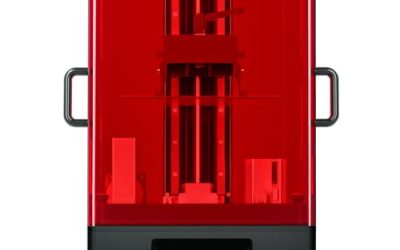
The Photon Mono M7 Max uses a 13.6-inch 7K mono LCD with a resolution of 6480 x 3600, stated plainly here as the closest verified size below the 14-inch label. Its build volume is 11.73 by 6.46 by 11.81 inches, the largest in this printer series, with a COB LighTurbo 3.0 light source, dynamic heating with temperature control, and a flip-open cover. Stated top speed is 60 mm/h, reflecting careful curing across the large plate rather than headline pace.
Who it suits: Studios printing large product housings, display models, or full plates of smaller parts, who want one machine for volume work.
Considerations: The screen is 13.6 inches, not 14.0, and this guide does not pretend otherwise. XY detail is coarser than the 10-inch class because the pixel count covers a much larger area, so the finest miniature work belongs on a smaller machine.
Comparison Table
| Product | Key specification | Best for |
|---|---|---|
| ANYCUBIC Photon Mono M7 Max | 13.6-inch 7K mono LCD (closest verified to 14-inch class), build 11.73 x 6.46 x 11.81 in | Large product models and batch layouts |
Judging Near-Size Machines Honestly
When a class label and a real specification disagree, the specification is what you live with. A 13.6-inch screen shapes everything from vat size to replacement screen sourcing, so record the exact figure when you plan accessories. Release film, for example, is sold by machine family and size, and ordering by the class label instead of the model risks the wrong part.
The practical question is whether the near-size plate changes your output. Lay your three largest recurring models, with supports, across a 13.6-inch area on paper or in your slicer. If they fit with sensible margins, the missing fraction of an inch has no effect on your work at all. If one dimension still overflows, the answer is a genuinely larger class, not a different near-size brand, because all verified machines in this band share similar plate dimensions.
Batch economics are the other strength to weigh. A near-14-inch plate can hold a full set of product parts for one assembly, printed in one run with identical settings and resin. That consistency simplifies finishing and colour matching across a set, and it is a workflow gain that smaller machines cannot copy even with equal detail.
Finally, allow for the physical routine: a plate this wide is heavy when loaded, resin volumes are large, and wash and cure capacity must match. Studios that set up a permanent station for the machine report the smoothest ownership, while shared-desk setups struggle with the size regardless of brand.
One more practical check is slicer support. Large-format machines depend on their slicer for anti-aliasing, support generation, and hollow and drain tools, so confirm the software workflow suits your team before the hardware arrives. A short test with your own largest product file, sliced and checked layer by layer, will tell you more about daily ownership than any specification table, and it costs nothing but an afternoon of preparation time.
Frequently Asked Questions
Does a bigger screen mean better detail?
Not automatically. Detail follows XY resolution in microns, which depends on pixel count divided by screen area. A large screen with a high pixel count can match a small screen, but a large screen with a modest pixel count will show softer edges on fine product details.
What else do I need besides the printer?
A wash and cure station or a manual washing setup, nitrile gloves, resin suited to your models, spare release film, and a ventilated workspace. Budget bench space for post-processing, not just for the printer itself.
How important is automatic levelling?
It removes one of the most common causes of failed first layers and saves setup time on every build plate change. Experienced users can level manually, but automatic systems make results more repeatable for product work.
Which resin suits high detail product models?
Standard and 8K-style resins are formulated for fine detail and smooth surfaces, while tougher ABS-like resins trade a little crispness for strength on functional parts. Match the resin to whether the model is for display, fitting, or handling.
Conclusion
There is no verified true 14.0-inch screen printer in this Amazon US check, so the honest recommendation is the 13.6-inch Photon Mono M7 Max, with its size stated clearly. It serves large product models well. Buyers who need finer detail over size should step down to the 10-inch class; buyers who need a genuinely larger plate should step up to the verified 15-inch model.
Write Your Review
No reviews yet. Be the first to share your experience!