
Start with an honest fact about this category: almost every professional arranger workstation ships with 61 or 76 keys, so the choice at 88 keys is really about depth of accompaniment. One instrument below is a genuine flagship arranger that happens to offer a hammer-action 88-key version. The other two are 88-key digital pianos whose listings include full auto-accompaniment systems, hundreds of styles or rhythms that follow your chords so one player can sound like a band. Deciding how much arranger machinery you truly need, against the piano feel you refuse to give up, is the whole purchase.
Pianists who gig solo, singer-pianists in churches and cafés, and home players who want a band on tap are the audience here. Each pick was taken from its Amazon listing: the Korg Pa5X 88 for full arranger power, the Yamaha DGX-670 for piano-first playing with band backing and a microphone input, and the Casio PX-S3100 for players who need 88 weighted keys they can still carry.
Quick Picks
As an Amazon Associate we earn from qualifying purchases.
| Product | Best for | Key spec from title |
|---|---|---|
| Korg Pa5X 88 | Solo performers who want a true flagship arranger | 88 hammer-action keys, over 2,000 sounds, 500+ styles |
| Yamaha DGX-670B | Pianists who sing and want band backing | 88 GHS weighted keys, 263 accompaniment styles, mic input |
| Casio PX-S3100 | Players who need 88 keys they can actually carry | 88 hammer-action keys, 700 tones, 200 rhythms |
How to Choose
A true arranger workstation or a piano with accompaniment
These are different instruments wearing similar clothes. A dedicated arranger workstation offers deep style control: multiple intros and endings, editable backing parts, a songbook database, pads and dual players for crossfading between songs. A piano with accompaniment gives you preset styles or rhythms that follow your chords, which is plenty for straightforward solo sets, but with far less editing underneath. Neither is wrong; the mistake is paying flagship money for editing depth you will never open, or buying a piano and discovering its rhythms cannot carry your whole act.
Key action: hammer action, grading and aftertouch
At 88 keys the action is the reason you are here. Graded hammer actions feel heavier in the bass and lighter in the treble, like an acoustic piano, and that familiarity lets pianists play their normal repertoire without adjusting. Aftertouch, fitted to the Korg flagship here, adds expression after the key is pressed, useful for strings and synth parts in an arrangement. Check the listing for the exact action type, because semi-weighted and hammer actions at this size feel nothing alike under the fingers.
Style depth, registrations and running a set
Count sections, not just styles. A backing that offers intros, four main variations, fills and endings can carry a whole song; a simple rhythm loop cannot. Registrations or one-touch settings store the sound and tempo for each number, and playlist tools arrange them in running order, which matters when you perform alone with nobody to cover a pause. Singers should also verify the microphone input on the listing, since among full-size boards it appears on some models and is absent on others.
Moving an 88-key board on your own
Weight is the hidden cost of the full keyboard. The instruments below range from roughly 25 pounds to well over 40, before the stand, bench and case join the load. A solo act loads in alone, often up stairs, so think about the car, the doorway and the distance from the car park. Slim-bodied models exist precisely for this problem, trading some speaker power and control surface for a board one person can carry under one arm. Also measure the instrument against your stand and your playing space, because an 88-key footprint is noticeably wider than the corner many small venues offer.
The 3 Best Options
Korg Pa5X 88

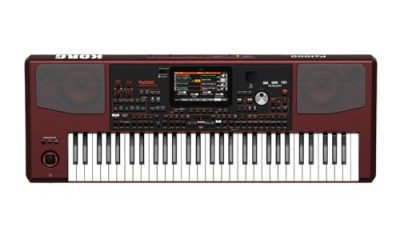
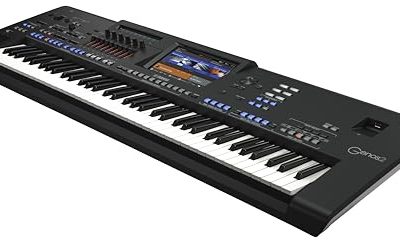
The Pa5X 88 is the only instrument in this roundup that is a flagship arranger workstation first and a piano second. Its Amazon listing describes 88 fully weighted keys, an 8-inch tiltable color touch screen, over 2,000 sounds and more than 500 styles, with the connector set a working solo act needs, including XLR and quarter-inch sockets alongside USB and MIDI. For a one-person band that is the full toolkit: dual players for seamless song changes, deep style editing, and a hammer action with aftertouch for players who will not compromise on feel. It is a serious, heavy, professional tool.
Specs
- Keys: 88, fully weighted hammer action with aftertouch
- Sounds: over 2,000
- Styles: 500+ accompaniment styles
- Display: 8-inch tiltable color touch screen
- Connectors: USB, MIDI, XLR, 1/4 inch jack, 1/8 inch mini-jack (as listed)
- Model: PA5X88 (manufacturer part Pa5X-88)
- Weight: 44.31 lb (20.1 kg)
Best for: Professional solo performers who want genuine arranger depth on a full weighted keyboard.
Watch out for: Amazon carries several Pa5X listings, including dealer bundles with stands and benches; confirm the ASIN is the 88-key keyboard itself and not the 61 or 76-key version before ordering.
ASIN: B0B5GBBTX8
Yamaha DGX-670B

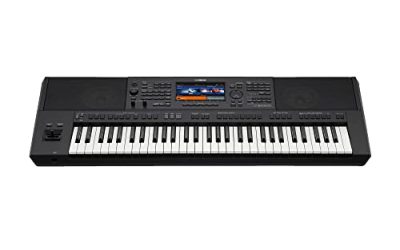
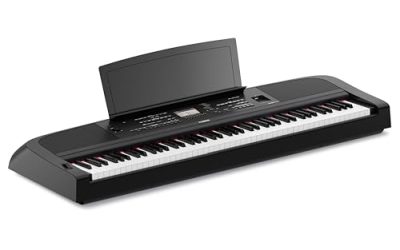
Yamaha builds the DGX-670 as a portable grand piano, and its listing backs that up with a graded hammer action and the CFX concert grand voice, but the accompaniment side is what earns it a place here. The listing includes 263 auto accompaniment styles that respond to your chords, with adaptive styles that follow your playing intensity, plus a microphone input listed among its special features, so a singer-pianist can run voice and band from one instrument. It will not edit styles like a workstation, yet for piano-led solo sets it covers the ground most players actually use.
Specs
- Keys: 88, Graded Hammer Standard (GHS) weighted, matte black keytops
- Voices: 601 voices plus 29 drum/SFX kits
- Styles: 263 accompaniment styles, each with 4 variations
- Display: 4.3-inch color TFT
- Special features listed: built-in speaker, hammer action, microphone input, weighted keys
- Included: sustain foot switch and music rest; furniture stand sold separately
- Connectivity: Bluetooth audio, USB
Best for: Singer-pianists who want piano feel first, with band backing and a mic channel built in.
Watch out for: The matching furniture stand and three-pedal unit are separate purchases, and its arranger section is preset-driven rather than a deep editing workstation.
ASIN: B08RNFJ98M
Casio PX-S3100

Casio’s PX-S3100 answers the transport problem. It squeezes 88 hammer-action keys into one of the slimmest, lightest bodies in this class, and its listing pairs 700 tones with 200 rhythms and an auto-accompaniment feature, so a solo player still gets a rhythm section that follows the harmony. A pitch bend wheel and two assignable knobs give more live control than most slim pianos offer, and Bluetooth support through the included wireless adaptor suits players who run lyrics or backing apps from a tablet. The backing is simpler than a dedicated arranger’s, but the whole instrument can travel in one hand.
Specs
- Keys: 88, Smart Scaled Hammer Action with simulated ebony and ivory textures
- Tones: 700
- Rhythms: 200 built-in rhythms with auto accompaniment
- Polyphony: 192 notes
- Controls: pitch bend wheel, two assignable knobs
- Connectivity: Bluetooth via included wireless MIDI and audio adaptor, USB-MIDI
- Weight: 11.4 kg (about 25 lb)
Best for: Solo players who move their keyboard constantly and need 88 keys without the load-in penalty.
Watch out for: Its accompaniment is rhythm-based and simpler than the style systems on the other two boards, and the similar PX-S1100 listing lacks this model’s rhythm library, so check the model name on the listing.
ASIN: B09S6RVRCZ
Which One Fits Your Situation
You are a pianist who refuses to downsize to 61 keys
The Korg Pa5X 88 was built for you. It is the one board here where the arranger engine is the headline and the hammer action is not a compromise: full style control, dual players for continuous music, and aftertouch for expressive parts. Accept the weight and the flagship commitment, and it replaces both a piano and a band.
You sing and play piano in church, cafés or care homes
Pick the Yamaha DGX-670B. The microphone input, the 263 chord-following styles and the familiar graded piano action cover a hymn set or a standards set without extra equipment. Add the matching stand if it will live in one room, and it behaves like a home piano between performances. The built-in speakers handle small rooms on their own, which keeps the whole setup simple.
Your gigs mean stairs, trains and small cars
The Casio PX-S3100 is the practical answer. At about 25 pounds in a slim body it is the only one of the three that treats portability as a feature rather than a footnote, and its 200 rhythms still give a solo player a band for practice, parties and smaller rooms.
You mostly play at home but want a band on tap
Either piano-based model works, and the deciding factor is repertoire. Choose the DGX-670 if you want composed styles with variations and endings that structure a song for you. Choose the PX-S3100 if you mainly want rhythmic backing for practice and jamming, in a body that stores easily against a wall.
Common Mistakes
- Assuming every 88-key keyboard with rhythms is a full arranger workstation, then missing the style editing and setlist tools your act needs.
- Buying the flagship arranger and never learning its deeper systems, when a piano with accompaniment would have covered the same sets.
- Forgetting that the stand, pedal unit and bench are sold separately on piano-style models, so the real setup costs more than the keyboard listing suggests.
- Ignoring the carry: ordering a 44-pound board for solo gigs that involve stairs, then dreading every load-in.
- Mixing up near-identical model names, such as the PX-S3100 and PX-S1100, which differ in exactly the accompaniment features you are buying for.
Frequently Asked Questions
Is there really such a thing as an 88-key arranger workstation?
Yes, but the field is tiny. Korg’s Pa5X is offered in an 88-key hammer-action version, and it is the standout example of a flagship arranger on a full keyboard. Most other 88-key instruments with backing are digital pianos that include accompaniment styles or rhythms, which is why this guide separates the two types clearly.
Is the Yamaha DGX-670 an arranger or a digital piano?
It is a digital piano with a substantial arranger section. Its listing includes 263 accompaniment styles with chord recognition, one-touch settings and a microphone input, so it can carry a solo set. What it does not offer is the deep style editing, songbook database and dual-player workflow of a dedicated arranger workstation.
Can one person realistically gig with an 88-key board?
Plenty do, but plan the logistics. The lightest pick here weighs about 25 pounds, while the flagship is over 44 before its case and stand. A wheeled case, a lightweight stand and a car you can load at kerb height make the difference between a sustainable routine and an aching back.
Can I use an iPad for lyrics and scores with these keyboards?
Generally yes. All three connect to a tablet or computer over USB MIDI, and the Yamaha and Casio also handle Bluetooth audio for playing reference tracks or backing audio through the keyboard’s speakers. Lyrics and score apps run on the tablet itself, while the keyboard supplies the sound and the accompaniment.


Write Your Review
No reviews yet. Be the first to share your experience!