
A one person band lives or dies on sounds the factory library does not contain: the regional drum kit your audience expects, the accordion from your home country, a vocal chop you built yourself. That is why the real decision in this category is not the style count on the box but how much of your own sampled material the keyboard can load, in which formats, and how quickly it is ready at a gig. Memory figures are quoted differently by every brand, so the listings need reading carefully before money moves.
This guide is for solo performers, wedding and restaurant players, and home studio arrangers who need full backing from one instrument. The three picks below were chosen from their Amazon listings for genuine user sampling or sample expansion: two Korg Pa models with onboard samplers and one Yamaha PSR-SX flagship with a large expansion memory for sample-based voices.
Quick Picks
As an Amazon Associate we earn from qualifying purchases.
| Product | Best for | Key spec from title |
|---|---|---|
| Korg Pa1000 61-Key Professional Arranger | Players who load large sample libraries | 600MB of storage for your own samples |
| Korg Pa700 61-Key Arranger Workstation | Sampling on the most accessible Pa model | 128MB compressed sampling memory |
| Yamaha PSR-SX900 61-Key Arranger Keyboard | Expansion packs and custom voices | Approx. 1GB voice expandability |
How to Choose
User sample memory, and how brands quote it
Sampling memory decides how much of your own material travels with the keyboard. Korg quotes the Pa700 at 128MB compressed, equivalent to 256MB of linear data, while the Pa1000 listing describes 600MB of storage for your own samples, and Yamaha rates the PSR-SX900 at roughly 1GB of voice expandability. Compressed and uncompressed figures are not interchangeable, so compare like with like. A wedding player loading a handful of drum kits needs far less than a performer rebuilding an entire regional library, and filling memory also lengthens load times before a show.
Import formats and the editing you actually get
A sampler is only useful if your existing library loads without conversion marathons. Both Korg models here load KORG, WAV, AIFF and SoundFont formats and save in KORG, WAV and AIFF, which covers most sample packs sold for arranger players. Yamaha takes a different route: the Expansion Manager software builds voices from your own sample library on a computer, then loads the pack into the keyboard. If you already own SoundFont collections, the Korg path is more direct. If you prefer preparing sets on a laptop screen anyway, Yamaha’s approach may suit your workflow better.
Voices, styles and the backing band underneath
Sampling sits on top of the factory content, and the factory content still does most of the work at a typical gig. The Pa1000 and Pa700 each list over 1,700 sounds; the Korg pair differ mainly in style count, with more than 420 styles on the Pa1000 against over 370 on the Pa700. Yamaha lists 1,337 voices and 525 styles on the PSR-SX900. Count the styles in the genres you actually play rather than the headline total, because a hundred extra dance styles help a folk performer very little.
Speakers, outputs and one person logistics
A solo act carries everything alone, so the boring details matter. Built-in speakers, as fitted to both Korg models here, cover small rooms and home practice without a separate amp, and they make sound checks faster. Check the listing for the outputs you need: separate outs for routing the arranger and your voice differently, a microphone input if you sing, and USB or card storage for moving sample data between computer and keyboard. Weight and a tilting screen also decide whether the instrument is a pleasure or a burden across three sets a night.
The 3 Best Options
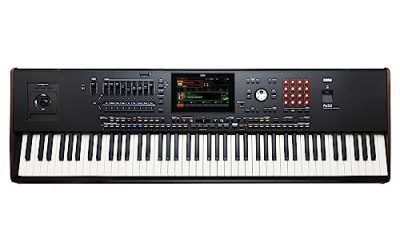
Korg Pa1000 61-Key Professional Arranger

The Pa1000 suits the one person band whose set list depends on sounds Korg never shipped: ethnic percussion, a specific accordion, or drum kits sampled from your own recordings. Its listing leads with storage for your own samples alongside the deepest style library of the Korg pair here, so custom content and factory backing arrive in one box. Built-in speakers and the tiltable colour touchscreen keep setup simple at small venues, while the mic input path with vocal processing means a singer-player can run voice and band from the same instrument instead of adding a mixer.
Specs
- Keys: 61
- Sounds: more than 1,700
- Styles: more than 420
- User sample storage: 600MB for your own samples, as stated in the listing
- Sampling formats: loads KORG, WAV, AIFF and SoundFont; saves KORG, WAV and AIFF
- Display: tiltable colour touchscreen
- Speakers: built-in
Best for: Solo performers whose repertoire needs a large personal sample library plus a deep factory style bank.
Watch out for: The listing ecosystem also shows bundle versions with stands and pedals under different ASINs; confirm you are ordering the keyboard-only listing, and check which seller is offering it before paying.
Korg Pa700 61-Key Arranger Workstation

The Pa700 is the entry point into Korg’s sampling arrangers, and for many one person bands it is the sensible ceiling rather than a compromise. You still get a full sampler with time-slice editing, the same 1,700-plus factory sounds as its bigger sibling, and over 370 styles, which covers most wedding, restaurant and church repertoires. Its smaller sample memory is the honest trade: players who load a few custom kits and loops will never notice, while library hoarders will. The TouchView display and built-in speakers keep it a self-contained instrument for small rooms and rehearsals.
Specs
- Keys: 61 (C2-C7) with velocity
- Sounds: over 1,700, including a multilayer stereo piano
- Styles: over 370
- Sampling: 128MB compressed (equivalent to 256MB linear data)
- Sampling formats: loads KORG, WAV, AIFF and SoundFont; saves KORG, WAV and AIFF
- Sound engine: EDS-X
- Display: TFT TouchView
Best for: Solo players who want genuine onboard sampling and editing without paying for the flagship tier.
Watch out for: Sample memory is a quarter of the Pa1000’s headline figure once formats are compared, so audit the size of the library you plan to load; also confirm the listing is the standard Pa700, not the Oriental variant with the quarter-tone keypad.
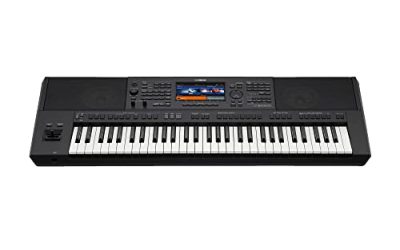
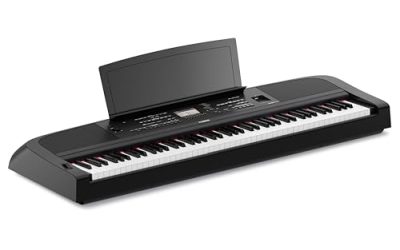
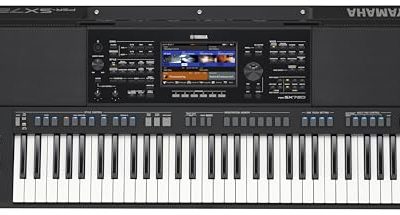
Yamaha PSR-SX900 61-Key Arranger Keyboard

Yamaha’s flagship PSR-SX takes the expansion route rather than a traditional onboard sampler: roughly 1GB of onboard memory holds expansion data, and the Yamaha Expansion Manager lets you build your own voices from your sample library on a computer, then load the finished pack. For a one person band that prepares material at home and simply performs live, that division of labour works well, and the pre-installed expansion content broadens the world-music coverage immediately. The joystick controller, assignable live controls and 525 styles make it a strong performance instrument even before any custom content is added.
Specs
- Keys: 61
- Voices: 1,337
- Styles: 525
- Voice expandability: approx. 1GB onboard expansion memory
- Expansion: Yamaha Expansion Manager; create your own voices from your sample library
- Internal memory: 4GB
- Display: colour touchscreen
Best for: Performers who prepare custom voices and regional expansion packs on a computer and want the largest expansion space here.
Watch out for: There is no onboard sample recording in the Korg sense; your samples must be prepared in the Expansion Manager first. Stock of this model fluctuates on Amazon, so check the seller and availability on the listing carefully.
Which One Fits Your Situation
You play regional repertoire the factory library misses
Choose the Korg Pa1000. Weddings and community events often hinge on a handful of very specific sounds, and its sample storage is the roomiest of the Korg pair, with direct loading of WAV, AIFF and SoundFont material. You can build the exact drum kit and lead sounds your audience recognises, then lean on the 420-plus factory styles for everything else in the set.
You are upgrading from a basic arranger on a controlled budget
Choose the Korg Pa700. It keeps the full sampler, the same broad sound library and built-in speakers, and only asks you to be selective about how much custom material you carry. For most solo players moving up from an entry-level board, the smaller sample memory is a limit they will reach slowly, if at all.
Your sets are built at home and performed unchanged
Choose the Yamaha PSR-SX900. If your workflow already lives on a laptop, preparing expansion packs in the Yamaha Expansion Manager is no hardship, and the roughly 1GB of expansion space swallows large voice collections. Pre-installed expansion content also means the keyboard covers more world genres from the first day than a bare factory library would.
You sing while you play and travel light
Choose the Korg Pa1000. A singing one person band benefits from running microphone and accompaniment through one instrument, and the Pa1000’s listing pairs its sampling depth with a mic input path and vocal processing. Built-in speakers then cover the smallest rooms, so the car carries one keyboard instead of a keyboard, an amp and a mixer.
Common Mistakes
- Comparing sample memory figures without checking whether they are quoted compressed or uncompressed.
- Buying a bundle listing by mistake when the same model also sells as a keyboard-only ASIN.
- Assuming a Yamaha expansion keyboard records samples onboard like a Korg Pa sampler does.
- Filling the sample memory completely, then discovering how long a full library takes to load before a gig.
- Ignoring the Oriental and other regional variants when ordering, which change keypads and preloaded content.
Frequently Asked Questions
Can these keyboards record samples directly?
The two Korg models can. Both the Pa1000 and Pa700 include a sampler that loads and edits material in KORG, WAV, AIFF and SoundFont formats. The Yamaha PSR-SX900 works differently: you build voices from your sample library in the Yamaha Expansion Manager on a computer, then load the pack into its expansion memory.
How much sample memory does a one person band actually need?
Less than the marketing suggests, for most players. A few drum kits, loops and lead sounds fit comfortably in the Pa700’s 128MB compressed memory. You only need the Pa1000’s larger storage, or Yamaha’s roughly 1GB expansion space, when you are carrying complete regional libraries or many full multisampled instruments to every show.
Do I still need an amplifier with these keyboards?
For home practice and small rooms, the built-in speakers on the Korg models handle the job, which is one less item to carry. For larger halls, weddings with dancing, or outdoor events, plan on connecting the keyboard’s outputs to a PA system, because onboard speakers are designed for modest spaces rather than filling a function room.
Will my existing SoundFont library work?
On the Korg Pa1000 and Pa700, yes: both list SoundFont among the formats their samplers load, alongside WAV and AIFF. On the Yamaha, the same material first has to be turned into an expansion voice using the Yamaha Expansion Manager, so expect a conversion step on the computer before the sounds reach the keyboard.
Write Your Review
No reviews yet. Be the first to share your experience!