
- Top Pick: Men's Swim Trunks Quick Dry Board Shorts with Zipper Pockets Beach Shorts Bathing Suits for Men – No Mesh Liner(Black,L)
- Best Value: Srnede Mens Swim Trunks Swimming Trunks Swim Shorts Quick Dry 11 Inch with Mesh Lining Funny Swimwear Bathing Suits Black
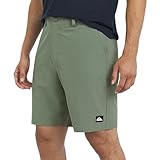
- Premium Choice: Quiksilver Men's Regular Fit Fixed Waist Water Friendly Active Hybrid Shorts, Solid Design – Sage, 40
Best Board Shorts for Surfing and Beach Days
The best board shorts for most surfers are a four-way-stretch pair with a 17- to 19-inch outseam, a secure drawstring waistband, quick-drying fabric, and a pocket that closes firmly without adding bulk. The right choice changes with your priorities: shorter inseams improve paddling and walking mobility, while longer cuts provide more coverage and reduce rubbing on longer sessions.
Our top picks by situation
| Best for | Recommended type or example | Useful specifications | Why it stands out |
|---|---|---|---|
| Frequent surfing and maximum mobility | Technical four-way-stretch surf short, such as Patagonia Hydropeak | About 18-inch outseam; recycled synthetic stretch fabric; bonded or low-profile seams | Flexible enough for paddling, duck dives, and walking between breaks |
| High-performance surfing | Lightweight stretch short, such as O’Neill Hyperfreak | Typically 19-inch outseam; elastane-blend fabric; drawstring closure; zip or hook-and-loop pocket | Low weight and fast drying suit repeated water use |
| Surfing plus everyday beach wear | Versatile stretch short, such as Vissla Solid Sets | Usually 17.5- to 19-inch outseam; recycled polyester blend; fixed waistband with drawcord | More casual styling without giving up useful surf features |
| Budget-conscious occasional use | Basic polyester-elastane board short | 17- to 20-inch outseam; 90-95% polyester and 5-10% elastane; one secure pocket | Good value when you need reliable beach clothing rather than specialist construction |
What matters most when choosing board shorts
Four-way stretch versus rigid fabric
Four-way stretch allows the fabric to extend both around the leg and along its length. That matters when you sit on a surfboard, lift a knee while climbing onto a board, or move from swimming to beach volleyball. Look for a synthetic blend containing roughly 5% to 15% elastane, or a fabric marketed specifically as stretch performance material.
As an Amazon Associate we earn from qualifying purchases at no extra cost to you.



Stretch alone does not guarantee comfort. A short can feel flexible in the hand but restrictive at the waist if the waistband is stiff or the rise is too short. Move through a deep squat and raise one knee before removing tags. The fabric should stretch without pulling the waistband downward or cutting across the hips.
Rigid polyester can still be suitable for occasional swimming and is often less expensive, but it is less forgiving during active surfing. It may also develop sharper creases and feel heavier when wet.
Choosing the right inseam
Inseam is the length from the crotch seam to the bottom hem. Board-short measurements can vary by brand, so compare the actual measurement rather than relying only on labels such as “short” or “regular.”
- 15 to 17 inches: maximum leg freedom and a shorter, more casual appearance; useful for swimming, warm-weather training, and people who dislike fabric around the knee.
- 17 to 19 inches: the best all-round range for surfing and beach days; it balances mobility, coverage, and compatibility with a rash guard.
- 19 to 21 inches: more coverage and less exposed skin, but potentially more fabric drag and knee restriction when sitting or paddling.
For most adults, a 17- to 19-inch inseam is the safest starting point. Taller wearers may prefer 19 inches for equivalent coverage, while shorter wearers may find a 19-inch short reaches the knee and restricts movement.
Quick-drying performance
Quick-dry fabric is primarily about fiber, construction, and water management. Polyester and nylon absorb less water than cotton, while a thin fabric with a smooth finish generally dries faster than a heavy, brushed material. Mesh-lined pockets and minimal internal panels also reduce retained water.
A useful practical test is to look at the short’s total construction, not just the marketing label. A lightweight synthetic fabric, drainage eyelet, and minimal lining are more meaningful than “quick dry” printed on the product page. Avoid cotton-rich blends for surfing: they retain water, become heavy, and take longer to dry between sessions.
Even good fabric dries slowly if it is left crumpled in a wet bag. Rinse salt and sand out with cool fresh water, squeeze rather than twist, and hang the shorts fully open in shade or indirect airflow.
Waistband and fly design
A board short should stay secure without needing to be tightened to the point of discomfort. A flat waistband with a durable drawcord is the most dependable arrangement for surfing. The cord should be long enough to tie securely and should not have a bulky plastic toggle that digs into the stomach while paddling.
Some performance shorts use a fixed waistband with an internal drawcord rather than elastic. This creates a clean fit but requires more accurate sizing. Elastic waistbands are convenient for beach lounging and changing body position, although very soft elastic can loosen with age.
Most modern board shorts use a no-fly front, which reduces bulk and eliminates hardware that can press into the body. A functional fly is not essential for surfing; it is mainly a convenience feature for changing or wearing the shorts as everyday clothing.
Secure pockets: small feature, major difference
A single pocket is usually enough for board shorts. The best placement is on the side or rear of the thigh, where it does not interfere with sitting on a board. A zipper or strong hook-and-loop closure is preferable to an open pocket when carrying a key, card, or small locker token.
Do not assume a zipped pocket is automatically surf-safe. Check for a drainage eyelet, a low-profile zipper, and enough depth to keep the contents from falling out when you sit. Large phones and salt water are a poor combination, so use a waterproof pouch for electronics rather than relying on a normal board-short pocket.
| Item carried | Minimum practical pocket depth | Preferred closure | Important limitation |
|---|---|---|---|
| Small key | 3 inches | Zip or secure hook-and-loop | Use a key loop if available |
| Card or folded cash | 4 inches | Water-resistant zipper | Protect from direct salt-water exposure |
| Phone | 6.5 inches or more | Not recommended in a standard pocket | Use a dedicated waterproof case instead |
Durability and ownership realities
The first parts to wear are usually the waistband drawcord, pocket closure, crotch seam, and inner-leg fabric. Sand works into seams and zippers, while ultraviolet exposure gradually weakens synthetic fibers and elastic. A pair used twice a week during a three-month summer season receives about 24 wears; rotating between two pairs cuts that load to roughly 12 wears per pair and gives each one more time to dry fully.
Rinse after every ocean session, especially when the shorts have been exposed to sunscreen, salt, or fine sand. Machine-wash on a cool or warm gentle cycle according to the care label, close zippers and hook-and-loop fasteners, and avoid fabric softener. Softener can coat performance fibers and reduce their ability to move moisture. Air-drying is preferable to high heat, which can damage elastane and distort bonded seams.
Never leave wet board shorts sealed in a car or gym bag overnight. Odor and mildew are harder to remove than ordinary salt residue, and prolonged dampness can weaken waistband elastic. If sand is trapped in a zipper, rinse from the reverse side instead of forcing the slider.
How to select your pair in five minutes
- Measure your waist where the waistband will sit, then compare that number with the brand’s size chart.
- Choose a 17- to 19-inch inseam unless you specifically want a shorter, freer leg or longer coverage.
- Confirm that the fabric contains stretch if you surf, paddle, run, or play active beach sports.
- Check that the drawcord can be tied comfortably and that the waistband stays level during a squat.
- Inspect the pocket closure and drainage design; avoid bulky hardware at the back or front of the body.
- Prioritize a light synthetic construction over a heavy cotton blend for repeated water use.
Final verdict
For one pair that covers surfing and ordinary beach days, choose a lightweight four-way-stretch board short with an 18-inch outseam, a flat drawstring waistband, and one zipped or securely fastened pocket. Select a 15- to 17-inch inseam if mobility and swimming are your priorities, or 19 to 21 inches if coverage and casual wear matter more. The best board shorts are not necessarily the shortest, lightest, or most feature-packed; they are the pair that stays secure, dries quickly, and remains comfortable after repeated exposure to salt, sand, and washing.



Write Your Review
No reviews yet. Be the first to share your experience!