
- Top Pick: Signature Design by Ashley Valebeck Counter Height Bar Stool, Brown
- Best Value: VATROS Counter Height Bar Stools Set of 2, 360° Swivel Upholstered Barstools with Backs and Metal Legs, 26" H Seat Height, Linen Fabric in Beige
- Premium Choice: VATROS Counter Height Bar Stools Set of 3, 360° Swivel Upholstered Barstools with Backs and Metal Legs, 26" H Seat Height, Linen Fabric in Beige
The best counter height bar stools are usually 24–27 inches tall at the seat, but the right choice depends on your counter’s finished height, available knee room, seating frequency, and how much back support you want.
As an Amazon Associate we earn from qualifying purchases at no extra cost to you.


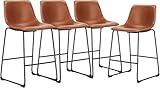
Start with the height: counter stool versus bar stool
Measure from the floor to the top of the counter or island, not to the underside of the worktop. Aim for approximately 9–12 inches between the seat and the counter surface so adults can sit comfortably without their knees hitting the underside.
| Counter or table height | Recommended seat height | Best match |
|---|---|---|
| 34–36 inches | 23–25 inches | Counter-height stool |
| 36–39 inches | 24–27 inches | Standard counter stool |
| 40–42 inches | 28–30 inches | Extra-tall counter or pub stool |
| 42–44 inches | 30–32 inches | Bar-height stool |
These are starting points rather than rules. A thick cushion can add an inch or more to the sitting height, while a curved or recessed countertop may require additional clearance. If the counter has drawers, an apron, or a waterfall edge, place a stool underneath before buying several.
Our picks by situation
Best all-purpose choice: a 25-inch stool with a supportive back
For a typical kitchen island, choose a stool with a 24–26-inch seat, a back that reaches at least the lower shoulder blades, and a built-in footrest. A padded seat with a wipeable fabric, faux leather, or finished wood surface works well for daily breakfasts, homework, and casual meals.
A backrest is worth prioritizing when the stools will be used for more than a few minutes at a time. Look for a seat width of about 16–19 inches and a stable four-leg or reinforced metal base. Swivel stools can be convenient, but they need a strong return mechanism and enough clearance to rotate without striking adjacent stools.
Best for a small kitchen: a backless, stackable stool
Backless stools slide fully beneath an overhang and preserve walking space. They are a strong choice when the island is close to a refrigerator, doorway, or narrow passage. A 14–16-inch-wide seat is often easier to fit than a generously padded 19-inch model.
The trade-off is comfort. Backless stools are better for short meals than for long conversations, and they offer less support for children or anyone who tends to shift position. Choose a model with a broad, stable base and a footrest rather than a narrow perch.
Best for long meals: a high-back upholstered stool
If your island doubles as a dining table, select a stool with a contoured seat, a reasonably tall back, and cushioning at least 2 inches thick. A seat width of 18–21 inches gives more room to change position, but remember that wider stools reduce the number that fit along the counter.
Performance fabric is easier to live with than delicate upholstery, especially in a kitchen. Removable, machine-washable covers are useful, although zippers and seams can become grease traps if they are difficult to remove. Avoid deep cushions that compress unevenly; the stool may feel comfortable at first but become lopsided with frequent use.
Best for a modern or minimalist space: a powder-coated metal stool
Metal stools create a slim visual profile and are easy to wipe clean. Powder coating is preferable to untreated painted metal because it generally resists small scratches and everyday moisture better. A low back or curved back can add support without making the kitchen look crowded.
Inspect the welds, leg joints, and underside of the footrest. A footrest attached only at one narrow point may loosen or bend over time. Metal can also feel cold and hard, so a molded seat, wood seat, or removable cushion may be worthwhile for frequent use.
Best for a warm, traditional room: solid wood
Wood stools suit farmhouse, traditional, and Scandinavian interiors and can often be repaired or refinished. Look for mortise-and-tenon or visibly reinforced joints, not just thin screws driven into end grain. A clear protective finish helps with spills, but no finish makes wood maintenance-free.
Wipe up water promptly, use mild soap sparingly, and avoid soaking the joints. Felt pads protect floors but should be replaced when they collect grit. If the stools wobble, tighten the fasteners first; continuing to sit on a loose frame can enlarge the joint holes and make a later repair harder.
How many stools will fit?
Allow at least 24 inches of counter width per person for compact seating. For a more comfortable arrangement, plan on 26–30 inches per stool, particularly when the seats have arms or swivel mechanisms.
For example, a 78-inch island might technically accommodate three 24-inch stools:
78 inches ÷ 3 stools = 26 inches per stool.
That is a comfortable starting point for narrow or average-width seats. Three 20-inch-wide stools would use 60 inches, leaving 18 inches for gaps, but swivel stools need additional elbow and rotation room. Do not count the corner of an island as usable seating width if it interferes with a cabinet or walkway.
Seat width, arms, and footrests: the details that change the fit
- Seat width: 16–18 inches suits compact spaces; 18–21 inches is more comfortable but may reduce capacity.
- Seat depth: About 15–17 inches fits most adults without projecting too far into the walkway.
- Back support: A low back supports the lumbar area while preserving sight lines; a high back is better for extended sitting.
- Arms: Measure the arm height and width. Arms must clear the underside of the counter and may prevent the stool from sliding completely underneath.
- Footrests: A continuous metal footrest or a securely joined wooden rung reduces pressure on the legs. A footrest positioned roughly 7–10 inches above the floor suits many counter stools.
- Swivels: Useful for getting in and out, but a rotating seat needs a few extra inches of free space on every side.
A practical decision matrix
| Your priority | Recommended configuration | What to accept as a trade-off |
|---|---|---|
| Lowest cost and occasional use | Backless wood or steel stool, 24–25 inches high | Less back support and potentially more assembly |
| Daily family meals | 25–26-inch stool with back, footrest, and wipeable seat | More visual bulk and a higher price |
| Narrow walkway | Backless or low-back stool, no arms, under 17 inches wide | Shorter comfortable sitting sessions |
| Long conversations or remote work | High-back padded stool with 18–21-inch seat | Reduced legroom and less under-counter storage |
| Messy kitchen or young children | Sealed wood, molded plastic, or performance upholstery | Some materials look less premium than delicate fabric |
| Frequent rearranging | Lightweight metal or wood stool with floor-safe glides | Very light designs can feel less planted |
Assembly and durability: what tends to fail first
Assembly quality often matters more than the listed weight capacity. Before tightening anything fully, attach all bolts loosely so the frame can align. Place the stool on a flat floor, tighten in stages, and recheck every fastener after one or two weeks of use. This prevents a slightly misaligned frame from becoming a permanent wobble.
The parts most likely to wear are floor glides, swivel plates, upholstery seams, and footrest joints. Replace worn glides rather than allowing metal or bare wood to scrape the floor. For a swivel stool, listen for grinding or side-to-side play; those signs suggest the bearing or mounting hardware needs attention.
Published weight limits are not a substitute for a strong frame. A stool rated for 250–300 pounds may still feel unstable if it has a narrow base, a tall back, or loose joints. Prefer a broad footprint, braced legs, and a footrest that connects both sides of the frame.
Cleaning and ownership costs
For routine care, vacuum crumbs from seams, wipe sealed surfaces with a damp cloth, and dry metal and wood afterward. Test any cleaner on an inconspicuous area. Avoid abrasive pads on powder coating and harsh solvents on faux leather, as both can dull or crack the finish.
General market pricing is approximately $40–$90 per stool for basic metal or wood models, $90–$200 for sturdier padded or swivel designs, and $200 or more for premium solid-wood or designer construction. Multiply the per-stool price by the number required, then allow for replacement glides, floor protection, and delivery if applicable. A cheaper stool that needs replacement after two years may cost more over its useful life than a better-braced model used for five or more years.
Final buying checklist
- Measure the finished counter height and subtract 9–12 inches.
- Confirm seat height, seat width, depth, and arm height from the specification sheet.
- Reserve 24–30 inches of counter width per stool.
- Choose a backrest for extended sitting and a backless design for tight walkways.
- Check that the footrest is structurally joined, not merely decorative.
- Match the material to spills, sunlight, pets, and cleaning habits.
- Look for replacement glides and accessible fasteners.
- Buy one stool first when possible, then verify comfort, clearance, and stability before ordering the complete set.
For most kitchens, the safest all-round choice is a 24–26-inch stool with a supportive low or medium back, a built-in footrest, a 16–19-inch seat, and a sealed or wipeable surface. Move toward backless stools when floor space is tight, or toward wider upholstered high-back models when the island is intended for full meals rather than quick perching.
Ready to decide? Our #1 pick for 2026 is the 34–36 inches.
Live price & availability on Amazon.




Write Your Review
No reviews yet. Be the first to share your experience!