
- Top Pick: Apple 13.3" MacBook Pro w/Touch Bar (Mid 2018), 2.3GHz, Retina Display, Intel Core i5, 256GB Solid State Drive, 16GB Memory, Space Gray (Renewed)
- Best Value: Apple MacBook Pro 13in Core i5 2.7GHz (MF840LL/A), 16GB Memory, 512GB Solid State Drive (Renewed)
- Premium Choice: Uiosmuph LED Wireless Mouse, G12 Slim Rechargeable Silent Mouse – Nude Pink
A used MacBook Pro can be the smartest purchase a student makes, delivering years of reliable service for a fraction of a new machine’s price. But the used market is full of tired batteries, storage that is too small for modern coursework, and models old enough to have dropped out of macOS support. Knowing what to inspect turns a gamble into a genuine bargain.
- Watch: Buying Guide: What to Look for in a Used MacBook Pro for Students — Video Review
- Decide Which Generation Fits Your Budget
- Prioritize RAM and Storage
- Inspect Battery Health and Physical Condition
- Verify It Is Genuine and Unlocked
- Round Out the Setup
- Tips
- Frequently Asked Questions
- Conclusion
- Related Articles
- Related Guides
This buying guide walks through the specs that matter for schoolwork, the physical checks that reveal a laptop’s true condition, and the accessories that round out a student setup. Whether you are eyeing a renewed 13-inch model or a private sale, these steps help you buy with confidence.
As an Amazon Associate we earn from qualifying purchases at no extra cost to you.


⚡ Save on Your Next PC — Amazon Prime
Prime members get fast free shipping on the systems above, plus early access to Prime Day & Black Friday PC deals. New members get a 30-day free trial.
Watch: Buying Guide: What to Look for in a Used MacBook Pro for Students — Video Review
Decide Which Generation Fits Your Budget
Not every used MacBook Pro is a good deal. Apple silicon models (M1 and later) offer the best longevity and battery life, but they command higher used prices. Intel-era machines like a 2018 or 2015 MacBook Pro are far cheaper and still handle documents, browsing, and streaming comfortably, making them viable for students on tight budgets who do not need heavy video editing.
- Best longevity: M-series MacBook Pro for the longest macOS support window.
- Best value: A renewed Intel MacBook Pro 13-inch for basic coursework at the lowest cost.
- Check support: Confirm the model still receives current macOS updates before buying.
Prioritize RAM and Storage
For a student, memory and storage matter more than raw processor speed. A machine with 16GB of RAM, like the renewed MacBook Pro 13-inch Core i5 with 512GB SSD, multitasks browser tabs, a word processor, and video calls without stutter, while an 8GB unit feels tight over time. Storage under 256GB fills quickly with class recordings and projects, so aim for 256GB minimum and 512GB if the price gap is small.
- Target 16GB RAM for smooth multitasking across a four-year degree.
- Choose at least 256GB SSD; 512GB is worth a modest premium.
- Remember Apple silicon RAM and storage cannot be upgraded later, so buy enough up front.
Inspect Battery Health and Physical Condition
Battery is the first thing to wear out. Ask the seller for the cycle count and battery condition from System Settings; under 500 cycles with “Normal” status is ideal. Physically, check the hinge for stiffness, the keyboard for sticky keys (a known issue on some 2016 to 2019 butterfly-keyboard models), and the screen for delamination or dead pixels.
- Request the battery cycle count; lower is better and under 500 is healthy.
- Test every key, the trackpad click, and all ports before paying.
- Inspect corners and the lid for drops, and confirm the display has no staining.
Verify It Is Genuine and Unlocked
Before money changes hands, confirm the laptop is not tied to someone else’s Apple account. Make sure Activation Lock is off and the machine is signed out of iCloud and Find My. Check the serial number on Apple’s coverage page to see warranty status and confirm it was not reported lost or stolen.
Round Out the Setup
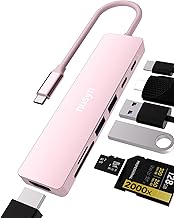
A used MacBook Pro becomes a complete study station with a few inexpensive add-ons. A quiet wireless mouse such as the Uiosmuph G12 slim rechargeable mouse spares you library glares and eases long research sessions, and a protective sleeve plus a USB-C hub cover connectivity gaps on older ports. Budget a little beyond the laptop itself for these essentials.
Tips
- Buy from sellers offering a return window so you can test the machine under real coursework loads.
- Run a full macOS update on day one to confirm the model is still supported.
- Back up to an external drive or iCloud immediately in case the used SSD is near end of life.
- Factor in a battery replacement cost if the cycle count is high but the price is otherwise great.
Frequently Asked Questions
Is a used Intel MacBook Pro still worth buying for school?
For writing, research, streaming, and video calls, yes. Intel models are much cheaper and remain capable for everyday student tasks, though Apple silicon lasts longer and runs cooler for demanding work.
How many battery cycles is too many?
MacBook batteries are rated for around 1,000 cycles. Under 500 with “Normal” condition is excellent; above 800 means you should plan for a replacement or negotiate the price down.
What is Activation Lock and why does it matter?
Activation Lock ties a Mac to the previous owner’s Apple ID. If it is still on, you cannot use the laptop. Always confirm the seller has signed out of iCloud and disabled Find My before buying.
Renewed from a retailer or private sale, which is safer?
Certified renewed units come tested and warrantied, making them the safer choice for most students. Private sales can be cheaper but require the physical and account checks in this guide to avoid surprises.
Conclusion
Buying a used MacBook Pro for school is about matching the right generation to your budget, prioritizing 16GB RAM and ample SSD storage, and verifying battery health, physical condition, and account status before you pay. Add a quiet mouse and a sleeve to complete the kit, and you will have a dependable study machine that outperforms its price for years to come.


Write Your Review
No reviews yet. Be the first to share your experience!