
Navigating the vast ecosystem of iPad note-taking applications can feel overwhelming, especially with the sophisticated hardware capabilities available in 2026. Choosing the right software is not merely about finding an app with the prettiest user interface or the most aggressive marketing campaign. Instead, it requires a deliberate evaluation of how your personal workflow intersects with core software architecture, processing efficiency, and long-term file portability.
- Hardware Integration and Low-Latency Performance
- Organization Architecture: Folders vs. Infinite Canvas
- Synchronization and Cross-Platform Reliability
- Handwriting Recognition and Search Capabilities
- PDF Annotation and Multitasking Performance
- Pricing Models: Subscriptions Versus One-Time Purchases
- Related Guides
- FAQ
- Related Guides
When you pair an iPad with an Apple Pencil, your device transforms into a dynamic digital notebook, sketchpad, and document reader all at once. However, a mismatch between your note-taking style and the app’s structural design can lead to frustrating friction, lost data, or wasted subscription fees. This decision guide cuts through the noise to help you evaluate what truly matters when selecting your primary note-taking environment.
As an Amazon Associate we earn from qualifying purchases at no extra cost to you.

Hardware Integration and Low-Latency Performance
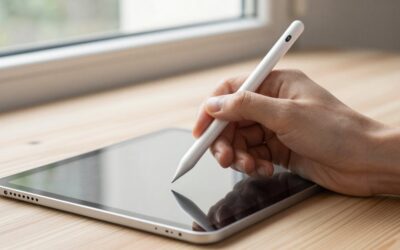
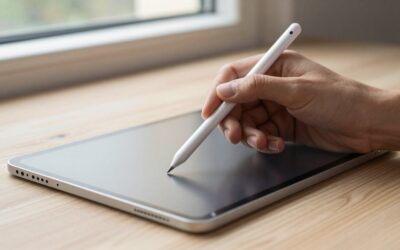
The foundation of any exceptional digital note-taking experience is how seamlessly the software communicates with your hardware. Modern Apple Pencil models offer incredible precision, pressure sensitivity, and tilt recognition, but these features rely heavily on how the application handles input rendering. You want an app engineered to leverage iPadOS Metal rendering pipelines, which drastically reduces stroke latency so that digital ink flows from the tip of your stylus instantly without noticeable lag. Apps that fail to optimize for hardware synergy often exhibit stutter during rapid handwriting or complex sketching sessions, destroying the illusion of writing on physical paper.
Organization Architecture: Folders vs. Infinite Canvas
How you structure your notes dictates whether you can retrieve information months down the line or lose it forever in a digital abyss. Note-taking applications generally fall into two structural philosophies: traditional hierarchical folder systems that mimic physical notebooks and filing cabinets, and spatial infinite canvases that allow you to map ideas visually across an expansive workspace. If your workflow relies on linear note-taking during lectures or structured meetings, a traditional notebook hierarchy with custom covers and page templates is essential. Conversely, if you are a visual thinker, designer, or mind-mapper, an infinite canvas provides the freedom to cluster related concepts spatially without running out of boundary edges.
Synchronization and Cross-Platform Reliability
Notes are rarely isolated to a single device; a truly useful note-taking app must integrate smoothly with your broader digital ecosystem. Reliable cloud synchronization ensures that your handwritten thoughts made on the go are immediately accessible on your Mac or iPhone. Look for apps that leverage robust syncing backends—whether through iCloud or proprietary servers—that handle background synchronization reliably without triggering frustrating version conflicts. Additionally, consider your export options; proprietary file formats that lock your notes inside a single app without easy PDF or markdown export can become a severe bottleneck if you ever decide to switch platforms.
Handwriting Recognition and Search Capabilities
One of the greatest advantages of digital handwriting over paper is the ability to search your own scrawls instantly. Advanced optical character recognition (OCR) engines index handwritten text in real-time, allowing you to type a keyword and locate a specific meeting note from months ago. When evaluating apps, test the accuracy of their handwriting search engine, as some struggle with cursive or messy notation styles. Furthermore, look for features that convert handwriting to typed text on the fly, as this dual functionality bridges the gap between rapid brainstorming and formal document creation.
PDF Annotation and Multitasking Performance
For students and professionals alike, an ideal note-taking app must double as a powerful PDF reader and annotator. You need the ability to import large textbook chapters, research papers, or business contracts, highlight key passages, and write margin notes directly onto the document layer. Check how the app handles heavy multi-page documents; poorly optimized apps will lag when scrolling through image-heavy PDFs. Additionally, evaluate split-screen multitasking performance so you can effortlessly drag and drop reference materials from Safari or reference a textbook side-by-side with your blank notebook.
Pricing Models: Subscriptions Versus One-Time Purchases
The monetization structure of note-taking apps has shifted dramatically, with most premium tools adopting recurring subscription models. While subscriptions often guarantee continuous software updates, cross-platform syncing infrastructure, and prompt bug fixes, they can become costly over time. Determine whether a freemium model with a one-time unlock fee meets your needs, or if a subscription is justified by features you will genuinely use daily. Avoid overpaying for bloated enterprise features if you simply need a reliable, distraction-free space to write down daily thoughts.
Related Guides
To expand your setup, explore our other expert roundups. If you want a specialized experience, check out our Best iPad Journal App with Pencil: Ultimate Top Picks. For a broader look at top-tier software, read the Best App for Keeping Notes on iPad with Apple Pencil Guide. You can also compare various workflows in Best apps for taking notes on ipad with apple pencil: Top.
FAQ
Does the Apple Pencil model change which note-taking app I should buy?
Most modern note-taking apps support the entire spectrum of current Apple Pencils without major feature discrepancies. However, advanced models with squeeze gestures or barrel roll capabilities require specific software hooks that newer apps utilize for quick tool switching. Check the app’s developer notes to ensure full support for your specific pencil hardware generation.
Is an infinite canvas better than traditional notebook pages for lectures?
Generally, traditional notebook pages are preferred for linear lectures because they prevent you from getting lost in a massive spatial workspace. Infinite canvases shine during brainstorming sessions, mind mapping, and creative design work where non-linear connections matter more than chronological order.
How much storage should I budget for heavy PDF annotation and handwritten notes?
Handwritten notes and vector ink take up relatively little space, but heavy PDF annotation libraries can consume gigabytes quickly. If you plan to store hundreds of scanned textbooks or reference documents locally alongside your notes, choose an iPad configuration with at least 256GB of storage and ensure your app utilizes efficient cloud caching.
Can I rely entirely on built-in Apple Notes, or do I need a third-party app?
Apple Notes has evolved into a remarkably powerful platform featuring instant quick notes, folder hierarchies, and robust inline PDF markup. For many users, it provides everything necessary without downloading external software, but power users may still prefer third-party apps for advanced audio-recording sync, custom paper templates, or specialized infinite canvases.




Write Your Review
No reviews yet. Be the first to share your experience!