
- Top Pick: Crawl Space Dehumidifier with Pump & Drain Hose, up to 70 Pints,4000 Sq.Ft
- Best Value: ALORAIR 70 Pints Crawl Space/Commercial Dehumidifier with Pump(Helios MP35)
- Premium Choice: Yaufey 70 Pints Energy Star Commercial Dehumidifier with Drain Hose for 5000 Sq. Ft. Crawl Space, Basement, Industrial, 10-90% RH Humidity Control, 24/7 Continuous Drainage,TUV Certified,5-Yr Coverage
The best dehumidifier for a crawl space is usually a purpose-built, ductable unit sized for the space’s moisture load—not a portable room model—with gravity drainage if a reliable downhill outlet is available and a condensate pump if it isn’t. Start with square footage, how wet the crawl space gets, and the height available for installation; then check that the unit’s rated capacity and drain setup suit those conditions.
As an Amazon Associate we earn from qualifying purchases at no extra cost to you.


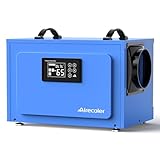
Choose capacity for the crawl space, not just its floor area
Capacity is commonly advertised in pints removed per day. Those figures are measured under specified test conditions, so a rating is not a guarantee that the unit will remove that much water in a cooler, drier crawl space. As a practical starting point, use the ranges below for a sealed or reasonably controlled crawl space. Move up a capacity tier if water regularly enters, humidity stays high, or the space has persistent damp odors. Fix standing water and drainage problems rather than expecting a dehumidifier to solve them.
| Crawl-space area | Starting capacity range | Best fit | Drain approach |
|---|---|---|---|
| Up to 800 sq. ft. | 30–50 pints/day | Small, enclosed space with a modest moisture load | Gravity drain if the outlet is lower; pump if it is not |
| 800–1,500 sq. ft. | 50–70 pints/day | Typical medium crawl space with elevated humidity | Continuous hose to a sump, drain, or approved discharge point |
| 1,500–2,500 sq. ft. | 70–100 pints/day | Larger space, humid climate, or recurring seasonal dampness | Pump is often useful when the outlet is above the unit |
| Over 2,500 sq. ft. or persistently wet | 100+ pints/day, or multiple units | High moisture load; assess leaks, drainage, and sealing first | Plan discharge routing before choosing equipment |
These are screening ranges, not a substitute for a moisture assessment. A 1,200-square-foot space with a sealed ground vapor barrier may need less capacity than a smaller space with seepage, outside air leaks, or wet soil. For a persistent water problem, have the source evaluated before buying a larger machine.
Shortlist by installation situation
- Low clearance and a nearby lower drain: Choose a compact crawl-space model with a low-profile chassis and gravity drainage. Verify the unit’s actual height, clearance needed for the air intake, and access to its filter before ordering.
- No downhill drain or a long hose route: Look for a model with a built-in condensate pump, or confirm that a compatible pump can be installed. Check the specified lift height and hose length; a pump cannot overcome an unlimited vertical rise.
- Large or unusually damp space: Compare units in the 70–100-pint/day range and above, but first address bulk water, poor grading, leaks, and an uncovered soil floor. Oversizing does not correct those problems.
- DIY installation on a tight budget: A gravity-drain unit can be less complicated and avoid pump maintenance. Budget for a suitable drain hose, stable support, electrical protection, and a humidity meter if the unit does not display humidity.
For a product shortlist, compare crawl-space or whole-home units from established manufacturers such as AprilAire and Santa Fe. Exact capacities, dimensions, and included pump features vary by model and revision, so check the current manufacturer specification sheet rather than relying on a brand name alone. A standard portable room dehumidifier may be cheaper, but it can be awkward to service in a crawl space and may not be designed for continuous, unattended operation there.
Work the drain and fit calculations before you buy
1. Check whether gravity drainage will actually work
Measure the height difference from the dehumidifier’s drain outlet to the intended discharge point. Gravity drainage needs a continuous downward slope, with no loops or uphill sections where water can collect. For example, if the unit sits 10 inches above a sump inlet and the hose can maintain a downward route, gravity may work. If the outlet is 18 inches below the sump rim, you need a pump rated to lift water at least that high, with margin for the actual hose run and bends.
2. Confirm the physical installation envelope
Measure the access opening, crawl-space height, and the path from the opening to the installation location. Compare those measurements with the unit’s length, width, and height—not just its advertised “compact” description. Leave room to remove the filter and reach controls, and follow the manual’s clearance requirements around air inlets and outlets. A unit that fits only when wedged against a foundation wall may be difficult to clean and may not circulate air properly.
3. Size with a worked example
For a sealed 1,200-square-foot crawl space with recurring high humidity but no standing water, the table points to roughly 50–70 pints/day as a starting range. If the outlet is below the unit, choose gravity drainage; if water must be lifted to a higher sump, select a model with a pump rated for that lift. If humidity remains high after sealing air leaks and addressing ground moisture, consider stepping up capacity or getting a professional assessment rather than assuming the original rating was wrong.
Features worth paying for—and what to verify
- Automatic humidity control: A built-in humidistat lets the machine cycle toward a setpoint instead of running constantly. A setting around 50–55% relative humidity is a common starting point for a dry crawl space; adjust based on conditions and local guidance.
- Continuous-drain connection: Confirm hose diameter and whether the hose is included. A drain connection is useful only if the route can reliably carry water away.
- Low-temperature operating range: Crawl spaces can be cooler than living areas. Check the manufacturer’s stated temperature range and defrost behavior; performance can fall in cold conditions.
- Filter access and serviceability: A removable, washable filter is convenient, but access matters just as much as the filter itself when the unit is under a low floor.
- Ducting options: Duct collars can help distribute dry air through a large or partitioned space. Confirm whether collars are included and whether ducting affects the rated airflow or installation requirements.
Ownership realities: drains, filters, and power
Drain failures are among the most consequential installation mistakes. A loose hose, blocked outlet, or kink can send water back into the crawl space. Secure the hose, route it away from the foundation, and test the discharge after installation. If using a pump, check its reservoir and discharge line periodically; pump components can clog or wear, and the pump needs a safe place to send water.
Inspect and clean the air filter on the schedule in the manual, more often if the crawl space is dusty. Keep the intake and outlet clear of insulation, stored materials, and debris. Check the drain for slime or sediment and make sure the unit remains level and stable. A humidity meter placed away from the unit’s direct airflow can help you see whether the space is staying near the target rather than relying on a single reading from the machine.
Use an appropriate grounded outlet and follow the manufacturer’s electrical instructions, including any guidance about a dedicated circuit or ground-fault protection. Do not use an extension cord unless the manual explicitly permits it. If the crawl space is difficult to access, has standing water near electrical equipment, or needs new wiring or a discharge line, use a qualified professional.
Bottom line
For most buyers, the decision is a two-part match: choose a capacity range based on square footage and moisture severity, then choose gravity drainage or a pump based on the route water must travel. In low-clearance spaces, dimensions, filter access, and service clearance are as important as pint capacity. Correct leaks and ground moisture first; the right dehumidifier can then help maintain the conditions you want without being forced to run against an unresolved water problem.
Ready to decide? Our #1 pick for 2026 is the Up to 800 sq. ft..
Live price & availability on Amazon.



Write Your Review
No reviews yet. Be the first to share your experience!