
A church keyboardist works differently from a solo performer. One player may have to carry the whole service — hymns in the morning, contemporary worship songs, a choir rehearsal midweek — and the instrument has to recall the right sounds instantly, connect cleanly to the house PA and survive being moved between the sanctuary, the hall and a youth room. Seventy-six keys matter here: enough range for two-handed playing and wide splits, in a body one person can still set up quickly.
This guide is written for church music teams comparing the current flagship 76-key arrangers sold on Amazon. The pool is genuinely small, because most arrangers stop at 61 keys, so the picks below are the current Yamaha and Korg flagships, chosen from their listings for style depth, registration handling and outputs. A third option would have to come from an older, discontinued generation, which is why this guide compares two rather than padding the list with boards that no longer fit the brief.
Quick Picks
As an Amazon Associate we earn from qualifying purchases.
| Product | Best for | Key spec from title |
|---|---|---|
| Yamaha Genos2 | One keyboardist covering a full service from a single setup | 76-Key Flagship Arranger Keyboard with 9-Inch Touch Screen |
| Korg Pa5X 76 | Services that flow song to song with no gaps | 76-key Arranger Workstation with XDS Crossfade Dual Player |
How to Choose
Check the style library against your actual song list
The headline style count only helps if the styles match what your team actually sings. Both listings here run into the hundreds — 800 styles on the Genos2, more than 600 on the Pa5X 76 — but the useful question is how much of that library covers hymns, gospel, contemporary worship ballads and the acoustic sets your church rotates through. Look for style categories named in the listing, and check whether the keyboard accepts additional style content, because teams often build a service around a handful of trusted arrangements. A smaller, well-matched library beats a larger one your worship leader will never open.
Registrations and setlist handling decide Sunday mornings
In a service, the keyboard is only as good as its recall. Registrations store the voice, style, tempo and effects for each song, so the player steps through the running order instead of rebuilding sounds between items. Judge a board by how it organises those registrations: the Genos2’s 9-inch touch screen keeps playlists and setlists readable at a glance in dim light, while Korg’s approach centres on its songbook and player workflow. Whatever the brand, confirm from the listing that registrations can be saved, named and reordered, and think about who else on the team needs to load the same setups when your regular player is away.
Confirm the outputs before you talk to the sound team
An arranger that sounds wonderful through headphones can still fail a church if it cannot reach the mixing desk properly. Before ordering, read the listing’s connectivity section for the outputs your PA needs — main stereo outs at minimum, and ideally a microphone input if a vocalist or speaker works from the keyboard position. Neither flagship here is built around its own speakers; the Genos2 listing pairs the keyboard with a separate speaker system, which tells you amplification is part of the plan. Agree the cable run, DI box and monitor arrangement with whoever runs sound, and order the keyboard to fit that setup rather than the other way round.
Weigh portability honestly
Seventy-six keys is the portable end of full-size playing, but these are still flagship instruments that travel in cases, not under one arm. The Pa5X 76 listing states a weight of 50.1 pounds and dimensions of 52.75 x 19.37 x 11 inches, so measure your stand, your platform and the vehicle it will ride in before committing. If the keyboard lives on one platform, weight hardly matters; if it moves between the sanctuary, a school hall and a youth room every week, the moving routine — case, trolley, a second pair of hands — becomes part of the purchase. Check the listing’s stated dimensions rather than assuming two 76-key boards are the same size.
The 2 Best Options
Yamaha Genos2

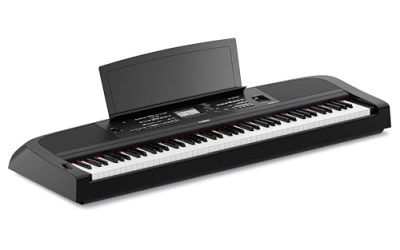
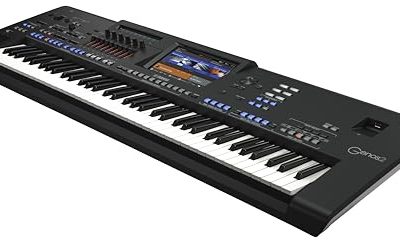
The Genos2 is the pick for a team that wants one flagship to cover traditional and contemporary services from the same chair. Yamaha lists 1,991 voices and 800 styles, with a Chord Looper for building sections under a song, and the 9-inch touch screen keeps registrations and setlists visible in dim light. The 76 FSX keys include aftertouch, which suits expressive organ and strings playing, and the same registration workflow carries from rehearsal to Sunday without rebuilding setups. It is the deeper library of the two for hymn and choir material.
Specs
- 76 FSX keys with velocity and aftertouch
- 1,991 voices and 800 accompaniment styles, as listed
- 9-inch colour touch screen
- Chord Looper
- Voice and Style library expansion as described in the listing title
- Model GENOS2
Best for: A single keyboardist or small team covering mixed traditional and contemporary services with saved registrations.
Watch out for: There are no built-in speakers to rely on — the listing pairs it with a separate speaker system — so confirm your PA or amplification plan before ordering.
ASIN: B0CKZZV7Q5
Korg Pa5X 76

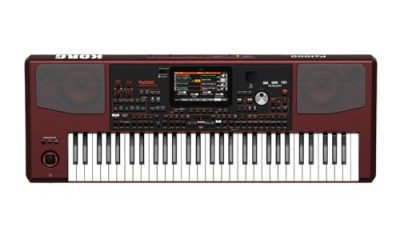
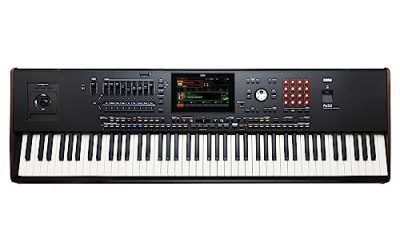
The Pa5X 76 suits teams whose services flow from song to song without pauses: Korg’s XDS crossfade dual player lets one style or song hand over to the next, which covers medleys, walk-in music and transitions while the band resets. The listing counts more than 2,200 factory sounds and over 600 styles, and the semi-weighted 76-key bed has aftertouch for pads and strings. At the weight shown in the listing it is a two-person lift for regular moves, so it fits teams with a fixed platform or a proper case and trolley routine.
Specs
- 76 semi-weighted keys with aftertouch
- More than 2,200 factory sounds and 600+ styles, as listed
- XDS crossfade dual player
- Multi-format recording
- Product dimensions 52.75 x 19.37 x 11 inches, as listed
- Item weight 50.1 pounds, as listed
- Model number PA5X76
Best for: Worship teams that run continuous sets, medleys and transitions with no dead air between songs.
Watch out for: Confirm the listed weight and dimensions against your stand, platform and transport before ordering, because this is a heavy flagship to move weekly.
ASIN: B0B4T3NBDM
Which One Fits Your Situation
One keyboardist carries the whole service
Choose the Yamaha Genos2. When a single player is the band, the depth of the style and voice library matters more than anything else, and 800 styles with 1,991 voices gives that player an arrangement for hymns, worship songs and choir pieces without outside help. Registrations let the whole service be prepared in advance and stepped through in order. Add a rehearsal session to build those registrations properly, because the board rewards preparation and punishes improvisation at the panel.
Your set runs as one continuous flow
Choose the Korg Pa5X 76. The XDS crossfade dual player is designed for services where songs merge into each other, prayer music runs under spoken sections and there is no natural pause to load the next setup. One side of the player can hold the current song while the next is cued, then crossfade at the right moment. Teams that play medleys, or that cover communion and offering music without stopping, will feel the difference every single week.
The keyboard moves between rooms every week
Measure first, then decide. Both boards are full-size flagships, and the Pa5X 76 listing states 50.1 pounds, so a weekly move means a case, a trolley and two carriers whichever you choose. The Genos2’s touch screen setlist workflow is quicker to reconfigure in a new room, which tips the choice its way for teams rotating between a sanctuary, a hall and a youth space. Whichever board you pick, confirm the dimensions against the stand and vehicle before ordering.
Your team supports a choir and traditional hymns
Choose the Yamaha Genos2. Choir work needs organ, strings and choral voices that sit under voices without crowding them, plus styles that respect hymn tempos rather than pushing them. The Genos2’s library depth and registration system suit a prepared folder of hymn arrangements that can be recalled identically every week. The aftertouch keyboard also helps with expressive organ playing, where the choir’s phrasing needs the keyboard to breathe with it rather than simply keep time.
Common Mistakes
- Buying a 61-key arranger for church work and running out of range the first time a split puts bass in the left hand and a full chord voicing in the right.
- Assuming a flagship arranger has built-in speakers that can fill a hall, when the listing expects a PA or a separate speaker system.
- Arriving on Sunday without saved registrations, then rebuilding sounds between songs while the congregation waits.
- Skipping the conversation with the sound team and discovering the desk, cable run or monitor setup does not match the keyboard’s outputs.
- Comparing boards on voice and style counts alone, without checking whether the library covers your church’s actual repertoire and service order.
Frequently Asked Questions
Why choose 76 keys instead of 61 or 88 for church use?
Seventy-six keys give a worship player room for left-hand bass or pads under wide right-hand voicings, which is how most service playing actually works. A 61-key board forces constant octave shifting mid-song, while an 88-key weighted piano is heavier to move and usually lacks the arranger styles a small team depends on. For a church keyboard that travels between rooms, 76 is the practical middle ground between range and portability.
Can one arranger keyboard really cover a full service?
For many churches, yes, provided preparation happens midweek. Styles supply drums, bass and accompaniment parts, and registrations store each song’s setup so the player steps through the service in order. The limits are repertoire and taste: unusual songs may need a custom registration, and a team with strong live musicians may use the arranger mainly for keys and pads. It replaces a band adequately; it does not replace rehearsal.
Do these keyboards work without a PA system?
Not in any useful sense for a service. Neither flagship in this guide is built around built-in speakers, and the Genos2 listing pairs the keyboard with a speaker system, which signals how it is meant to be heard. A powered speaker can cover a prayer meeting or rehearsal room, but a sanctuary needs the house PA or a dedicated setup. Confirm the amplification plan before the keyboard arrives, not after.
What should we check on the listing before ordering?
Four things. First, the dimensions and weight, against your platform, stand and transport. Second, the connectivity list, checked against your mixing desk’s inputs. Third, what is included — keyboard only, or a speaker bundle — because flagship listings vary. Fourth, the seller and the listing’s model name, since both boards sit near similar 61-key and earlier-generation versions. Checking these prevents the costliest ordering mistakes.


Write Your Review
No reviews yet. Be the first to share your experience!