
Choosing a keyboard for teaching is a different decision from choosing one for home playing. Students need a full 88 weighted keys so the touch they practise on matches the acoustic pianos they meet in exams and recitals, yet a plain stage piano gives a teacher nothing to play against. Arranger features change the lesson itself: a steady style keeps a nervous beginner in time, split and duet modes let teacher and student share one instrument, and a headphone socket keeps the room usable for everyone else.
This guide is for private piano teachers, small teaching studios and school music rooms that want one instrument to cover lessons, practice and simple ensemble work. Every pick below is an 88-key model with built-in accompaniment, chosen from its Amazon listing: the Yamaha DGX-670B for its lesson guidance and style library, the Roland FP-E50 bundle for a room that must be ready on day one, and the slim Casio Privia PX-S3100 for tight spaces and partner lessons.
Quick Picks
As an Amazon Associate we earn from qualifying purchases.
| Product | Best for | Key spec from title |
|---|---|---|
| Yamaha DGX-670B | Lessons built around guided practice and full-band styles | 88-Key Weighted Digital Piano with Sustain Foot Switch and Music Rest |
| Roland FP-E50 Bundle | A new teaching room that must be complete on delivery day | 88-Key Digital Piano Bundle with Stand, Three Pedal Unit and Bench |
| Casio Privia PX-S3100 | Small rooms, shared classrooms and side-by-side lessons | 88-Key Weighted Digital Piano with 700 Tones |
How to Choose
Start with the action, not the arranger
The accompaniment is the fun part, but the key action is what a student takes into every other piano they will ever play. For teaching, insist on a full 88 keys with a weighted hammer action, graded or scaled so the bass end feels heavier than the treble, as the listings for all three picks here describe. Semi-weighted and synth-action boards are fine for keyboard classes, yet they teach a touch that has to be unlearned before an exam on an acoustic piano. Check the listing’s own wording for the action type rather than relying on the word piano in the product name, because plenty of 88-key boards are unweighted.
Treat the accompaniment as a practice tool
A style library earns its place in a studio when it keeps students playing in time and makes repetitive practice bearable. Look at how the accompaniment behaves, not just how many styles are listed: the DGX-670B’s Adaptive Style builds or thins the backing with the student’s playing, and its Simple Style reduces the band to rhythm and bass for first attempts. One-touch settings that match a registration to each style save lesson minutes, and a clear tempo control matters more than exotic genres. For very young beginners, single-finger or smart chord modes let the left hand trigger full chords while it is still learning to voice them.
Look for lesson, split and duet features
The features that separate a teaching keyboard from a performance one are easy to miss in a listing. A lesson or guide function that can mute the right-hand or left-hand part lets students practise one hand against the recording, and the DGX-670B adds guided modes such as Follow Lights and Your Tempo. Split mode puts a second sound under the teacher’s hands for demonstrations, while a true duet or twin mode divides the keyboard into two identical ranges so a small child and a teacher can play the same notes side by side, which is exactly how the PX-S3100 is set up. Confirm each mode by name in the listing before you buy.
Plan for headphones, stands and pedals
A teaching room fails on logistics more often than on sound. Two headphone outputs, as listed for the PX-S3100, let a teacher monitor a student silently while another lesson happens nearby, and even one output changes what you can assign during a busy afternoon. Then read the listing’s included-items line carefully: the DGX-670B includes a sustain foot switch and music rest but its furniture stand is sold separately, while the FP-E50 bundle folds the stand, three-pedal unit and bench into the same order. Pedals matter for older students, so decide whether a single sustain switch is enough or a three-pedal unit belongs in the room from the start.
The 3 Best Options
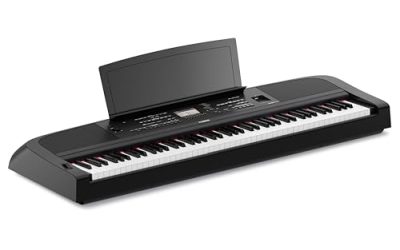
Yamaha DGX-670B

The DGX-670B suits teachers whose students learn best by playing along. Its 263 auto accompaniment styles cover pop, jazz, R&B and more, and the Adaptive Style function thins or builds the backing in response to how hard the student plays, while Simple Style strips it back to rhythm and bass for early lessons. The Lesson/Guide functions, including Follow Lights and Your Tempo, let learners chase the music at their own pace, and Smart Chord turns one left-hand finger into full chords for beginners who are not ready to voice them yet.
Specs
- 88 keys with Graded Hammer Standard (GHS) weighted action
- 630 voices, including the CFX grand piano
- 263 auto accompaniment styles, each with 4 variations
- 256-note polyphony
- Lesson/Guide functions including Follow Lights, Any Key and Your Tempo
- Bluetooth audio and microphone input
- Sustain foot switch and music rest included; furniture stand sold separately
Best for: Teachers who build lessons around guided practice and playing along with styles.
Watch out for: The furniture stand and three-pedal unit are separate purchases, so check the listing’s included items before assuming the room is complete.
ASIN: B08RNFJ98M
Roland FP-E50 Bundle

This Austin Bazaar bundle of the Roland FP-E50 is the practical choice for a studio being set up from an empty room: the stand, three-pedal unit, bench and sustain pedal arrive in the same order, alongside a piano book and online lessons. The piano itself brings Roland’s professional auto-accompaniment, with interactive backing that follows the student’s playing, plus a microphone input with vocal harmony for teachers who sing parts or run small group sessions. Bluetooth and MIDI support cover app-based homework and tablet scores without extra cables across the floor.
Specs
- 88-note PHA-4 Standard hammer-action keyboard
- SuperNATURAL Piano and ZEN-Core sound engines
- Professional auto-accompaniment with interactive backing styles
- Mic input with vocal harmony effects
- Bluetooth and MIDI support
- Bundle includes KSFE-50 stand, KPD-70 three-pedal unit, bench and sustain pedal
- Piano book, online lessons and instructional DVD included in the bundle
Best for: A teacher fitting out a new studio who wants the piano, furniture and pedals in one order.
Watch out for: This is a bundle listing, so confirm every named component is in the box and that the seller shown is the bundle seller before ordering.
ASIN: B0BTD22B14
Casio Privia PX-S3100

The PX-S3100 fits teaching spaces where floor area is the constraint: Casio lists it as a slim 88-key hammer-action piano, so it sits against a wall in a spare room or school corner where a furniture-style piano will not go. Its 200 rhythms and auto accompaniment still give students a band to play with, the Duet mode splits the keyboard into two identical ranges for side-by-side lessons, and two headphone outputs let a teacher listen in silently. The included wireless adaptor adds Bluetooth audio and MIDI for lesson apps.
Specs
- 88 keys with Smart Scaled Hammer Action Keyboard
- 700 tones and 192-note polyphony
- 200 built-in rhythms with auto accompaniment and 200 One Touch Presets
- Duet mode and lesson function with right-hand, left-hand or both-hands part selection
- Two headphone outputs
- Bluetooth audio and MIDI via the included Wireless MIDI & Audio Adaptor
- Headphones included in the listing; stand and bench not included
Best for: Teachers working in small or shared rooms who run partner lessons and silent practice.
Watch out for: The listing includes headphones but no stand or bench, so both need to be ordered separately for a permanent setup.
ASIN: B09S6RVRCZ
Which One Fits Your Situation
Your students practise better with a band behind them
Choose the Yamaha DGX-670B. The combination of 263 styles, Adaptive Style that reacts to the student’s dynamics and guided lesson modes is built for exactly this teaching style. Beginners stay in time because the backing carries them, and the teacher can thin the arrangement down to rhythm and bass when a passage needs work. It is the strongest pick here for lesson structure, provided you add the stand it does not include.
You are equipping a brand-new teaching room
Choose the Roland FP-E50 bundle. A bare piano in a box still leaves a studio unusable until a stand, pedals and bench arrive, and this listing folds all of them into one delivery, with a piano book and online lessons on top. The FP-E50’s auto-accompaniment and mic input also cover group warm-ups and sing-along work that a plain digital piano cannot. Check the bundle contents line once more at checkout, then the room is ready.
Your teaching space is a spare room or a shared classroom
Choose the Casio Privia PX-S3100. Its slim body is the easiest of the three to fit along a wall or move between rooms, and the two headphone outputs mean a lesson can run quietly while the space is used for something else. The 200 rhythms keep accompaniment on the table despite the small footprint. Remember that the stand and bench are separate orders, so plan the setup before the first student arrives.
Your students are preparing for graded piano exams
Choose the Yamaha DGX-670B. Exam candidates need a graded weighted action that behaves like the acoustic pianos they will be examined on, and the GHS keyboard plus 256-note polyphony handle pedalled repertoire without notes dropping out. The lesson and guide functions still help between exams, and the style library keeps younger candidates motivated during term time. Add the furniture stand and a proper pedal setup so practice posture matches the exam room as closely as possible.
Common Mistakes
- Buying a 61-key arranger for piano lessons, then watching students run out of range as soon as repertoire moves beyond beginner books.
- Choosing unweighted or semi-weighted keys for students who will sit exams on acoustic pianos, where the touch feels completely different.
- Assuming a stand, bench and three-pedal unit are in the box when the listing sells them separately or bundles them only in a specific variant.
- Ignoring headphone outputs in a shared teaching space, which limits silent practice and partner monitoring during busy hours.
- Comparing keyboards on voice count alone and skipping the lesson, duet and split features that actually change how a lesson runs.
Frequently Asked Questions
Do beginners really need all 88 keys for lessons?
For piano teaching, yes. Method books move beyond the middle of the keyboard, and exam repertoire assumes the full range from the start of the higher grades. An 88-key board means the student practises on the same layout they will meet on an acoustic piano. A 61-key arranger is fine for keyboard or ensemble classes, but it becomes a ceiling for piano students within two years.
Can a teacher and student play on one keyboard at the same time?
On the right model, yes. A duet or twin mode, such as the one listed for the PX-S3100, splits the keyboard into two identical pitch ranges so teacher and student can play the same passage side by side. Split mode is different: it assigns two sounds to two halves at their normal pitches, which suits demonstrations. Check which modes the listing names, because sellers often confuse the two.
How do accompaniment styles help actual practice?
A style gives the student a tempo and a harmonic frame, which exposes rushing, dragging and wrong chords faster than playing alone. Teachers can start with a reduced backing, such as the DGX-670B’s Simple Style, then restore the full arrangement as confidence grows. Styles make scales, chord drills and exam aural work less repetitive. They are a practice structure, not a substitute for unaccompanied playing, so lessons should mix both.
What extras should a studio plan for besides the keyboard?
Start with the items the listing leaves out: a stable stand at playing height, a bench, and pedals — a single sustain switch at minimum, a three-pedal unit for advancing students. Headphones matter if the room is shared or lessons run back to back. The FP-E50 bundle includes most of it in one order, while the DGX-670B and PX-S3100 need pieces added, so compare the included-items lines, not the headlines.


Write Your Review
No reviews yet. Be the first to share your experience!