
As an Amazon Associate we earn from qualifying purchases.
The Samsung Galaxy S23 vs iPhone 14 comparison is the classic compact-flagship choice between Android and iOS. Both phones pair a 6.1-inch display with a premium build, a capable main camera and full 5G support, and both are now most commonly found on Amazon US as Renewed models rather than as brand-new stock. That makes this a comparison of two mature, well-understood phones: the differences that matter are the refresh rate, the camera approach, the charging connector, the SIM arrangement and, above all, which software ecosystem already holds your apps, photos and messages.
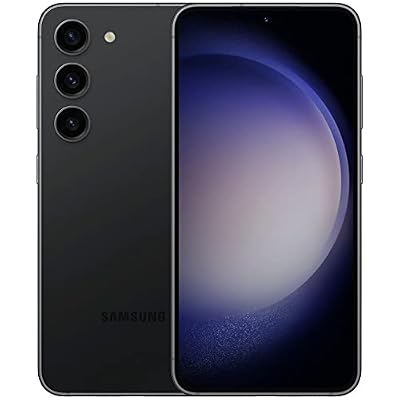
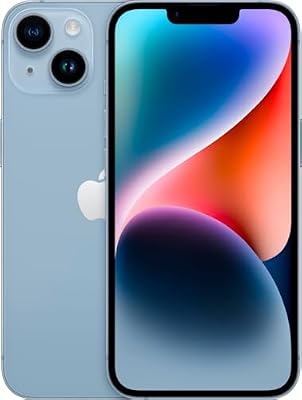
This guide compares the exact listings checked for this article: the Samsung Galaxy S23 5G, 128GB, Phantom Black, Unlocked (Renewed), and the Apple iPhone 14, 128GB, Blue, Unlocked (Renewed). Both are Renewed products, which means each has been inspected, tested and refurbished as necessary to be fully functional by Amazon-qualified suppliers, and each carries the warranty stated on its own listing. Read the Renewed section below before deciding, because condition grades and included accessories are part of what you are choosing between.
Disclosure: This article contains affiliate links. If you buy through these links, we may earn a commission at no additional cost to you.
Quick comparison
| Feature | Samsung Galaxy S23 (Renewed) | Apple iPhone 14 (Renewed) |
|---|---|---|
| Display | 6.1-inch AMOLED, up to 120Hz | 6.1-inch OLED, 60Hz |
| Resolution | Up to 2340 x 1080 pixels | 2532 x 1170 pixels |
| Chip | Snapdragon, 3.2 GHz | Apple A15 Bionic, 3.23 GHz |
| Operating system | Android | iOS 16 |
| Storage on checked listing | 128GB | 128GB |
| Main camera | 50MP rear, 12MP front | 12MP rear, 12MP front |
| Video | Up to 8K capture | Up to 4K capture |
| Battery capacity | 3,900 mAh | 3,279 mAh |
| Connector | USB Type-C | Lightning |
| SIM | Nano SIM, single SIM slot | eSIM |
| Unlock status | Unlocked | Unlocked for all carriers |
| Condition | Renewed | Renewed |
The two listings in detail
Samsung Galaxy S23 5G, 128GB, Phantom Black — Unlocked (Renewed)
Check the Galaxy S23 (Renewed) on Amazon
The Galaxy S23 listing checked for this comparison is the 128GB Phantom Black model, unlocked, sold as a Renewed product with a 90-day warranty stated on the page. The page lists a 6.1-inch AMOLED display with a refresh rate of up to 120Hz, a Snapdragon processor running at 3.2 GHz, 8GB of RAM and a 3,900 mAh lithium-ion battery. The camera hardware is headed by a 50MP rear sensor and a 12MP front camera, with video capture listed up to 8K, and the product description highlights Nightography for low-light photography and an Adaptive Vision Booster for viewing content in different lighting.
The page also confirms the practical details: 5G cellular technology, USB Type-C connection, no headphone jack, face recognition among its biometric options, a single Nano SIM slot, and dimensions of 5.76 x 2.79 x 0.3 inches. A charging cable is listed as the built-in media included with this Renewed model. For buyers who want a compact Android phone with a fast-refreshing screen and a higher-resolution main camera on paper, this is the listing that anchors the Samsung side of the comparison.
Apple iPhone 14, 128GB, Blue — Unlocked (Renewed)
Check the iPhone 14 (Renewed) on Amazon
The iPhone 14 listing checked here is the 128GB Blue model, unlocked for all carriers, sold as a Renewed product with a 90-day Amazon Renewed warranty stated on the page. Its page lists a 6.1-inch OLED display at 2532 x 1170 pixels with a 60Hz refresh rate, the Apple A15 Bionic processor at 3.23 GHz, iOS 16, and a 3,279 mAh battery with an average battery life figure of 20 hours given in the product information. The camera system is a dual rear arrangement built around a 12MP rear sensor, with a 12MP front camera and video capture up to 4K.
Other page-stated details include Face Recognition for unlocking, Lightning as the connector type, eSIM instead of a physical SIM slot on this US model, built-in GPS, and an item weight of 172 grams. The box contents are listed as the iPhone 14 and a USB cable. The listing also notes that Renewed iPhones are not certified by Apple, which is worth knowing before you buy: the inspection and warranty behind this phone come through the Amazon Renewed programme described on the page, not through the manufacturer. For buyers already using an iPhone, iPad or Mac, this is the natural continuation of that setup.
Display: refresh rate against resolution
Both phones use a 6.1-inch panel, so neither asks you to carry a larger device, and both suit one-handed use better than the bigger models in their families. The difference is in how each panel is tuned. The Galaxy S23 page lists an AMOLED display with a refresh rate of up to 120Hz, which means supported scrolling and motion can appear smoother than on a fixed-rate screen. Its maximum display resolution is listed as 2340 x 1080 pixels.
The iPhone 14 page lists an OLED display at 2532 x 1170 pixels and a 60Hz refresh rate, with a pixel density of 460 pixels per inch in the product information. On paper, then, the trade is straightforward: the Samsung offers the higher refresh rate, while the Apple offers the higher stated resolution and pixel density. If you read and scroll for long stretches, the refresh rate is the difference you are most likely to notice day to day. If you tend to judge a screen by still-image sharpness, the iPhone figures are the stronger set. Neither listing suggests a poor display; they simply prioritise different things.
Performance and software
The Galaxy S23 runs Android on a Snapdragon processor listed at 3.2 GHz, with 8GB of RAM on the checked listing. The iPhone 14 runs iOS 16 on Apple’s A15 Bionic at 3.23 GHz. Clock figures do not translate directly across platforms, so the honest way to frame this section is by ecosystem rather than by a synthetic winner. Android on the Galaxy gives you Samsung’s interface, wide sideloading and customisation options, and straightforward file handling over USB Type-C. iOS on the iPhone gives you Apple’s interface, iMessage and FaceTime, and tight integration with an iPad, a Mac or AirPods if you already own them.
For most buyers, this is the section that actually decides the purchase. A phone is replaced every few years, but app purchases, photo libraries, message history and learned habits carry over. Switching sides is possible, and both platforms provide migration tools, yet it still costs time. If your household, car system and accessories already lean one way, matching that lean is usually worth more than a small hardware edge on the other side. If you are genuinely uncommitted, then the display and camera differences in this comparison become the deciding factors instead.
Cameras
Samsung leads with resolution on the main camera: the S23 page lists a 50MP rear sensor against the iPhone 14’s 12MP rear sensor, and both phones list a 12MP front camera. The Galaxy’s product description leans on Nightography, its branding for low-light capture, and the page lists shooting modes including a night mode. Video capture ceilings also differ, with up to 8K listed for the Galaxy and up to 4K for the iPhone.
Megapixels alone do not settle real-world photo quality, because processing shapes the final image as much as the sensor does. What the listings do establish is the hardware starting point and the headline features each maker chose to publish. Video creators who want the highest stated capture resolution will note the Galaxy figure. Buyers who mostly share photos through messaging apps will find either phone’s output more than sufficient, and should weigh the front camera, which is evenly matched on the stated figures, just as heavily.
Battery and charging
The Galaxy S23 page lists a 3,900 mAh battery, while the iPhone 14 page lists 3,279 mAh alongside an average battery life figure of 20 hours and a talk time of 18 hours in its product information. Capacity numbers are not directly comparable across platforms because screen behaviour and software management differ, so treat them as a rough guide rather than a verdict. Both phones are compact models rather than endurance editions, and heavy camera or gaming days will call for a top-up with either.
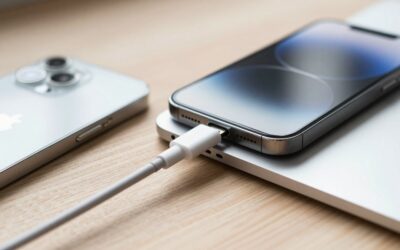
The connector difference is simpler and more practical. The Galaxy uses USB Type-C, the same connector as most current laptops, tablets and Android accessories, and a charging cable is listed with the Renewed model. The iPhone 14 uses Lightning, and its box contents are listed as the phone and a USB cable. If your desk and travel kit are already built around USB-C, the Samsung drops in without an extra cable type. If your home is full of Lightning accessories from earlier iPhones, the iPhone keeps them useful.
Connectivity, SIM and unlocking
Both checked listings are unlocked phones with 5G. The iPhone 14 is described as unlocked for all carriers, with 5G and 4G LTE cellular technology and Bluetooth, USB and Wi-Fi connectivity listed. The Galaxy S23 is listed as unlocked with 5G, GSM network technology and Bluetooth connectivity.
The SIM arrangements differ in a way that matters for travellers and for anyone who swaps physical cards. The Galaxy page lists a single Nano SIM slot, so a physical card still has a home. The iPhone 14 page lists eSIM as the SIM type, which means activation is handled digitally through the carrier rather than by moving a card. Neither approach is better in the abstract, but if your carrier or your travel routine depends on physical SIM swapping, that line of the specification table may decide the comparison on its own.
What Renewed means for both phones
Because both checked listings are Renewed, the buying advice is shared. The pages explain that Renewed products have been professionally inspected, tested, cleaned and refurbished as necessary by Amazon-qualified suppliers to be fully functional, and that a product is restored to its original factory settings and supplied in one of the cosmetic conditions named on the page, from Premium through Excellent, Good or Acceptable. Accessories equivalent to those that shipped in the box when new are included, though they may not be original, and packaging may be the original box or a new cardboard box.
Each listing states its own warranty: 90 days on the Galaxy S23 listing checked, and a 90-day Amazon Renewed warranty on the iPhone 14 listing checked. When your phone arrives, check the cosmetic condition against the grade described, confirm the storage matches the 128GB on the listing, verify the phone is unlocked by completing carrier activation, and review battery behaviour during the first days while the return route described on the page is fresh in mind. Those simple checks apply equally to both sides of this comparison.
Which one should you choose?
Choose the Galaxy S23 if you want the 120Hz display, the higher-resolution main camera on paper, 8K video capture, a physical Nano SIM slot and a USB Type-C connector that matches the rest of a modern kit bag, all inside the Android ecosystem. Choose the iPhone 14 if you want iOS, Face Recognition through Face ID, the higher stated display resolution, and continuity with an iPad, Mac or AirPods you already own, and you are comfortable with eSIM activation and a Lightning cable.
If you are switching platforms, budget an evening for the move itself: accounts, two-factor apps, photo libraries and message history all need attention whichever direction you travel. If you are staying on your current platform, the decision is already half made, and the Renewed condition grade and warranty on the specific listing deserve more of your attention than the small hardware gaps between these two well-matched phones.
Frequently asked questions
Are both phones in this comparison Renewed?
Yes. The Galaxy S23 and iPhone 14 listings checked for this article are both Renewed, unlocked models, and each page describes the inspection, testing and refurbishment carried out by Amazon-qualified suppliers, plus the warranty that applies to that listing.
Do both phones support 5G?
Yes. The Galaxy S23 page lists 5G cellular technology, and the iPhone 14 page lists 5G alongside 4G LTE. Both checked listings are unlocked, so carrier compatibility should still be confirmed against the bands your carrier uses before ordering.
Which phone has the smoother display?
On the stated figures, the Galaxy S23, because its page lists a refresh rate of up to 120Hz against the iPhone 14’s 60Hz. The iPhone counters with a higher stated resolution of 2532 x 1170 pixels and 460 pixels per inch.
Can I use a physical SIM card in both phones?
The Galaxy S23 listing includes a single Nano SIM slot. The iPhone 14 listing checked here uses eSIM, so activation is digital rather than card-based on that model.
What comes in the box with each Renewed phone?
The Galaxy S23 listing names a charging cable among its included media. The iPhone 14 listing names the phone and a USB cable. Renewed pages note that included accessories are equivalent to the originals and may not themselves be original items.
Write Your Review
No reviews yet. Be the first to share your experience!