
Quick answer: Our top pick in 2026 is the Small wired power bank, 5,000mAh — our #1 rated choice. See the full ranked comparison, alternatives and buying advice below.
The Short Answer
An iPhone battery case is worth it if you regularly run out of power away from an outlet and want charging protection built into the phone case. If you only need extra battery life occasionally, a small power bank is usually cheaper, more flexible, and less bulky.
That one condition matters because a battery case is a specialized accessory. It adds a second battery to your iPhone, but it also adds weight, thickness, and another device that must be charged. In 2026, the decision comes down less to whether battery cases work and more to whether the convenience is worth carrying one every day.
As an Amazon Associate we earn from qualifying purchases at no extra cost to you. Product prices and availability are accurate as of the date shown and are subject to change.

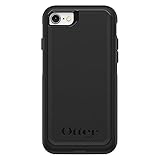
![QTshine Battery Case for iPhone 8/7/6s/6/SE (2022/2020),[2025 Upgraded] 7000mAh Ultra-Slim Portable Extended Charger Cover for iPhone 8/7/6s/6/SE (2022/2020) Charging Case (4.7 Inch)-Black](https://m.media-amazon.com/images/I/41lAcb3pcmL._SL160_.jpg)
What You Actually Get
A battery case combines a protective phone shell with a rechargeable battery pack. Your iPhone slides or snaps into the case, and a button, switch, or automatic charging feature sends power from the case to the phone through the charging port or built-in connector.
Capacity is usually advertised in milliamp-hours, or mAh. The products in this category commonly claim between 5,000mAh and 7,500mAh. For example, the listed cases for older 4.7-inch iPhones and the iPhone 13/13 Pro/14 advertise 7,000mAh and 7,500mAh capacities, respectively, with prices around $25.60 to $25.95.
Those numbers are not the same as usable iPhone battery life. Energy is lost during voltage conversion and charging, and the case’s capacity rating may be measured under conditions different from normal use. As a practical expectation, a 7,000mAh case should provide substantial supplemental power, but buyers should not assume it will deliver a perfect two full phone charges. Actual results depend on the iPhone model, battery health, temperature, cable or connector design, and whether you use the phone while charging.
Expect a battery case to weigh roughly 6 to 10 ounces and add about 0.4 to 0.7 inches of thickness, depending on its capacity and construction. A slim model may be easier to hold, while a high-capacity case can make a compact iPhone feel closer to a small power bank attached to the back. Most charge through USB-C or Lightning, although the exact port and compatibility vary by model.
Charging speed is another important detail. Many inexpensive cases deliver approximately 5W to 10W to the phone, rather than matching the fastest wired charging speeds supported by newer iPhones. Wireless charging may work inconsistently or not at all through a thick case. Always check whether the case supports pass-through charging, meaning the phone and case can charge together, and whether it supports data syncing through its connector.
Pros
- Convenience: The battery is always attached to the phone, so there is no separate power bank to pack, hold, or connect with a cable.
- Emergency power: A case can keep your phone usable during long commutes, flights, festivals, road trips, work shifts, and days spent navigating outdoors.
- Protection: Most designs provide a raised lip around the screen and some coverage around the sides and back. They can replace a standard protective case, though protection quality varies.
- Useful capacity: A 5,000mAh to 7,500mAh rating can meaningfully extend a phone’s day, especially when using navigation, video, mobile data, or a camera.
- No dangling cable: You can continue using the phone while it charges without managing a cable connected to a separate battery pack.
- Low upfront cost: Basic models often cost about $25 to $45, making them an affordable backup compared with replacing an iPhone battery or buying a premium magnetic battery pack.
Cons
- Extra bulk: A case that adds several ounces and roughly half an inch of thickness can make the iPhone less comfortable in a pocket or small bag.
- Slower charging: Budget cases commonly charge at around 5W to 10W. That is adequate for topping up but noticeably slower than a modern wall charger.
- Heat: Charging the phone inside a battery case can produce warmth, particularly during gaming, video recording, navigation, or use in a hot car. Heat is not ideal for long-term battery health.
- Capacity claims are optimistic: The advertised mAh figure describes the case battery, not necessarily the power that reaches the iPhone. Older or low-quality cells may also lose capacity over time.
- Compatibility limitations: A case made for the iPhone 13 may not fit an iPhone 14 correctly, even when the phones have similar dimensions. Camera cutouts, buttons, connectors, and MagSafe features can differ.
- Potential connector problems: Some cases interfere with wired headphones, CarPlay, data transfer, or charging accessories. Models with a fixed connector require particular care when inserting the phone.
- It becomes obsolete with the phone: When you upgrade to a different iPhone size or port configuration, the case may no longer be useful.
- Less flexible than a power bank: A battery case charges only the phone it fits. A conventional power bank can also charge earbuds, tablets, cameras, and other devices.
Who Should Buy It
Buy a battery case if your iPhone frequently reaches 10% or less before you get home, and you dislike carrying a separate battery. It is especially practical for commuters who spend hours away from outlets, travelers using maps and translation apps, event attendees, delivery workers, students, and anyone who uses the camera or cellular data heavily throughout the day.
It can also make sense for an older iPhone with a worn battery. If your phone’s battery health has declined and you are not ready to replace the phone, a battery case can provide a temporary extension. However, if the iPhone shuts down unexpectedly or has severe battery problems, replacing the internal battery may be a better long-term fix.
Choose a case with a clearly stated model fit, reliable protection around the connector, an on/off control, visible charge indicators, and pass-through charging if you want to charge everything together. A 5,000mAh case is generally a better balance for daily use; a 7,000mAh or 7,500mAh model is more appropriate when maximum runtime matters more than pocket comfort.
Who Should Skip It
Skip a battery case if you usually finish the day with plenty of charge, carry a backpack, or already own a power bank. A case is also a poor choice for people who prioritize a thin phone, use MagSafe accessories, rely on wireless charging, or frequently switch between several iPhone models.
It may not be worthwhile if you want the fastest possible charging. A wall charger or USB-C power bank can deliver more power and often has better thermal management. Similarly, buyers who expect a cheap 7,000mAh case to provide multiple complete charges may be disappointed by real-world efficiency and the added heat.
Cheaper Alternatives
| Option | Cost | Trade-off |
|---|---|---|
| Small wired power bank, 5,000mAh | $15–$30 | Cheaper and removable, but requires a cable and separate item to carry. |
| Compact power bank, 10,000mAh | $20–$45 | Usually provides more usable capacity and can charge other devices, but is heavier and less convenient. |
| Replacement iPhone battery | $70–$110 | Restores internal battery performance without adding bulk, but costs more and requires service. |
| Magnetic battery pack | $35–$100 | Attaches when needed and avoids a permanent bulky case, but may charge more slowly and requires a compatible phone or magnetic case. |
| Wall charger and longer cable | $15–$40 | Fast and inexpensive where an outlet is available, but useless when you are away from one. |
FAQ
Does a battery case fully charge an iPhone?
Sometimes, but do not assume it will. A case advertised at 7,000mAh or 7,500mAh loses energy during voltage conversion, and the phone consumes power while charging. A smaller iPhone may receive a full charge plus additional power, while a larger model or an iPhone with an aging battery may receive less. Look for independent testing when available rather than judging performance from the mAh number alone.
Do battery cases damage iPhone battery health?
They do not automatically damage the phone, but heat and frequent high-temperature charging can accelerate battery wear. Avoid using a battery case under blankets, in direct sun, or during demanding games while charging. If the case becomes unusually hot, stop charging and let both devices cool.
Can you use an iPhone battery case with a screen protector?
Usually, yes. Most screen protectors do not affect fit because they sit on the front glass, while the battery case grips the sides and back. Very thick edge-to-edge protectors can occasionally conflict with a tight-fitting case. Check the manufacturer’s fit notes if your protector has raised or reinforced edges.
Is a battery case better than a power bank?
It is better for immediate convenience because it is always attached and requires no separate cable in use. A power bank is better for flexibility, capacity, charging speed, and multi-device use. For most people, a power bank is the better value; a battery case wins when avoiding cables and keeping the phone powered all day are the top priorities.
Ready to decide? Our #1 pick for 2026 is the Small wired power bank, 5,000mAh.
Live price & availability on Amazon.





Write Your Review
No reviews yet. Be the first to share your experience!