
Buying an AirPods case looks simple until the wrong fit blocks the charging port, interferes with wireless charging, or adds enough bulk to make your earbuds unpleasant to carry. Many shoppers choose based on color alone, assume every case supports the same features, or buy from a listing that uses vague model names. Those mistakes can leave you with a loose lid, a trapped hinge, or a case that does not fit your particular generation.
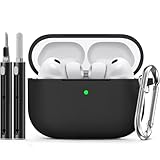
This guide explains what to look for in AirPods cases before you buy. The goal is not to find the most expensive cover, but to match the case with your AirPods model, daily habits, charging setup, and tolerance for extra weight. Whether you are considering a low-cost cleaner-kit case or a leather cover priced near $20, these are the details that actually matter.
As an Amazon Associate we earn from qualifying purchases at no extra cost to you. Product prices and availability are accurate as of the date shown and are subject to change.



Decide These 3 Things First
- Confirm the exact AirPods model. Compare the case listing with your model name, generation, and charging-case shape. “AirPods,” “AirPods Pro,” and newer numbered versions are not automatically interchangeable.
- Choose your protection level. A slim silicone sleeve is suitable for pocket and desk use. A harder shell, raised bumper, or full hinge-and-lid design is better for bags, commutes, and frequent drops.
- Pick your charging and carrying priorities. Decide whether you need wireless charging pass-through, a lanyard, a carabiner, a visible pairing button, or space for a tracker. Each feature can add bulk or affect access.
Size and Model Fit
Fit is the first decisive factor because a case made for the wrong charging case cannot be fixed with a better material. Before ordering, check the manufacturer’s compatibility list and compare photos of the hinge, speaker openings, indicator light, pairing button, and charging port.
A well-fitted cover should add roughly 1 to 3 millimeters of material around the charging case, not create large gaps at the lid or base. For everyday carry, aim for a total added weight of about 10 to 25 grams. Heavier protective designs can reach 30 to 45 grams, which may be worthwhile for a backpack but noticeable on a keychain.
Pay particular attention to lid alignment. The lid should open fully without rubbing against the case, and it should remain attached when you open the charging case with one hand. A cover that slides upward by more than 2 or 3 millimeters is likely to collect dust and eventually loosen further.
Material and Surface Feel
Silicone is usually the best budget choice. It is flexible, grippy, washable, and relatively forgiving when dropped. Look for silicone described as soft-touch or high-density rather than an unspecified “rubber” blend. Very thin silicone can stretch around the lid, while very soft material may attract lint.
Thermoplastic polyurethane, or TPU, provides a middle ground. It is generally firmer than silicone and can offer cleaner edges, stronger corners, and better resistance to deformation. TPU cases often work well for people who want protection without the rigid feel of polycarbonate.
Polycarbonate and other hard plastics resist scratches and can preserve a slim profile, but they may crack after a hard impact. Leather and leather-like cases offer a more polished appearance and often become more comfortable with use. Genuine leather typically costs more and can show marks; synthetic leather may provide the look at a lower price but can peel at seams over time.
For a pocket case, a thickness of approximately 1.5 to 2.5 millimeters is usually a sensible target. Cases thicker than 3 millimeters may provide extra impact protection, but check whether they still fit comfortably in your charging station or pocket.
Construction and Protection
Construction matters more than the material name on the package. Look for reinforced corners, a raised lip around the lid, and a base that does not flex when squeezed. A lip measuring about 1 to 2 millimeters above the charging-case surface can help protect against scratches when the case is placed face down.
Two-piece designs should include an adhesive strip or another reliable method of keeping the lid section in place. Adhesive is not always necessary for a tight silicone sleeve, but a hard upper shell can detach during a drop if it relies only on friction. Check that any adhesive is positioned on a removable insert or a clean, non-visible area.
Inspect the hinge area in product photos. A cutout that is too narrow can restrict the lid, while a completely exposed hinge offers less protection from dirt and impact. The best compromise is a flexible hinge cover or a carefully shaped opening that allows at least 90 degrees of lid movement.
Also confirm that the status light, pairing button, speaker vents, and charging port remain usable. If the case covers the pairing button, you should be able to press it through the material without removing the cover.
Comfort, Carrying, and Charging Performance
A case should improve daily handling, not make it awkward. Textured silicone and leather usually provide more grip than glossy plastic. If you carry your AirPods on keys or a bag, choose a case with a reinforced attachment point rather than a thin decorative loop. A metal carabiner can be useful, but it may add 5 to 15 grams and can scratch nearby devices.
Wireless charging compatibility deserves careful reading. A case should say that wireless charging works through the cover, not merely that the case is “charger compatible.” Test the fit on your own charging pad because thick bases, metal decorations, and misaligned magnets can prevent reliable charging. A 5-watt or 7.5-watt pad is adequate for many general charging setups, while a MagSafe charger may use a higher-rated power adapter; the case itself does not determine the charger’s maximum wattage.
Do not assume that a printed battery indicator, cleaner kit, or decorative metal plate adds useful performance. A cleaner can be convenient, but it does not replace regular maintenance with a dry, soft brush. Avoid cases with metal inserts if they interfere with magnetic alignment, wireless charging, or nearby cards.
Price Tiers: What You Get
AirPods cases generally fall into three useful price bands:
- Budget: $5 to $10. Expect silicone or basic TPU, a simple cutout layout, and limited fit refinement. Examples such as a $5.99 cleaner-kit case or a $6.49 engraved case can be good for color and light scratch protection, but inspect reviews for lid movement and charging access.
- Midrange: $11 to $20. This tier commonly offers better molding, stronger attachment points, more precise openings, and improved surface finishes. A pager-style case around $14.99 or a leather case near $19.99 may provide more distinctive design and better everyday handling.
- Premium: $21 to $45 or more. Higher prices may reflect genuine leather, multiple protective layers, a secure hinge, magnetic alignment, or a longer warranty. They are worthwhile only when those features solve a real need.
Price alone does not prove durability. Compare the return policy, material details, attachment design, and user photographs before paying extra for branding or decoration.
Warranty and Returns
A practical warranty is more valuable than a vague promise of “quality.” Look for at least 30 days for returns and a stated replacement period of 6 to 12 months for defects such as splitting seams, broken clips, or faulty molding. Confirm whether the buyer pays return shipping and whether normal scratches, stains, or accidental damage are excluded.
For leather cases, check whether color variation and surface marks are considered normal. For adhesive-backed designs, find out whether the adhesive is single-use. Save the order confirmation and product photos until you know the case fits and charges correctly.
Delivery and Assembly
Most AirPods cases require no assembly beyond snapping the charging case into the lower section and fitting the lid. If the design uses adhesive, allow the surface to warm to room temperature, clean it with a dry cloth, and press the section in place for 30 to 60 seconds. Wait at least 10 to 15 minutes before repeatedly opening the lid.
Before ordering, check delivery timing, especially if the case is a gift or replacement. Standard delivery can take several business days, while customized engraving may take longer. Confirm that the listing includes every pictured item: some sets include a keychain and cleaner, while others show accessories that are sold separately.
Spec Checklist
| Spec | Budget | Mid | Premium |
|---|---|---|---|
| Typical price | $5–$10 | $11–$20 | $21–$45+ |
| Material | Silicone or basic TPU | Thicker TPU, hard shell, or synthetic leather | Layered shell or genuine leather |
| Added thickness | About 1.5–2.5 mm | About 2–3 mm | About 2.5–4 mm |
| Added weight | About 8–18 g | About 12–30 g | About 20–45 g |
| Protection | Scratch and light-impact protection | Raised edges and reinforced corners | Layered impact protection and stronger hinge coverage |
| Extras | Basic loop or cleaner | Carabiner, lanyard, or improved grip | Premium hardware, tracker space, or magnetic features |
| Warranty target | 30-day returns | 30-day returns and 6-month coverage | 30-day returns and 12-month coverage |
Red Flags
- The listing says only “fits AirPods” without naming the generation or model.
- Product photos show different hinge, button, or port layouts.
- There is no statement about wireless charging pass-through.
- The case has metal decorations but provides no charging guidance.
- The lid section has no adhesive, hinge support, or retention method.
- Measurements, material, weight, and return terms are missing.
- Reviews repeatedly mention stretching, blocked ports, loose lids, or peeling surfaces.
- The package contents are unclear, particularly for cleaner kits and keychains.
FAQ
How do I know which AirPods case size I need?
Match the case to the exact AirPods model and generation listed in your device settings, packaging, or purchase record. Do not rely only on appearance. Compare the charging port, hinge, indicator light, and button placement with the seller’s compatibility images.
Will an AirPods case affect wireless charging?
A thin silicone or TPU case usually works if it is specifically designed for wireless charging. Thick bases, metal plates, and poor alignment can interfere. Check the listing, then test the case on your charging pad before discarding the packaging.
Is leather better than silicone?
Neither is universally better. Silicone offers grip, easy cleaning, and low cost. Leather offers a more refined appearance and can develop character, but it may cost more and require protection from moisture. Choose based on handling and environment rather than status.
How much should I spend on an AirPods case?
Spend $5 to $10 for basic scratch protection, $11 to $20 for a better everyday case, and $21 or more only when you need premium materials, stronger construction, or a longer warranty. A well-fitting $8 case is a better purchase than an expensive case made for the wrong model.
Ready to decide? Our #1 pick for 2026 is the Typical price.
Live price & availability on Amazon.




Write Your Review
No reviews yet. Be the first to share your experience!