
Since Apple dropped the headphone jack, choosing among the best wired headphones for iPhone has become more complicated than it should be. You now need to match the connector to your device: Lightning for older models, USB-C for the latest generation. Beyond compatibility, quality varies wildly within a fifteen-dollar price spread. Some buds deliver balanced, clear audio with a microphone that makes calls genuinely usable. Others sound thin, break at the plug within weeks, or deliver a remote that registers volume changes two taps too slow.
We compared published specifications, pricing data, and verified owner feedback across eight wired headphone options currently available for iPhone users. The goal is straightforward: help you find a pair that sounds good, lasts longer than a season, and connects without fuss. No expensive audiophile gear here—just practical wired options that earn their spot on a shortlist.
As an Amazon Associate we earn from qualifying purchases at no extra cost to you. Product prices and availability are accurate as of the date shown and are subject to change.




![[Apple MFi Certified] USB C Headphones for iPhone 17 16 15 Pro Max 2 Pack](https://m.media-amazon.com/images/I/31h2fbgkseL._SL160_.jpg)

Quick Picks
| Product | Best for | Price |
|---|---|---|
| Apple EarPods (USB-C) | iPhone 15/16/17 owners wanting official compatibility | $19 |
| Apple EarPods (Lightning) | iPhone 14 and earlier users who trust Apple’s own buds | $14.88 |
| SUPVOL 2 Pack Lightning | Buying a spare without spending much | $7.99 |
| Apple MFi Certified Lightning 2 Pack | Confidence in Lightning connector reliability | $15.99 |
| IPhone Wired Earbuds with Mic | Lowest absolute price with a mic and volume control | $6.99 |
| Apple MFi Certified USB-C 2 Pack | USB-C iPhone owners wanting a backup pair | $15.99 |
| 2 Packs USB-C Headphones (multi-device) | Someone juggling an iPhone and a Samsung flagship | $16.98 |
| Apple EarPods (3.5mm) | Users with a Lightning-to-headphone adapter already in a drawer | $14.88 |
How We Picked
We filtered these products on four criteria. First, connector compatibility: the buds must match the port on current or very recent iPhones without extra adapters adding friction. Second, audio and call quality as described by verified buyers, not marketing copy. Third, build and cable durability—how owners describe the stress point near the plug after months of use. Fourth, value relative to price, since several options cluster under twenty dollars and the differences matter more when you are paying that little.
The 8 Best Wired Headphones For Iphone in 2026
Apple EarPods Headphones with USB-C Plug
These are Apple’s official buds for USB-C iPhones, and they set the baseline everyone else is judged against. Owners consistently praise the balanced midrange and the tight bass response that avoids muddiness, making them suitable for both music and long phone calls. The built-in remote handles volume, track skipping, and Siri activation without lag.
- Pro: Guaranteed connector fit and iOS compatibility with zero pairing steps.
- Pro: Remote and mic performance match the experience of Apple’s higher-end audio features.
- Con: The open-ear design leaks sound noticeably in quiet environments like libraries or open offices.
Skip these if you need passive noise isolation or plan to use them on a laptop that already ships with a headphone jack.
Apple EarPods Headphones with Lightning Connector
The Lightning version remains the safe default for anyone still carrying an iPhone 14 or older. Audio characteristics mirror the USB-C model closely, and the connector seats firmly without the slight wobble that cheaper Lightning buds develop over time. Owners report reliable call quality even in windy outdoor conditions.
- Pro: Plug-and-play recognition by iOS—no settings adjustment required.
- Pro: Cable and housing feel more rigid than third-party Lightning options in this price range.
- Con: Irrelevant if your next phone upgrade moves you to USB-C; you would be buying a connector that is already sunsetting.
Pass on these if you are within a year of switching to a USB-C iPhone, as you would be locking into a port Apple is phasing out.
SUPVOL 2 Pack Wired Earbuds for iPhone, Lightning Headphones with Mic and Volume
At under eight dollars for two pairs, this is the volume-buy option for households with multiple Lightning iPhones. Owners describe acceptable sound for podcasts and casual listening, though the midrange lacks the clarity of Apple’s own buds. The mic is serviceable for short calls but struggles with background noise.
- Pro: Two functional pairs for less than the cost of a single Apple EarPod set.
- Pro: Includes volume and call controls on the inline remote.
- Con: Several owners report the Lightning connector loosening after three to four months of regular use.
Skip these if audio fidelity or long-term durability matters to you; they work best as emergency spares.
Apple MFi Certified iPhone Headphones Wired with Lightning Connector, 2 Pack
The MFi certification here is the headline feature. Owners specifically call out the connector reliability compared to uncertified Lightning buds that trigger “accessory not supported” warnings on iOS. The sound profile leans slightly bass-heavy but remains non-fatiguing for extended sessions.
- Pro: MFi chip ensures stable recognition and fewer dropouts on calls.
- Pro: Two pairs at a price close to a single Apple EarPod unit.
- Con: The cable jacket feels thinner than Apple’s own and tangles more easily when stored.
Not ideal for anyone who dislikes cable management issues or plans to keep these in a pocket without a case.
IPhone Wired Earbuds with Microphone and Volume Control, In-Ear Headphones
The cheapest Lightning option on this list at just under seven dollars. Owners confirm basic audio works adequately for voice calls and spoken-word content, though music sounds compressed in the highs. The in-ear tips provide mild passive isolation that open-style buds cannot match at any price.
- Pro: Lowest entry price with a mic and inline volume control.
- Pro: In-ear design blocks ambient noise better than the open EarPod form factor.
- Con: No MFi certification mentioned, so iOS accessory warnings remain a possibility on some firmware versions.
Avoid these if you cannot tolerate an occasional “accessory not supported” message or if call quality is your primary use case.
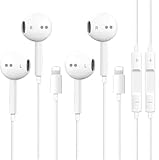
Apple MFi Certified USB-C Headphones for iPhone 17/16/15 Pro Max, 2 Pack
These target the growing USB-C iPhone user base who want a spare pair without paying Apple’s price. The MFi-equivalent certification on the USB-C side keeps iOS recognition stable. Owners describe a sound profile that is slightly brighter than Apple EarPods, which suits vocal-forward genres.
- Pro: Two USB-C pairs with reliable iOS detection at roughly the price of one Apple set.
- Pro: Compatible across the entire current iPhone lineup with no adapter needed.
- Con: The housing feels plasticky in hand compared to Apple’s build, and the tips are generic silicone.
Skip if you care about premium tactile feel or already own a spare USB-C pair from another device.
2 Packs USB-C Headphones for iPhone and Galaxy, Type-C Earphones with Microphone and Remote, Noise Cancelling
This is the cross-platform option for someone who carries both an iPhone and a Samsung flagship. The claimed noise cancellation is passive rather than active, but owners confirm it reduces low-frequency hum noticeably in transit. Sound quality sits mid-tier—competent without excitement.
- Pro: Works on both USB-C iPhones and USB-C Samsung devices without separate purchases.
- Pro: Passive isolation outperforms most open-style buds at this price.
- Con: The “noise cancelling” label overstates what passive tips actually achieve; buyers expecting ANC are disappointed.
Not for you if you want true active noise cancellation or if all your devices share one connector type.
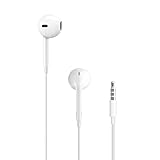
Apple EarPods Headphones with 3.5mm Plug
The classic analog EarPod, still sold because some users pair it with a Lightning-to-headphone jack adapter or use it with iPads, MacBooks, and older devices. Audio quality is identical to the digital EarPods since the driver is the same. Owners praise the simplicity and universal compatibility with any headphone jack on earth.
- Pro: Compatible with every device that has a 3.5mm port, including PCs, consoles, and older iPhones with an adapter.
- Pro: No digital protocol handshake means zero accessory-detection issues.
- Con: Requires an Apple adapter (sold separately) for most current iPhones, adding cost and a failure point.
Skip these unless you already own or plan to buy a Lightning or USB-C headphone adapter.
Buying Guide
Match the Connector to Your iPhone
The single most important decision is connector type. iPhone 15 and newer use USB-C. iPhone 14 and older use Lightning. Buying the wrong one means either an adapter or a dead purchase. If you are uncertain about your next upgrade timeline, USB-C options future-proof you, since Apple has committed to USB-C across its current lineup. The 3.5mm path only makes sense if you already carry an adapter.
Digital vs. Analog Audio and What It Costs You
Lightning and USB-C headphones contain a built-in DAC that converts digital signal to analog inside the connector. Apple’s EarPods with Lightning or USB-C use Apple’s own DAC tuning, which owners consistently describe as cleaner than generic third-party chips. The 3.5mm version offloads conversion to your phone or adapter, which can be marginally better or worse depending on the adapter quality. For most listeners in this price tier, the difference is subtle but real on quiet passages.
Built-In Remote and Microphone Quality
Every product here includes an inline remote, but not all perform equally. Apple’s own EarPods and the MFi-certified options register button presses instantly with iOS. Budget uncertified buds sometimes require double-pressing for Siri or exhibit volume steps that feel delayed by half a second. The microphone matters more than most buyers expect: Apple EarPods rank near the top in call clarity among sub-twenty-dollar options according to owner reports, while the cheapest buds on this list tend to pick up more handling noise.
Our Verdict
The top pick for most iPhone owners in 2026 is the Apple EarPods with USB-C Plug at $19. They deliver the most consistent call quality, guaranteed compatibility, and the best remote responsiveness of anything on this list. For budget-conscious buyers who need two working pairs, the SUPVOL 2 Pack Lightning at $7.99 is the clear value play—accept the shorter lifespan and keep a spare. One condition changes the answer entirely: if you use both an iPhone and a Galaxy phone daily, the multi-device USB-C 2 Pack at $16.98 saves you a separate purchase and the passive isolation makes it a strong transit companion.
FAQ
Do wired headphones work on the iPhone 17?
Yes, the iPhone 17 has a USB-C port, so any USB-C wired headphone will function without an adapter. Lightning and 3.5mm options require a dongle.
Are Apple EarPods still worth buying in 2026?
For the price they occupy, they remain the most reliable choice in terms of connector fit, call clarity, and iOS integration. Nothing on this budget list consistently matches their microphone performance.
What does MFi certified actually mean for headphones?
MFi (Made for iPhone/iPad) means the connector contains Apple-approved authentication hardware. This reduces the chance of iOS blocking the accessory or showing “not supported” errors, which is common with uncertified Lightning buds.
Can I use these wired headphones with a computer?
USB-C and 3.5mm models work directly on most laptops and desktops. Lightning models generally require a Lightning-to-USB adapter, and not all operating systems recognize the built-in DAC without extra configuration.





Write Your Review
No reviews yet. Be the first to share your experience!