
Iphone 15 Vs 16erepresents a crucial comparison for buyers on a budget in 2026. While one offers premium dual cameras and the stylish Dynamic Island, the other delivers the latest A18 chip and advanced Apple Intelligence at a lower price. This guide explores their features to help you make the smartest choice today.
Design and Aesthetics Comparison
Analyzing the design of the Iphone 15 Vs 16e reveals a fascinating clash of generations. While they share similar high-quality aluminum frames and standard sizing, Apple has made distinct compromises on one side to offer a cheaper entry point, creating a noticeable gap in modern screen aesthetics for prospective users.
As an Amazon Associate we earn from qualifying purchases at no extra cost to you.


![for iPhone 17E / iPhone 16E Case, with Slide Camera Cover HD Screen Protector [Military Grade 16ft. Drop Tested] Ring Holder Kickstand Protective Phone Case for Apple iPhone 17e / iPhone 16e, Black](https://m.media-amazon.com/images/I/41614Ja0GYL._SL160_.jpg)

| Specifications | iPhone 15 | iPhone 16e |
| Processor | A16 Bionic (4nm) | A18 (3nm) |
| RAM / Memory | 6GB | 8GB |
| Display Cutout | Dynamic Island | Classic Notch |
| Peak Brightness | 2000 nits | 1200 nits (HDR) |
| Rear Camera | 48MP Main + 12MP Ultrawide | 48MP Fusion (Single) |
| MagSafe Support | Yes (15W) | No (Qi Only, 7.5W) |
| Apple Intelligence | No Support | Full Support |
| Battery Life | Up to 20 Hours Video | Up to 26 Hours Video |
Aesthetic Differences and the Notch
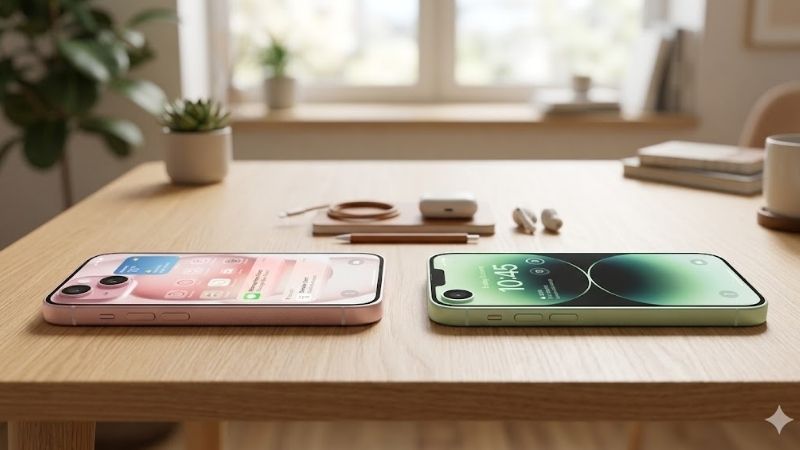
Looking at the screen in the Iphone 15 Vs 16e comparison, the notch is the first thing you notice. It uses the classic cut-out display from older lines, which might feel dated to some. In contrast, the previous flagship features a modern pill-shaped cutout, making the interface feel much more interactive and sleek.
This screen design choice is a major deciding factor for style-conscious smartphone buyers. While the notch is familiar, it lacks the animated shortcuts and active notifications of newer displays. Users who prefer a truly modern iOS experience will find the older flagship far more appealing than the newer budget device.
Screen Quality and Outdoor Brightness
Display quality is another area where these two devices diverge significantly in daily usage. The older flagship model can reach a massive peak outdoor brightness of up to 2000 nits. This means you will have no trouble reading your text messages, viewing maps, or browsing social media feeds under direct, harsh summer sunlight.
Meanwhile, the budget contender maxes out at a standard 1200 nits of peak brightness for HDR content. Under bright skies, this difference becomes quite apparent to the eye. While both screens are OLED and offer deep contrast levels, the older model is clearly superior when you are using your smartphone outdoors frequently.
Portability and Color Options
for carrying these phones around, both models are compact and highly portable. They both feature a comfortable 6.1-inch screen size, which is perfect for one-handed operation. However, there is a slight weight difference, with the older model being just a few grams heavier than its newer, lightweight competitor.
Color options also set these two devices apart for buyers who value personal aesthetics. The older premium model comes in a variety of soft pastel shades that look highly modern. On the other hand, the newer budget option is restricted to classic black and white, catering to those who prefer a minimalist, simple appearance.
Build Quality and Long-Term Durability
Durability is essential for any modern smartphone, and both of these options perform very well. They are built with strong aluminum frames and feature strong glass backs. Both devices also carry an IP68 rating, ensuring they can survive accidental drops in water or heavy rain showers without suffering any immediate damage.
However, there is a subtle difference in the glass protection used on their displays. The older standard model features the first-generation Ceramic Shield, which is highly scratch-resistant. The newer model also uses reliable materials, but subtle cost-cutting measures mean it may not feel quite as premium to the touch.
Processor Power and System Performance
Under the hood, these devices show the true power gap in the Iphone 15 Vs 16e matchup. One is powered by an older chip that is still incredibly fast, while the other boasts the latest 3-nanometer technology. This CPU difference impacts not just speed, but also the long-term software capabilities of your phone.
Chipset Power and Daily Speed
In terms of raw speed, the Iphone 15 Vs 16e comparison highlights a massive generational leap. The newer budget smartphone features the modern A18 processor built on a 3nm process. This chip is highly efficient, allowing it to handle intensive tasks and heavy gaming with absolute and seamless ease.
In contrast, the older model runs on the A16 Bionic chip, which is still a powerhouse today. For regular tasks like social media, emailing, and streaming, you will not feel any lag at all. However, for raw processing power and future-proofing, the A18-equipped budget phone has a clear, undeniable advantage.
RAM and App Multitasking
Multitasking efficiency is heavily dependent on the random-access memory available in each phone. The older flagship is equipped with 6GB of RAM, which is sufficient for most everyday users. It allows you to keep several apps open in the background, though heavier apps may occasionally reload when you switch back to them.
The newer budget contender steps things up significantly by offering a generous 8GB of RAM. This upgrade ensures that multitasking is incredibly smooth, and apps remain active in memory for much longer. The extra memory also ensures that the device can handle complex system-level tasks without slowing down over time.
Apple Intelligence and AI Features
The biggest selling point for the newer budget phone is its full support for Apple Intelligence. Thanks to the A18 chip and 8GB of RAM, it can run advanced on-device AI models smoothly. This includes smart writing tools, clean-up features in the photo editor, and a much smarter, context-aware digital assistant.
Unfortunately, the older flagship is completely locked out of these advanced AI features due to hardware limits. While you can still download third-party cloud AI apps, you will miss out on the deeply integrated system-level magic. This makes the budget option the clear winner for anyone wanting to experience the AI era.
Battery Efficiency and Playback Time
Battery endurance is another area where the newer model shines brightly compared to its predecessor. Apple claims this budget phone can deliver up to an impressive 26 hours of continuous video playback. This is largely thanks to the highly efficient A18 processor and a larger physical battery packed inside the chassis.
On the flip side, the older flagship offers around 20 hours of video playback on a single charge. While this is easily enough to get most users through a standard workday, it falls short of the newer model. If battery longevity is your absolute top priority, the newer budget option will keep you away from chargers longer.
Camera Systems and Charging Speeds
When analyzing the Iphone 15 Vs 16e camera and charging systems, we see major trade-offs. One option provides a versatile dual-lens system, while the other focuses on a single lens with advanced processing. Understanding these trade-offs will help you choose the best overall device for your lifestyle.
Main Camera Megapixels and Quality
Evaluating the camera of the Iphone 15 Vs 16e shows that both feature impressive 48-megapixel main sensors. This high resolution allows you to capture incredibly detailed photos that can be cropped without losing quality. In good lighting, both phones produce sharp, vibrant images with excellent dynamic range.
However, the older flagship has a slightly larger physical sensor with advanced stabilization. This physical advantage allows it to capture more light in dark environments, resulting in cleaner nighttime photos. While the newer model uses advanced software to compensate, the older hardware still holds a slight edge.
Ultrawide Lens vs Cropped Zoom
The most obvious physical difference on the back is the number of camera lenses. The older flagship features a dual-camera system, including a highly useful 12MP ultrawide lens. This lens is perfect for capturing sweeping landscapes, tight indoor spaces, and creative perspective shots that are otherwise impossible.
The newer budget phone only has a single rear lens, completely lacking an ultrawide option. Instead, it relies entirely on sensor cropping to offer a high-quality 2x zoom effect. If you love taking wide-angle photos of groups or landscapes, the older flagship is definitely the superior camera choice for your needs.
Video Recording Features
Video recording capabilities are outstanding on both devices, supporting up to 4K resolution at 60 fps. They also support Dolby Vision HDR, ensuring your videos look bright and colorful on any screen. Both phones feature excellent electronic stabilization, making your handheld videos look incredibly smooth and professional.
But the newer budget model gains a unique advantage with support for spatial audio recording. This feature pairs beautifully with virtual reality headsets, creating immersive soundscapes for your home movies. If you are interested in capturing memories with rich, spatial sound, the newer device is highly appealing.
Wireless Charging Speeds and MagSafe
Charging technology is an area where Apple made a very clear compromise on the budget model. It only supports basic Qi wireless charging, which is limited to a relatively slow 7.5W speed. Furthermore, it completely lacks built-in magnetic MagSafe technology, meaning you cannot easily snap on magnetic wallets or stands.
The older flagship supports full 15W MagSafe wireless charging, allowing you to charge twice as fast. The built-in magnets also open up a massive ecosystem of convenient magnetic accessories. If you love the convenience of MagSafe chargers, stands, and car mounts, the older model is the much more functional choice.
Conclusion: Making Your Final Choice
In conclusion, deciding on the Iphone 15 Vs 16e depends on your personal tech priorities. If you want a superior dual-camera setup, MagSafe charging, and a gorgeous Dynamic Island screen, the older flagship is your best bet. However, if you crave maximum A18 processing speed, long battery life, and Apple Intelligence, buy the newer model.
Summary of Key Differences
To sum up, the primary differences lie in processing power, camera versatility, and screen layout. The older premium model gives you a stunning screen experience with its high-end Dynamic Island and a very useful secondary camera. These features make it highly practical for content creators and heavy media consumers.
Conversely, the newer budget option focuses heavily on future-proof technology. It provides a massive leap in processing power and brings modern artificial intelligence to a much more accessible price point. This makes it highly attractive to tech enthusiasts who want the latest software capabilities.
Who Should Buy the Flagship?
You should choose the older flagship model if you prioritize a premium visual experience and photography. Its dual-camera system with an ultrawide lens is far superior for capturing creative memories, landscapes, and travel group photos. The bright display also makes a huge difference if you spend a lot of time outside.
Additionally, the inclusion of MagSafe is a massive quality-of-life feature for many users. If you have already invested in magnetic chargers, wallets, or car mounts, sticking with this model will be much more convenient. It remains a polished, top-tier device that holds its own incredibly well in terms of premium hardware.
Who Should Choose the Budget Model?
On the other hand, the newer budget option is the perfect choice if you want maximum performance for your dollar. With its A18 processor and larger RAM, it easily handles high-end gaming and multitasking. It is also the only choice between the two if you want to use Apple’s new native artificial intelligence tools.
Find out more:
Recommended Products

PrimeCustom Pictures Case for Apple iPhone 17 Pro Max, Personalized Phone Cases with Full Covered Camera Protection, Clearly Customize Glass Back Protective Cases for Birthday, Black

PrimeOtterBox Father’s Day Custom iPhone 17 Pro Max Case, Black – Commuter MagSafe Series – Personalized Image, Text, Monogram, Logo – Printed in USA

PrimeGuard Dog Case Compatible with iPhone 17 Pro Max – Compatible with MagSafe – Military Grade – Rugged Two Piece Protection – Custom – Photo – Portrait
As an Amazon Associate we earn from qualifying purchases. Product prices and availability are accurate as of the date/time indicated.
Conclusion
Furthermore, its exceptional battery efficiency makes it ideal for busy users who are always on the go. If you do not care about wide-angle photography or magnetic accessories, this phone offers incredible value. It provides a direct and highly affordable path into the future of Apple software updates for years to come.
Top-Rated Picks


| Product | Brand | Rating | Reviews | Price |
|---|---|---|---|---|
| Apple iPhone 13, 128GB, Midnight – Unlocked (Renewed) | Amazon Renewed | ★ 4.1 | 26.9k | under $300 |
| Apple iPhone 14, 128GB, Blue – Unlocked (Renewed) | Amazon Renewed | ★ 4.1 | 12.4k | under $350 |
| Apple iPhone 13 Pro, 128GB, Sierra Blue – Unlocked (R… | Amazon Renewed | ★ 4.1 | 11.7k | under $400 |
| Apple iPhone 16 Pro Max, 256GB, Black Titanium – Unlo… | Amazon Renewed | ★ 4.3 | 3.3k | under $900 |
| Apple iPhone 16 Pro Max, US Version, 256GB, Black Tit… | Amazon Renewed | ★ 4.3 | 3.3k | under $900 |
Frequently Asked Questions
What is the key difference between them?
The 16e uses a newer chip with a longer software support window but trims features to hit a lower price, most notably the camera system and MagSafe magnets. The iPhone 15 offers a dual rear camera, the Dynamic Island and full MagSafe support, but is a year older.
Does the 16e support MagSafe?
It supports Qi wireless charging but lacks the full MagSafe magnet array found in the iPhone 15, so magnetic wallets and snap-on mounts will not hold directly to the phone. A case with its own embedded magnet ring restores that functionality at a small extra cost.
Which takes better photos?
The iPhone 15 has the advantage, thanks to its second rear camera providing an ultra-wide field of view and a 2x optical-quality crop from its high resolution main sensor. The 16e’s single camera produces good results in daylight but is more limited for landscapes and close-in framing.
Which will be supported longer?
The 16e, since it launched later with a newer chip, so expect roughly an extra year or more of major iOS updates compared with the iPhone 15. If you plan to keep the phone for five or more years, that gap is a genuine consideration.
Do they use the same cases and chargers?
Both use USB-C, so chargers and cables are interchangeable and a 20W or higher adapter suits either. Cases are not interchangeable: the camera cutouts differ because one has a single lens and the other has two, so buy for the specific model.
Write Your Review
No reviews yet. Be the first to share your experience!