
Choosing between a MagSafe and Qi2 charger is less about which technology is universally “better” and more about how your household uses phones. The real decision is whether you want Apple’s tightly integrated magnetic charging experience or the broader compatibility and often lower cost of the Qi2 standard. Both use magnets to align a phone with a charging coil, so either can be more convenient than placing a device on a flat wireless pad. The differences show up in charging speeds, accessory compatibility, price, repairability, and how easily the charger fits into your home.
For an iPhone-focused household that wants the most predictable Apple experience, MagSafe remains compelling. For shoppers comparing Android and iPhone devices, outfitting several rooms, or trying to spend less, Qi2 can be the more flexible choice. Here is how the two standards compare in 2026.
As an Amazon Associate we earn from qualifying purchases at no extra cost to you. Product prices and availability are accurate as of the date shown and are subject to change.


Quick Verdict
Choose MagSafe if you own an iPhone that supports it, want Apple-specific charging features, and prefer a polished accessory ecosystem. Apple’s charger and licensed MagSafe accessories can deliver a dependable magnetic connection, with compatible iPhones supporting faster charging than older magnetic wireless solutions. MagSafe also tends to be the safer pick if you already own magnetic wallets, stands, car mounts, or battery packs designed specifically for Apple’s system.
Choose a Qi2 charger if you want magnetic alignment at a lower typical price, need a charger that can work across more brands, or are furnishing multiple charging spots. Qi2 chargers generally provide up to 15 watts for compatible phones, although the exact speed depends on the phone, charger, power adapter, and certification. Qi2 is also a useful hedge if your household mixes iPhone and Android devices.
In short, MagSafe is the better fit for maximum iPhone integration; Qi2 is usually the better value and compatibility choice.
Side by Side
| Factor | MagSafe | Qi2 |
|---|---|---|
| Comfort | Snaps into place and can support Apple-focused accessories | Magnetic alignment is similarly convenient on certified devices |
| Charging speed | Up to 15W on many compatible models; some newer combinations support higher output | Typically up to 15W for phones, with speed controlled by the device and charger |
| Durability | Strong ecosystem, but cable strain and exposed charging surfaces still matter | Comparable day-to-day durability; quality varies among manufacturers |
| Price range | About $14 to $40 for basic charging pads, with premium stands costing more | About $20 to $60 for basic pads and stands |
| Maintenance | Keep the magnetic face and phone ring free of dust, metal, and debris | Requires the same cleaning; inspect the cable and USB-C power adapter |
| Space needed | Roughly 2.5 to 4 inches of desk or nightstand depth for a basic pad | Roughly 2.5 to 5 inches, depending on whether it is a pad or stand |
| Look | Often minimalist and Apple-coordinated | More variety, from compact travel pads to fabric-covered stands |
| Resale | Apple-branded accessories may retain value well | Recognized brands can resell well, but generic models depreciate faster |
| Best for | iPhone owners invested in Apple accessories | Mixed-device households, value shoppers, and multi-room setups |
Where MagSafe Wins
MagSafe’s biggest advantage is integration. On a compatible iPhone, the magnets center the charger quickly and make it easier to use the phone while it is connected. That is particularly useful on a nightstand, where you may want to check a notification, or at a desk, where a magnetic connection can be less fussy than a loose cable.
The accessory ecosystem is another strength. MagSafe-compatible wallets, battery packs, car mounts, desk stands, and charging docks are widely available. If you are building a coordinated charging station for an iPhone, Apple’s system gives you many choices with familiar dimensions and mounting patterns. A basic pad can be as small as about 2.5 inches across, while a stand may occupy 3 to 5 inches of desk depth.
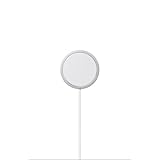
MagSafe can also offer a more predictable experience when you use an Apple charger, an appropriate USB-C power adapter, and a compatible iPhone. The Apple MagSafe Charger with a 2-meter cable is listed at $39.99, which is expensive compared with many third-party pads, but the longer lead can be useful when an outlet is behind a bed or sofa.
There is a caveat: “MagSafe-compatible” does not always mean the accessory is an official MagSafe product. Some inexpensive pads use magnets for alignment but charge at standard Qi or Qi2 speeds. Read the wattage and certification details rather than relying on the word “magnetic” alone. A $13.95 MagSafe 25W Wireless Charger for Apple Magnetic Fast Charging Pad may appeal to budget shoppers, but its real-world performance depends on the included cable, power adapter, phone model, and whether its claimed output is supported by all of those components.
Where Qi2 Charger Wins
Qi2’s strongest advantage is standardization. It brings a magnetic alignment system to a wider range of certified products instead of tying the experience exclusively to Apple’s accessory ecosystem. A Qi2 charger can be a sensible purchase for a household with several phone brands, especially when family members replace devices at different times.
Price is often favorable as well. You can find simple Qi2 pads and compact stands for roughly $20 to $35, while more substantial multi-device stations commonly cost $50 to $150. The Anker Zolo MagSafe-Compatible Wireless Charger with Qi2 15W Fast Charging, priced at $25.99, is an example of a midrange option that combines magnetic alignment with the standard’s typical 15W phone output.
Qi2 is also attractive for furnishing several locations. Buying three or four chargers can become expensive if every station uses a premium Apple-branded model. A Qi2 pad in the kitchen, home office, and guest room may provide the same basic convenience without requiring a large investment. For travel, a small pad weighing approximately 2 to 4 ounces can fit in a cable pouch without taking much room.
Compatibility still requires attention. The phone must support Qi2, or it must have a compatible magnetic case or ring. A phone that supports ordinary wireless charging may charge on a Qi2 pad but will not necessarily align magnetically or reach 15W. Cases can also weaken the connection if they are unusually thick, contain metal, or use an incompatible magnet layout.
Cost Over 5 Years
For a basic single-device setup, the five-year cost difference is modest. Assume one charger, one compatible USB-C power adapter, and occasional cable replacement. A budget MagSafe-compatible pad may cost $14 to $25. An Apple MagSafe charger may cost about $40, before adding a power adapter if you do not already own one. A Qi2 pad typically costs $20 to $35, with premium stands reaching $60 or more.
Using a simple five-year ownership estimate:
- Budget magnetic charger: $14 to $25 initially, plus $5 to $15 for a replacement cable or adapter if needed, for an estimated total of $19 to $40.
- Apple MagSafe setup: About $40 for the 2-meter charger, plus $20 to $30 for a suitable USB-C power adapter if necessary, for an estimated total of $40 to $70.
- Qi2 setup: About $20 to $35 for a basic charger, plus $5 to $15 for replacement accessories over time, for an estimated total of $25 to $50.
These are ownership estimates, not guaranteed lifespans. Heat, frequent travel, bent cables, and low-quality power adapters can shorten service life. For a home with three charging areas, the initial difference can be more significant: three $25 Qi2 chargers cost about $75, while three $40 Apple chargers cost about $120 before power adapters.
Which One for Your Home
Small apartment
Choose based on the number of devices and the location of outlets. A compact Qi2 pad is often the best value for a nightstand or narrow console because it provides magnetic alignment without taking much space. If every household phone is an iPhone and you already own MagSafe accessories, a single Apple charger may be worth the premium. Look for a pad no more than 3 inches deep if your bedside surface is crowded.
Family with kids or pets
Qi2 is a practical choice when chargers may be moved, shared, or replaced. Buy a reputable model with a braided cable, a weighted base if it is a stand, and over-temperature and over-voltage protection. Keep loose cables away from floor-level traffic. For young children, a flat pad can be safer than a tall stand that is easy to knock over, regardless of the charging standard.
Rental
Renters often benefit from portable Qi2 chargers. They work well on a desk, kitchen counter, or temporary nightstand and do not require drilling or permanent cable management. A compact 15W Qi2 pad plus a 6-foot cable can serve multiple rooms. MagSafe is equally portable, but Qi2 usually offers more affordable options if a charger is lost during a move.
Long-term home
In a permanent home, prioritize the places where charging happens every day. MagSafe is a strong choice for a dedicated Apple desk or bedroom dock, especially if you use a matching wallet or stand. Qi2 is better for future-proofing a guest room or family charging zone because it is less dependent on one brand. For a built-in nightstand or kitchen station, measure the surface first and leave at least an inch around the charger for cable access and cleaning.
FAQ
Is Qi2 the same as MagSafe?
No. They are related magnetic wireless charging systems, but MagSafe is Apple’s proprietary platform and Qi2 is an industry standard. Some Qi2 accessories use a magnetic profile similar to MagSafe, but certification, charging speed, and accessory compatibility can differ.
Does Qi2 charge an iPhone as fast as MagSafe?
Often, but not always. Many Qi2 chargers provide up to 15W on compatible iPhones, while the phone, adapter, cable, and charger all affect the result. Some newer iPhone and MagSafe combinations support higher speeds, so check the specifications for your exact model.
Can I use a MagSafe case with a Qi2 charger?
Usually, yes, if the case has a compatible magnetic ring and is not too thick. The charger may align properly, but the phone will use the highest charging speed supported by the phone and Qi2 charger rather than automatically receiving every MagSafe feature.
Is a magnetic charger safe overnight?
Certified chargers with a suitable power adapter are generally designed for normal overnight use. Place the phone and charger on a hard, ventilated surface, keep metal objects away from the charging face, and replace damaged cables. If the phone or charger becomes unusually hot, disconnect it and investigate the cause.
Ready to decide? Our #1 pick for 2026 is the Comfort.
Live price & availability on Amazon.



Write Your Review
No reviews yet. Be the first to share your experience!