
A dead iPhone at the wrong moment is a solved problem, and in 2026 power banks have never been smaller, faster, or cheaper. This guide cuts the category to the decisions that matter: capacity, speed, connector style, and the form factor you will actually carry.


Anker iPhone Charger, 2-Pack 20W Fast USB C Charger Block, Type C Charger Fast Charging for iPhone 17/17 Pro Max/16 Series/iPad Pro and More (White, 2 Pack & 2 Cable)

![[Apple MFi Certified] iPhone 17 Charger Fast Charging, Stuffcool 4Pack PD 20W USB C Chargers Dynamic Power Adapter Type C Wall Charger + 6FT Type C Cable for iPhone 17/17 Pro/17 Pro Max/16 Pro/15/iPad](https://m.media-amazon.com/images/I/618-MJqshTL._AC_SL1500_.jpg)

Recommended Products

PrimeRedragon K503 Wireless Gaming Keyboard, 3-Mode (2.4G/BT/USB), RGB LED Backlit, Multimedia Keys, Fully Programmable Silent Membrane Keyboard with Wrist Rest for Windows PC Games (Black)
![elago 2 Pairs AirPods 4 Ear Tips Cover Designed for AirPods 4, [Fit in The Case] Anti Slip Silicone Cover, Anti Scratches, Installation Guide (1 Pair of Each) (Dark Grey & White)](https://m.media-amazon.com/images/I/619SpLSDQVL._AC_SL1500_.jpg)
Primeelago 2 Pairs AirPods 4 Ear Tips Cover Designed for AirPods 4, [Fit in The Case] Anti Slip Silicone Cover, Anti Scratches, Installation Guide (1 Pair of Each) (Dark Grey & White)

PrimeCaseology by Spigen Vault Designed for Airpods Pro 2nd Generation Case (2022/2023/2024) Drop Protection Cover with Carabiner – Matte Black
As an Amazon Associate we earn from qualifying purchases. Product prices and availability are accurate as of the date/time indicated.
Capacity: Honest Math First
Power bank shopping starts with a conversion truth: voltage step-up and charging losses mean a bank delivers roughly two-thirds to three-quarters of its labeled milliamp-hours to your phone. A 5,000 milliamp-hour bank therefore yields about one standard iPhone charge, the 10,000 class delivers roughly two, and 20,000-plus units cross into multi-day and multi-device territory at laptop-brick weight. Match capacity to your actual failure pattern, not your anxiety: commuters topping up an evening need 5,000-class slims, travelers and festival-goers justify 10,000, and only off-grid trips reward the big bricks. Every tier flies within standard airline carry-on limits except the very largest, and all banks belong in cabin luggage, never checked.
Speed and Ports That Match an iPhone
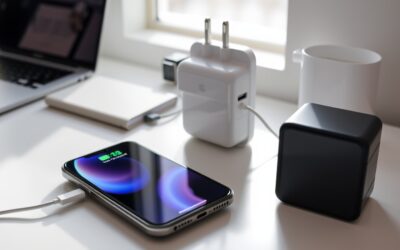
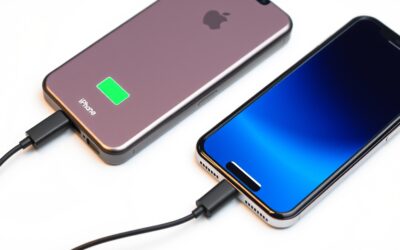
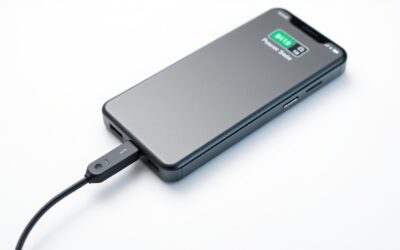
Output wattage determines whether the bank fast-charges or trickles. Modern iPhones fast-charge at twenty-plus watts over USB-C Power Delivery, so a bank rated at least twenty watts on its USB-C port restores half a battery in about thirty minutes, while old ten-watt banks need triple the time. Current iPhones charge directly over USB-C cables, simplifying everything; owners of Lightning-era models need an MFi cable in the kit. Banks with two ports rescue a companion’s phone simultaneously, with the usual check on per-port output when shared. Input speed matters too, since a bank that refills itself in ninety minutes over USB-C beats an overnight-recharge unit for spontaneous use.
Form Factors: Slim, Magnetic, and Cable-Equipped
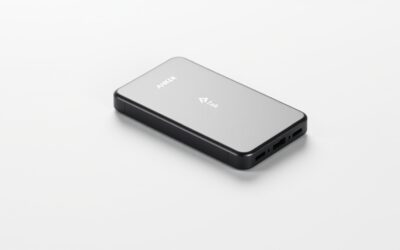
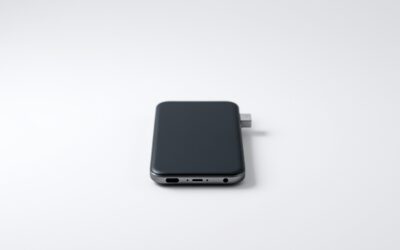
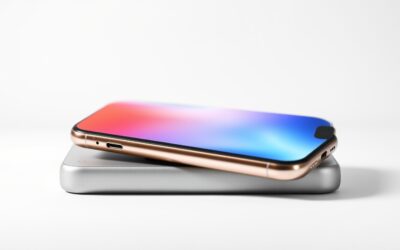
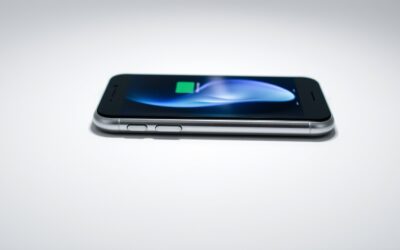
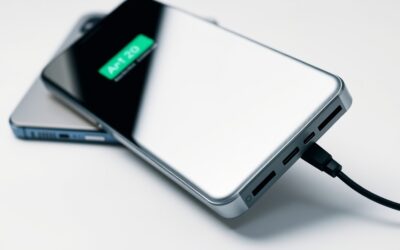
The best bank is the one in your pocket when the battery dies, which makes form factor the deciding spec. Credit-card slims vanish into bags and jackets, covering the daily emergency at minimal weight. Magnetic banks snap to MagSafe iPhones and charge wirelessly, trading some efficiency for cable-free convenience and one-handed use. Banks with integrated cables, folding plugs, or both compress the whole charging kit into a single object, eliminating the forgotten-cable failure mode entirely; some even include wall prongs, doubling as the travel adapter. Rugged banks with sealed ports serve beach and trail days. Most owners eventually settle on two: a slim daily carry and a higher-capacity travel unit.
Safety, Longevity, and Buying Discipline
Power banks concentrate lithium energy in a pocket, so brand quality is a safety feature rather than a luxury. Established makers include temperature monitoring, current regulation, and certified cells; bargain-bin units skip protections invisibly until a hot day or cheap cable finds the gap. Banks age like all batteries, losing capacity over a few hundred cycles, and storage at moderate charge in moderate temperatures slows that decline. Recharge the bank after each use so it travels ready, and retire any unit that swells, heats abnormally, or loses most of its capacity. Spread across years of rescued evenings, a quality bank is among the cheapest insurance an iPhone owner can buy.
Related guides on our site:Best Apple Watch Screen Protectors in 2026: Top Guard Shields·Best Wireless iPhone Chargers in 2026: Top Qi and MagSafe Stands·Best iPhone 13 Chargers in 2026: Top Fast-Charging Plugs·Best iPad 10th Generation Cases in 2026: Top Budget Covers·Best Techwoven iPhone 17 Pro Cases in 2026: Top Fabric Covers.
Frequently Asked Questions
What size power bank should I carry daily for an iPhone?
A 5,000 milliamp-hour slim bank delivers roughly one full charge and disappears into any bag, covering the realistic daily emergency. Step up to 10,000 for travel days.
Can a power bank fast-charge an iPhone?
Yes, if its USB-C port outputs twenty watts or more over Power Delivery, restoring about fifty percent in thirty minutes on supported models.
Are power banks allowed on flights?
Yes, in carry-on baggage only. Standard consumer capacities sit well under airline lithium limits; only units beyond roughly 27,000 milliamp-hours need airline approval.
Write Your Review
No reviews yet. Be the first to share your experience!